Scuba Diving in Side: Discover Dives vs Certified Diving
What's the difference between a discover dive and certified diving in Side?
A discover dive (or 'baptism') needs no certification or experience — an instructor briefs and accompanies you one-on-one to a shallow depth, usually under 12m. Certified diving requires a recognised card (Open Water or above) and opens access to deeper reef and wreck sites, often to 18-30m, with far less hand-holding underwater.
Two very different dives under the same name
“Scuba diving in Side” covers two experiences that share a wetsuit and a boat but little else. One is a discover dive (sometimes called a baptism or try-dive): no certification, no prior experience, an instructor within arm’s reach the whole time, and a shallow, forgiving depth. The other is certified diving: you already hold a recognised qualification, you dive as part of a buddy team rather than being personally shepherded, and the sites open up considerably — deeper reef walls, the occasional wreck-style structure, longer bottom times.
Neither is “better” — they’re for different people at different points in their diving life, and mixing them up when booking is the most common way visitors end up disappointed. This guide separates the two clearly: what each requires, what gear you’ll use, which sites near Side suit each level, and how to choose.
Discover dives: no certification required
A discover dive is built for someone who has never used scuba gear and wants to try it without committing to a multi-day certification course. The format is consistent across most operators on this stretch of coast:
- A land or boat-based briefing covering hand signals, equalising your ears, and what to do if something feels off.
- A short practice session in shallow water or a pool-depth area, breathing through the regulator and getting used to the mask.
- One (sometimes two) supervised dives, typically in the 5-12m range, with an instructor maintaining close contact — often literally holding on — throughout.
No swimming test in the athletic sense is required, but basic swimming ability and a clean bill of health (via a short medical questionnaire) are standard. Certain conditions — significant heart or lung issues, recent ear surgery, uncontrolled asthma — can disqualify someone from diving; flag anything relevant to the operator when booking rather than on the boat.
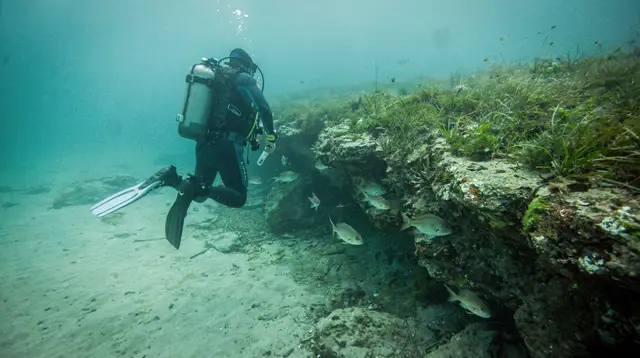
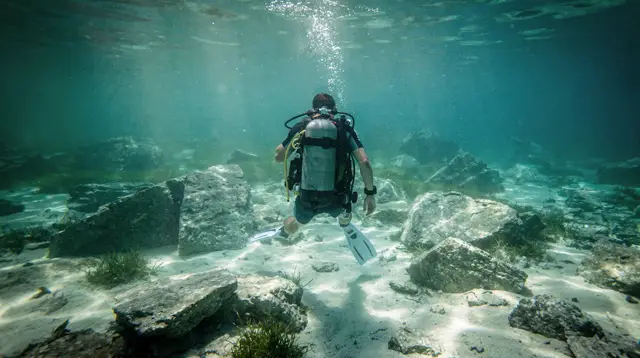
What you actually see at 8-10m near Side is more than most first-timers expect: rocky reef, sea grass, small schools of fish, and on some itineraries a shallow artificial-reef or sculpture site built specifically at a depth accessible to beginners. It’s a controlled, low-pressure introduction — genuinely close to a guided walk underwater rather than a technical activity.
a scuba diving day with lunch included, suited to first-timers and licensed divers alikeCertified diving: what you need, what it opens up
If you already hold an Open Water certification (PADI, SSI, CMAS or equivalent) or higher, the Side dive scene looks different. Bring your certification card — a photo on your phone is usually accepted, though a physical card or a digital wallet copy is safer — and your logbook if you keep one, especially if it’s been a while since your last dive.
Certified divers on a boat trip are generally expected to:
- Manage their own buoyancy and air consumption rather than being physically guided.
- Dive in a buddy pair or small group rather than one-on-one with an instructor.
- Handle basic problem-solving (a fogged mask, a minor equalising delay) without hand-holding.
In return, the sites accessible expand to roughly 12-30m, depending on the operator, the group’s collective certification level, and conditions on the day. That range typically includes rockier reef structures further from shore, occasional wreck-style or artificial-reef formations, and dive profiles with longer bottom times than a discover dive would ever attempt. Advanced-level certified divers may be offered deeper or drift-style sites on some itineraries — ask directly when booking if you’re chasing a specific depth or site type.
an underwater museum dive with submerged sculptures, a shallow site often open to both beginners and certified diversDiscover dive vs certified diving, at a glance
| Discover / baptism dive | Certified diving | |
|---|---|---|
| Certification needed | None | Open Water (or equivalent) minimum |
| Typical depth | 5-12m | 12-30m, operator-dependent |
| Supervision | One-on-one, instructor in close contact | Buddy pair / small group |
| Pre-dive prep | Briefing + shallow practice session | Gear check, dive plan briefing |
| Number of dives (day trip) | Usually 1, sometimes 2 | Usually 2, occasionally 3 |
| Gear | Fully provided | Fully provided (own gear optional) |
| Best suited to | First-time divers, cautious swimmers | Existing certified divers wanting reef/deeper sites |
Gear: provided either way
Whichever level you’re diving at, expect full equipment rental as standard on Side day trips: wetsuit, buoyancy control device (BCD), regulator, tank, mask, fins and weights. You don’t need to own anything to take part. Certified divers who prefer their own mask, dive computer or fins for comfort or familiarity are welcome to bring them, but it’s a personal preference, not a requirement — operators size gear on the day regardless.
Sun protection matters more than most people plan for: reef-safe sunscreen, a rash guard or light layer for the surface intervals, and a hat and water for the boat ride are worth packing separately from the dive kit itself.
What a typical day looks like
Both discover-dive and certified-diver itineraries out of Side tend to follow a similar day structure, which is worth knowing before you book:
- Hotel pickup, usually early-to-mid morning, included in most packages.
- Boat departure from Side or a nearby harbour, with a briefing en route to the first site.
- First dive, shallow for discover divers, deeper for certified divers.
- Surface interval of an hour or more — lunch is typically served on board or at a beach/harbour stop during this window, which also lets dissolved nitrogen off-gas safely before a second dive.
- Second dive, at a different site or slightly different depth.
- Return and drop-off back at your hotel, generally mid-to-late afternoon.
For a broader look at what’s on the water near Side beyond diving specifically, see Side boat trips.
a full scuba diving day trip departing from SideCombining diving with a wider day on the water
Divers who want more than just the dive itself sometimes pair a scuba day with a broader boat outing later in the trip, or split time between diving and other Side-area activities. A regional boat tour covering swim stops and coastal viewpoints is a relaxed contrast to a dedicated dive day, and works well earlier or later in a multi-day stay.
a Side and Manavgat boat tour combining swim stops with coastal sightseeingDiving elsewhere along the Turquoise Coast
Side is one of several bases for scuba diving on this stretch of the Mediterranean, and it’s worth knowing what the alternatives look like before assuming it’s the only option. Alanya, a short drive further along the coast, runs a similar mix of discover dives and certified trips from its own harbour, often to different reef and rock formations, and trips are sometimes marketed jointly across both towns — read the itinerary and departure point carefully rather than assuming a package labelled “Side” leaves only from Side.
Closer to the airport, Antalya city and the Kemer and Belek coasts each run their own dive operators, useful if your hotel sits nearer one of those bases than Side itself. Further along the Lycian coast, Kaş has a longstanding reputation among certified divers for clear water and a wider range of sites, though it’s a considerably longer transfer from a Side hotel and suits a dedicated diving trip better than a day excursion. Manavgat, Side’s inland neighbour, offers broadly the same boat-based trips from a different departure point.
a two-dive scuba trip departing from Antalya with lunch included an Alanya scuba diving trip for both beginners and certified diversFor most visitors staying in or near Side, though, booking locally saves a transfer and keeps the day shorter — the comparisons above matter mainly if you’re still weighing where to base yourself before choosing a hotel.
Getting to your dive and choosing when to go
Most Side scuba diving packages include hotel pickup as standard, so the practical planning mostly comes down to arrival logistics and timing within your trip rather than the dive day itself. Travellers arriving directly into the region can check getting around the Antalya coast for an overview of transfer options between hotels and harbours, and Side airport transfers for the specific route from the airport to a Side base before diving.
Sea conditions and comfort shift through the year on this coast; for a month-by-month sense of when to travel, best time to visit Antalya is a useful starting point, even though it isn’t written specifically for diving. Booking a dive day early in your stay rather than on the last day also leaves a buffer — if conditions on a given day mean an operator reschedules or shortens a trip, having a spare day or two in hand avoids missing out altogether.
Tipping the boat crew and instructor is customary but not obligatory in Turkey; if you’re unsure how much or in what currency, money in Antalya: currency and tipping covers the general local norms that apply as much to a dive boat as to a restaurant.
Choosing between the two
A few honest questions help more than any marketing copy:
- Have you ever breathed underwater through a regulator before? If no, start with a discover dive — it’s designed exactly for this, and the shallow depth keeps the margin for error wide.
- Do you hold a current certification and remember your training? If it’s been years, mention that when booking; some operators offer a short refresher dive or a shallower first dive to rebuild comfort before pushing depth.
- Are you chasing a specific site — a wreck, a deeper reef wall, the underwater museum? Confirm which certification level and site access the trip actually includes before paying, since itineraries and depth limits vary by operator and by conditions on the day.
- Is this a one-off holiday activity or the start of ongoing diving? A discover dive is a taster; if you enjoy it and want to keep diving elsewhere, ask the instructor about routes toward a full Open Water certification rather than repeating discover dives on future trips.
Planning around the rest of Side
Diving typically takes a half or full day out of a Side-based stay, so it pairs naturally with a slower day exploring Side itself — the old town peninsula, its Roman-era ruins, and the waterfront — on either side of the dive. For the wider ancient sites in easy reach, see Side ancient sites, and for a broader menu of day-trip options from the same base, Side day trips is a useful starting point. Travellers weighing where to stay along this coast can also compare Side against Alanya and Kemer before booking accommodation.
Those arriving directly rather than routing through Antalya city can check Antalya airport transfers for the practicalities of getting from the airport to a Side hotel before a diving day.
Beyond the ruins and the waterfront, a half-day Side city tour or an evening at one of the shows and parks nearby rounds out a stay that isn’t spent entirely underwater. And because diving involves depth changes and a degree of physical exertion, it’s worth a quick read of general safety in Antalya advice if you’re combining it with other adventure activities on the same trip, so you can space out anything that also carries its own recovery-time recommendations, such as flying soon afterwards.
Frequently asked questions about scuba diving in Side
Do I need to know how to swim to try a discover dive in Side?
Yes, basic swimming ability is normally required, though you don’t need to be a strong swimmer. Most operators ask divers to complete a short medical questionnaire before the dive; certain heart, lung or ear conditions can rule out diving, so check with the dive centre in advance if you have any concerns.
What depth do beginner discover dives reach near Side?
Discover dives typically stay in the 5-12m range, close to a boat or shore entry point, with an instructor in constant physical contact or very close supervision. This keeps ascent times short and leaves a wide safety margin for someone diving for the first time.
Can I dive in Side if I’m already Open Water certified?
Yes — bring your certification card (a digital copy or physical card) and logbook if you have one. Certified divers can usually join boat trips to reef, rock and occasional wreck-style sites in the 12-30m range, sized to the group’s collective experience level.
Is the underwater museum near Side suitable for beginners?
Submerged sculpture and artificial-reef sites of this kind are usually set at a shallow enough depth to be included on discover-dive itineraries, though exact eligibility depends on the operator and conditions on the day — confirm when booking rather than assuming.
What’s included in a typical Side scuba diving day trip?
Most day trips include hotel pickup and drop-off, all diving equipment (wetsuit, BCD, regulator, tank, mask and fins), a lunch on board or at a beach stop, and one or two dives depending on the package. Discover-dive packages add a pre-dive briefing and pool or shallow-water practice session.
How many dives can I do in one day near Side?
Two dives is the common structure for a full-day boat trip, separated by a surface interval of an hour or more to let dissolved nitrogen off-gas safely — this applies to both discover dives and certified diving, though certified divers may be offered a third dive on some itineraries.
Do I need my own gear for diving in Side?
No — full equipment rental is included in nearly all Side scuba diving packages, for both first-timers and certified divers. Bringing your own mask or dive computer is optional and mainly a comfort preference for regular divers.
Scuba Diving and Snorkelling
Verified deep-linked GetYourGuide tours. Book through these links and we earn a small commission at no cost to you.
GetYourGuide does not provide a product photo for this activity — the image shows the meeting point, photographed by us.