Money in Antalya: Currency, Cards and Tipping
What currency should I use in Antalya, and do I need to tip?
The official currency is the Turkish lira (TRY); euros are sometimes accepted in touristy spots but usually at a poor rate with change given in lira. Cards are widely accepted, though cash still helps in bazaars and small shops. Tipping isn't automatically included — rounding up or adding a small extra at restaurants is customary, not a fixed legal percentage.
I’ll admit I got this a little wrong on my first trip to Antalya. I’d read that Turkey was “cheap” and assumed that meant I could wing the money side of things the way I do in most of Western Europe — card everywhere, no real planning needed. I landed with a handful of euros in my wallet and nothing else, and by day two I was doing mental gymnastics at a market stall in Kaleiçi trying to work out whether the price the vendor quoted me in euros was actually a good deal or a quiet way of pocketing the difference.
It wasn’t a disaster. But it taught me that money in Antalya works a little differently than in most of the EU, and it’s worth fifteen minutes of reading before you go rather than figuring it out stall by stall. If you haven’t sorted the basics yet, our first-time planning guide and the visa and entry requirements page are worth reading alongside this one, since money, documents, and arrival logistics all tend to land on you at once.
The lira is the currency, not the euro
The official currency here is the Turkish lira (TRY), and that’s what you should be thinking in, budgeting in, and ideally paying in. Turkey sits outside the EU and outside the eurozone, so unlike hopping between, say, France and Germany, you’re not just carrying the same notes across a border.
That said, you will see euros accepted — sometimes pounds and dollars too — in the most touristy pockets of the region: parts of Kaleiçi’s old town, some restaurants along Lara and Konyaaltı, tour desks near the marina. I’ve paid in euros a couple of times when I genuinely didn’t have lira on me and needed to. What I’ve learned is that this convenience has a cost.
The exchange rate a shop or restaurant applies when you hand over foreign cash is almost always worse than the actual market rate, and you’ll get your change back in lira calculated at that same unfavourable rate. So you’re effectively losing money twice on one transaction. It’s not a scam exactly — nobody’s hiding anything — it’s just a rate stacked in their favour, and it’s on you to know that going in.
My rule of thumb now: use lira for anything I’m paying cash for, and treat “they’ll take euros” as a backup for emergencies, not a plan. This matters most in places built around price negotiation — see our bazaars and haggling guide — and in the old town generally, which our Kaleiçi guide covers in more depth.
If you land at the airport with no lira at all, that’s not a crisis — just don’t assume the first counter you see is the best rate. Our airport-to-city transport guide and the broader airport transfers guide cover getting into town before you’ve sorted cash, and if you’re heading straight to a hotel, some airport transfer options can be paid for online in advance so you’re not scrambling for lira the moment you land.
Why lira prices you read online are already out of date
One thing that threw me before this trip: Turkey has had persistent high inflation for several years, which means lira prices move fast — faster than most currencies you’re used to budgeting in. A price I saw quoted in a blog post from even a year earlier was noticeably off by the time I actually travelled. This isn’t unique to travel writing; it’s true of restaurant menus, taxi meters, and museum tickets too, which is part of why prices sometimes feel almost improvised compared to what’s printed.
Practically, that means I don’t treat any specific lira figure — including ones I read on sites like this one — as gospel. I check a live exchange-rate source close to my travel dates, and I think in ranges rather than fixed numbers. It also means carrying a currency converter app on my phone is genuinely useful here, more than it’s been almost anywhere else I’ve travelled recently, just to sanity-check whether a price feels right in the moment.
Cards work almost everywhere — but not quite everywhere
I was pleasantly surprised by how far card payments reach in the Antalya region. Hotels, supermarkets, chain restaurants, most sit-down places in Kaleiçi, ticket counters at sites like Aspendos or Perge — card, tap or chip, no issue. If your bank doesn’t charge foreign transaction fees, this is genuinely the easiest way to pay for most of a trip here.
Where cash still earns its keep:
- Bazaars and street markets — haggling in a currency the vendor has to mentally convert on a card machine kills the flow, and plenty of stalls simply don’t take cards.
- Small, family-run lokantas (local eateries) away from the main tourist strips.
- Minibuses (dolmuş) and some taxis, especially outside Antalya city itself.
- Public toilets, small kiosks, tips.
So my approach is: card as the default, with a modest amount of lira cash topped up every few days from an ATM attached to an actual bank branch rather than a standalone unbranded machine. When an ATM asks whether I want it to do the currency conversion or let my own bank handle it, I always decline the ATM’s offer — my bank’s rate has consistently been better.
Public transport is one of the places cash still quietly matters: the tram and bus network runs on the Antalyakart smart card rather than loose change, and topping one up is easiest done with cash at a kiosk — our Antalyakart and tram guide walks through it. If you’re planning to drive instead, renting a car in Antalya usually needs a credit card for the deposit, not cash, which is worth knowing before you show up at the rental desk with a wallet full of lira and no card in your own name.
Bahşiş: tipping without a rulebook
This is the part that took me longest to get comfortable with, coming from a place where service is legally built into the price and tipping is a rounding gesture at most, not an expectation.
In Turkey, bahşiş (tipping) isn’t automatically included the way a service charge sometimes is elsewhere, and there’s no legally fixed percentage anybody has to follow. It’s a custom, not a rule — which sounds vague until you’ve done it a few times and it starts to feel natural.
What I actually do, based on what locals and other repeat visitors have told me:
| Setting | What’s typical |
|---|---|
| Sit-down restaurant | Round up, or add roughly 5-10% if service isn’t already included |
| Café / casual eatery | Rounding up to a convenient note is common |
| Taxi | Round up the fare, or let the driver keep small change |
| Hotel staff, guides | A small note is appreciated, not obligatory |
None of these are fixed percentages I’ve seen printed anywhere official — they’re just the norm I’ve picked up by watching what Turkish diners around me do and asking a couple of guides directly. If you forget to tip, nobody’s going to chase you down; it’s a nicety, not a bill line-item.
The same logic carries over to two experiences that come up a lot on this coast: eating out (our local food guide has more on ordering and pricing) and a hammam visit, where the attendant who scrubs and massages you is usually tipped separately from whatever you paid at the counter — see our Turkish hammam guide for what that actually looks like in practice.
Where this actually matters on a day out
The money question stops being abstract the moment you’re booking activities rather than just eating out. On a boat trip or canyon day where lunch is included, tipping the crew a little at the end is common and genuinely welcomed — I’ve done this on a canyon and boat day near Alanya, something like the Antalya/Alanya Green Canyon trip with a boat and lunch included, and it’s a nice way to end a day where the crew has clearly worked hard.
Boat days are also where I most appreciate having paid for the excursion by card in advance and only needing a little cash on me for extras — a cold drink, a tip, a small souvenir. A cruise like the Alanya hidden coves and blue lagoon cruise is a good example: the big cost is settled ahead of time, so the day itself only needs pocket money.
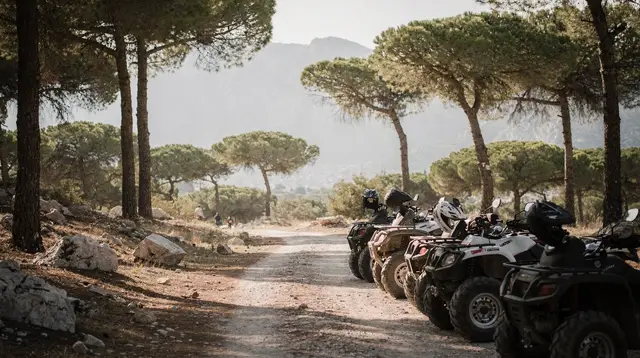
The same goes for jeep safaris into the mountains, where you’re often stopping at small roadside places that may not take cards at all. On the Sapadere Canyon jeep safari with lunch, I was glad to have lira on me for a coffee stop along the way. Same story on the mountain trails jeep adventure with a riverside lunch — it’s the kind of day where cash smooths things out even if the main cost is already paid. Our broader Alanya jeep safaris guide has more on what to expect and bring on these trips.
This pattern holds whichever base you’re using for day trips. Our Antalya day trips guide and Alanya day trips guide both flag which excursions include lunch and which leave you needing a little cash on the road, so it’s worth checking before you head out with an empty wallet.
Money looks a little different depending on where you base yourself
The mechanics above — lira as the working currency, cards for most things, cash for the rest — hold everywhere on this coast, but daily spending patterns shift depending on which town you’re staying in. If you’re weighing up a base, our Antalya vs Alanya comparison, Side vs Belek, and Kemer vs Kaş pages each touch on how prices and payment habits differ between them. And if you’re still deciding how long to stay in the first place, how many days in Antalya is worth a read before you work out a cash budget for the trip.
For day trips further afield — a long day out to Pamukkale or Cappadocia — I’ve found it’s worth carrying a bit more cash than usual, since these are longer routes with fewer obvious card-friendly stops along the way, especially once you’re off the main coastal strip.
A couple of practical odds and ends worth knowing before you go: is tap water safe to drink in Antalya (relevant if you’re budgeting for bottled water on top of everything else), and general safety in Antalya, which touches on keeping cash and cards secure in crowded spots like Kaleiçi’s bazaar streets. If you’re travelling with kids, our Antalya with kids guide and the accessibility guide both have notes on ticket pricing and where cash still trips people up.
A few habits that saved me hassle
A short list of things I now do without thinking:
- Withdraw lira from a bank-branch ATM soon after landing, rather than exchanging cash at the airport counter, where rates are usually worse.
- Keep a rough mental budget in lira, not in euros converted on the fly — it’s easier to spot when something’s off.
- Carry small notes for taxis, tips, and bazaars; breaking a large note at a tiny stall is awkward for everyone.
- Check my bank’s foreign transaction fee before I go, since that quietly affects whether card or cash works out cheaper for bigger purchases.
- Never assume a quoted euro price at a market stall is doing me any favours — it usually isn’t.
None of this is complicated once you’ve done it once. It just isn’t quite what I expected walking in with a Western European mindset, and I’d rather pass on the fifteen minutes of homework than have someone else do the same slightly awkward maths at a market stall that I did on my first afternoon in Kaleiçi.
Money in Antalya: frequently asked questions
Should I bring euros or exchange for lira before I arrive?
I’d exchange for lira, or just use cards and ATMs once I land. Euros get accepted in some very touristy spots, but the rate is rarely in your favour and you’ll get change back in lira anyway, so you’re paying a hidden conversion fee twice.
Are credit and debit cards widely accepted in Antalya?
Yes, cards are accepted almost everywhere I’ve used them — hotels, restaurants, supermarkets, most shops, and ticket counters at the bigger sites. I still keep cash for bazaars, small family-run places, and minibus fares.
How much cash should I carry per day?
I generally carry enough lira to cover a meal, a taxi, and some small purchases — enough that running out isn’t a problem, not so much that losing my wallet would ruin the week. Top it up as you go rather than carrying a large amount at once.
Is tipping mandatory in Turkey?
No. There’s no legally fixed percentage and it isn’t automatically added to restaurant bills the way a service charge is in some other countries. It’s a customary gesture — rounding up or adding roughly 5-10% where service isn’t already included.
Do taxis expect a tip?
Not really in the way restaurants do. Rounding up the fare to the next convenient note, or letting the driver keep small change, is normal and appreciated but not expected as a rule.
Why did my card statement show a different amount than I paid?
That’s usually the lira’s exchange rate moving between the transaction date and when your bank settles it, plus your bank’s own conversion fee. With Turkey’s persistent inflation, the lira can shift noticeably even over a one- or two-week trip.
Are there ATMs everywhere, and are they safe to use?
I’ve found ATMs at the airport, in Kaleiçi, and in every town centre I’ve visited along this coast. I stick to machines attached to actual bank branches rather than unbranded standalone ones, and I check for a foreign-currency conversion prompt so I can decline it and let my own bank set the rate.
tours.Budget
Verified deep-linked GetYourGuide tours. Book through these links and we earn a small commission at no cost to you.
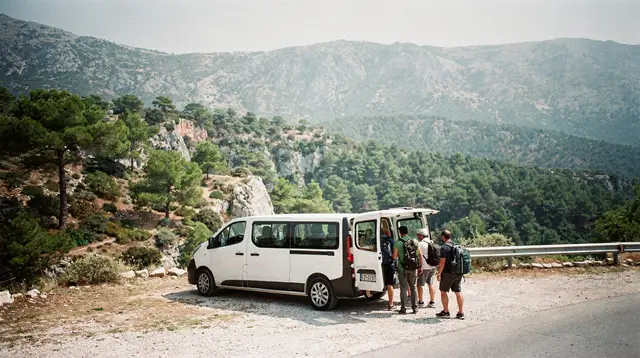
GetYourGuide does not provide a product photo for this activity — the image shows the meeting point, photographed by us.