Scuba Diving in Alanya: Discovery Dives vs Certified Diving
What's the difference between a discovery dive and certified diving in Alanya?
A discovery (or 'baptism') dive is a short, instructor-led introduction for complete beginners, typically one dive to shallow depth with full gear provided and no certification required. Certified diving in Alanya is for divers already holding a recognised qualification (like PADI Open Water), giving access to deeper reefs, wrecks and multi-dive boat trips with less hand-holding from the crew.
Two very different dives, one stretch of coast
The water along the Alanya coastline looks the same from the beach whether you’ve never put your face underwater or you’re a certified diver with dozens of logged dives — but the experience of getting into it is not the same at all. Alanya’s dive operators run two distinct kinds of trip: a short, closely supervised “discovery” or “baptism” dive built for absolute beginners, and full diving trips for people who already hold a recognised certification. Booking the wrong one for your experience level either wastes money on capability you don’t need, or leaves an experienced diver stuck in shallow water going through a beginner’s briefing they don’t need to hear.
This guide separates the two paths clearly: what a discovery dive actually involves, what certified diving adds, the gear and prerequisites for each, and which sites near Alanya suit which level, so you can book the right trip the first time.
Discovery dives: scuba diving with zero experience
A discovery dive — sometimes marketed as a “baptism dive” or “try dive” — is designed for people who have never used scuba equipment before and hold no certification at all. The format is built around close, constant supervision: an instructor stays within arm’s reach for the entire underwater portion, manages your buoyancy and equipment, and keeps the dive shallow and short.
A typical structure looks like this:
| Stage | What happens |
|---|---|
| Pickup | Hotel or meeting-point pickup, transfer to the dive centre or boat |
| Briefing | 20-30 minutes covering hand signals, breathing through a regulator, equalising ear pressure |
| Equipment fitting | Wetsuit, mask, fins, buoyancy vest and tank fitted and checked |
| Confined check | A few minutes in shallow water or off the boat’s platform to get comfortable |
| The dive | One supervised dive, typically 20-30 minutes, at shallow depth |
| Afterward | Surface interval, often lunch, return transfer |
No swimming certification or prior diving knowledge is required, though most operators expect you to be a reasonably confident swimmer and in general good health — some ask a few basic medical questions before you go in, and certain conditions (recent ear surgery, uncontrolled asthma, some heart conditions) can rule a discovery dive out, so it’s worth checking with the operator ahead of time if you have any concerns.
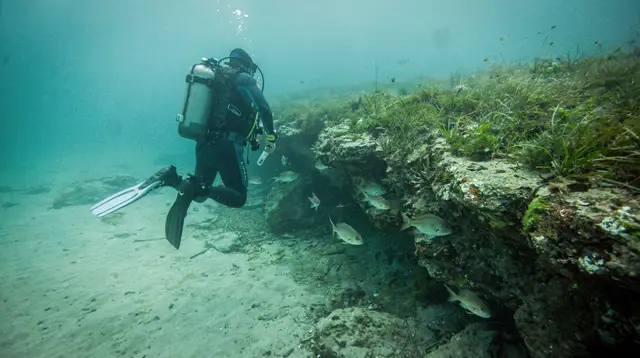
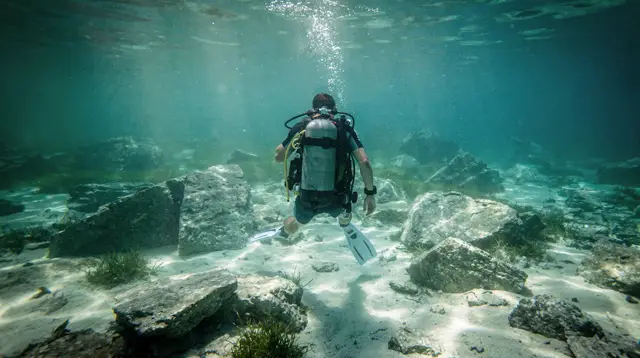
Depth on a discovery dive is deliberately conservative, generally staying in shallow water where light, visibility and the instructor’s ability to react are all at their best. It’s enough to see fish, rock formations and the different feel of moving underwater without any of the buoyancy or navigation skills a certified dive assumes you already have.
For a first-timer travelling with a group that includes both total beginners and confident swimmers, a discovery dive is also a reasonable way to test whether scuba diving is something worth pursuing further with a full certification course back home.
Book a beginner-friendly scuba diving experience with lunch includedCertified diving: what changes once you’re qualified
Certified diving trips are built for people who already hold a recognised open-water qualification — PADI Open Water, SSI Open Water, or an equivalent CMAS-recognised certification — and have logged at least a handful of dives. The structure is noticeably lighter on hand-holding: instead of one instructor managing every beginner’s equipment individually, a certified trip runs more like a standard dive-boat outing, often with two dives rather than one.
What a certified trip generally includes that a discovery dive doesn’t:
- Deeper sites. Certified divers can typically go deeper than the shallow zone used for discovery dives, opening up different rock formations, small swim-throughs and a wider range of marine life depending on the site.
- Two dives instead of one. Many certified packages build in a surface interval and a second dive at a different site or depth, rather than a single supervised dip.
- Less individual supervision. The crew still dives with you and checks in regularly, but certified divers are expected to manage their own buoyancy, air consumption and basic navigation.
- Bring your own gear if you prefer. Certified divers often bring a personal mask, dive computer or fins rather than using only centre-provided kit, though full equipment rental is still available.
What to bring: your certification card (a physical card or a reliable digital copy), your logbook if you have one — especially useful if it’s been a while since your last dive, as some operators will ask about recent diving experience before booking you onto a deeper site — and any personal gear you’d rather dive with than rent.
Check availability for a certified two-dive trip with pickup and lunchComparing the two at a glance
| Discovery dive | Certified diving | |
|---|---|---|
| Certification required | None | Recognised open-water certification |
| Typical dives | 1 | Often 2 |
| Typical depth | Shallow (roughly 5-12m) | Deeper (often 18-30m depending on level) |
| Supervision | Instructor with you at all times | Standard buddy/crew supervision |
| Equipment | Fully provided, fitted by staff | Provided or bring your own |
| Best for | First-timers, curious travellers, families | Divers with a card and some logged dives |
| Typical inclusions | Pickup, briefing, gear, lunch | Pickup, gear, two dives, lunch |
If you’re travelling with a mixed group — some certified divers, some complete beginners — it’s worth checking with the operator whether a single boat trip can accommodate both levels at once, since many Alanya dive centres run mixed-level boats with separate instructors handling each group.
See the full scuba diving experience with lunch and transfer includedWhat the water and sites are actually like
Alanya’s coastline mixes rocky coves, small caves and sandy patches along a Mediterranean shoreline that stays warm through summer — sea temperatures commonly sit around 25-28°C in July and August, cooling off outside the main season. Visibility varies with weather and time of year but is generally good for a Mediterranean destination, favouring calmer mornings.
Discovery dives tend to stick to sheltered, shallow bays close to shore or just off the boat, chosen specifically for calm conditions and easy access rather than dramatic scenery. Certified trips range further, often taking in small rock formations, drop-offs and occasional wreck or reef sites further from shore where depth and current make more sense for divers already comfortable managing their own buoyancy.
Neither type of trip in Alanya typically involves cave diving or technical wreck penetration — this is recreational, open-water diving on both counts, just at different depths and with different levels of supervision.
What you might see underwater
Marine life along this stretch of the Mediterranean is generally modest compared to tropical diving destinations — there’s no coral reef here, and the appeal is more about clear water, rock formations and a relaxed introduction (or return) to diving than a dense concentration of exotic species. Expect schools of small fish moving around rocky outcrops, occasional larger fish in deeper water, sea urchins and starfish tucked into crevices, and the interplay of light through clear water on sunny days. Certified divers going deeper sometimes encounter more varied terrain — small swim-throughs, ridges and drop-offs — simply because those features tend to sit below the shallow zone used for discovery dives.
Set expectations accordingly: this is a good introduction to diving or a pleasant recreational trip for certified divers already in the area, rather than a bucket-list destination for serious marine-life spotting. Divers who’ve done tropical diving elsewhere sometimes find the Mediterranean quieter in comparison, while first-timers with no reference point tend to simply enjoy being underwater at all.
How to choose between the two if you’re not sure
If you’ve never dived before, the discovery dive is the only realistic option — certified trips require proof of qualification, and operators won’t take an uncertified diver to depth. The more common dilemma is for people who did a certification course years ago and haven’t dived since: in that case, most operators will still accept a valid certification card regardless of how long ago it was issued, though some may ease you in with a shallower first dive or a quick refresher briefing before a deeper second dive, especially if your logbook shows a long gap. Being upfront about how recently you’ve dived, rather than overstating your comfort level, generally gets you a better-matched trip and a more relaxed dive.
Families travelling with children face a related question: many discovery dive operators set a minimum age, so it’s worth checking a specific listing’s age requirements before booking rather than assuming a young child can join. Teenagers and adults with no experience are the core audience for discovery dives, and mixed-age groups can often be split between a discovery boat and a certified boat departing around the same time.
Combining diving with the rest of an Alanya trip
Diving usually fills half a day, morning or afternoon depending on the operator, which leaves the rest of the day free for Alanya Castle and the beach directly below it, Cleopatra Beach, or a boat trip along the coast to see sea caves from the water rather than under it. If you’d rather stay on the surface, an Alanya jet ski adventure or a thrilling ringo ride covers the adrenaline angle without any certification or briefing required.
Add a jet ski adventure for the rest of the day on the waterTravellers based further along the coast, in Side or Kemer, can usually still book an Alanya-based diving trip with pickup included — worth checking the specific listing’s pickup zones before booking, since not every operator covers every town.
For a broader look at what else fills a day around Alanya beyond the water, the Alanya day trips guide and the Alanya boat trips guide both cover options that pair naturally with a half-day dive. Families weighing up water activities against the castle and canyons might also find the things to do in Alanya overview useful for balancing a week’s itinerary. Divers curious about how Alanya compares to diving further along the coast can check Side scuba diving for a nearby alternative with its own set of sites.
Booking tips for either option
- Book a day or two ahead in peak summer. July and August fill up fast, particularly for smaller boats running certified two-dive trips.
- Mention any medical conditions when booking, not on the boat — operators can often accommodate concerns with advance notice that become harder to resolve on the day.
- Confirm pickup times and zones before paying, since hotel pickup radius varies between operators and areas like Gazipaşa sit further out than central Alanya.
- Bring your certification card physically or as a reliable digital copy if you’re booking a certified trip — some centres are strict about seeing it before deeper dives.
- Pack reef-safe sunscreen and a change of clothes, since most of the day is spent in and around salt water with limited shade on smaller boats.
Frequently asked questions about scuba diving in Alanya
Do I need to know how to swim to try scuba diving in Alanya?
Yes, basic swimming ability is normally required even for a discovery dive, since operators need to know you’re comfortable in water before fitting equipment and briefing you underwater. You don’t need to be a strong swimmer, but most dive centres will ask directly before booking.
What’s included in a beginner scuba diving experience near Alanya?
A typical beginner package includes hotel pickup and drop-off, a short theory and safety briefing, full equipment (wetsuit, tank, regulator, mask, fins), one supervised dive to shallow depth with an instructor, and usually lunch on the boat or at the dive centre afterward.
Can I go scuba diving in Alanya without any certification?
Yes. Discovery or introductory dives are designed for people with zero diving experience and no certification, since a qualified instructor stays with you throughout and manages the equipment and dive plan. These trips don’t lead to a certification themselves, but some operators offer them as a taster before a full course.
What certification do I need for a full diving trip in Alanya?
Most dive centres accept any recognised open-water level certification, such as PADI Open Water, SSI Open Water, or an equivalent CMAS qualification, along with proof of your last logged dive if it’s been a while. Bring your certification card and logbook if you have one, since some centres ask to see it before letting you dive deeper sites.
How deep do beginner dives go compared to certified dives around Alanya?
Discovery dives for beginners are usually kept shallow, often in the region of 5 to 12 metres, to stay well within comfortable and safe limits for someone diving for the first time. Certified divers can typically go deeper, depending on their certification level, often into the 18 to 30 metre range at local sites, giving access to different rock formations and marine life.
Is lunch included on Alanya scuba diving trips?
Many Alanya diving day trips, including both discovery and certified options, include lunch as part of the package, usually served on the boat or back at the dive centre after diving. It’s worth checking the specific listing, since inclusions vary between operators and seasons.
What should I bring on a scuba diving trip in Alanya?
Bring swimwear worn under your clothes, a towel, sun protection, and a change of clothes for afterward, since equipment (wetsuit, mask, fins, tank) is normally provided. Certified divers should also bring their certification card, logbook, and any personal gear they prefer to dive with, such as their own mask or dive computer.
Scuba Diving and Snorkelling
Verified deep-linked GetYourGuide tours. Book through these links and we earn a small commission at no cost to you.
GetYourGuide does not provide a product photo for this activity — the image shows the meeting point, photographed by us.