Scuba Diving in Manavgat: Try-Dive vs Certified Diving
What's the difference between a try-dive and certified diving near Manavgat?
A try-dive (Discover Scuba Diving) needs no certification or experience — an instructor briefs and accompanies you for a shallow dive, usually 6-12m. Certified diving requires a recognised card (Open Water or above) and lets you dive deeper reef and wreck sites, typically 12-30m, with a buddy or dive guide rather than hands-on instruction.
The Manavgat and Side coastline sits on a stretch of clear, relatively calm Mediterranean water that has become one of the busier diving bases on Turkey’s Turquoise Coast. What makes it slightly confusing to book is that “scuba diving in Manavgat” actually covers two quite different products aimed at two quite different travellers — and picking the wrong one wastes both money and a day of your trip.
Two different experiences, one region
The first is the try-dive, sometimes called Discover Scuba Diving. It needs no prior experience, no certification card, and often no more than the ability to feel comfortable in water. An instructor handles the equipment, briefs you on land or in shallow water, and stays within arm’s reach for the entire dive.
The second is certified diving — booked by people who already hold a recognised open-water qualification. These trips assume you know how to manage your own buoyancy, clear a mask, and read basic dive signals, and they reward that experience with access to deeper, more varied sites than a try-dive ever reaches.
Both are sold as day trips from the Manavgat and Side area, both usually include hotel transfer, and both use the same stretch of coast — which is exactly why it’s easy to book the wrong one by accident. The rest of this guide breaks down the practical differences so you can match the trip to your actual experience level.
Try-dives: who they’re for and what to expect
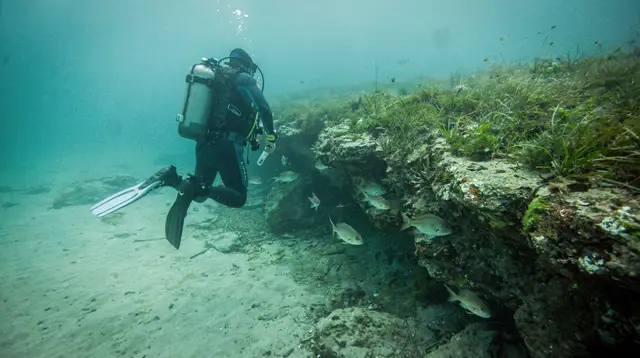
A try-dive is built for total beginners. You don’t need to have ever put on a mask before. A typical session runs like this: a short briefing on land covering hand signals, breathing through a regulator, and equalising pressure in your ears; a shallow confidence dip, often in a pool or very calm bay; then the dive itself, usually in the 6-12m range, with the instructor holding or guiding you the whole time.
Because the instructor is doing most of the active management — buoyancy, depth control, navigation — a try-dive is less physically demanding than it sounds. The main things operators ask of you are basic swimming comfort and a willingness to breathe calmly underwater, which for some first-timers takes a few minutes of getting used to.
What a try-dive is not: it isn’t a certification. You won’t come away with a card that lets you dive independently elsewhere, and you won’t be diving unsupervised. If you enjoy it and want to go further, most dive centres offer a route into a full Open Water course, which typically spans a few days rather than a single afternoon.
Sites used for try-dives tend to be sheltered, shallow, and forgiving — reef edges, calm bays, and areas with minimal current. The [Side/Manavgat Scuba Diving Course with Hotel Transfer](a beginner-friendly try-dive package with pickup included) is built around exactly this profile: no experience required, instructor-led throughout, hotel transfer bundled in.
Certified diving: what you need and where it goes
If you already hold an Open Water certification (PADI, SSI, or an equivalent recognised agency), the calculus changes. Dive centres will generally ask to see your certification card and log dives — if it’s been more than a year or two since your last dive, expect a short refresher or a supervised check-out dive before you’re taken to the more interesting sites.
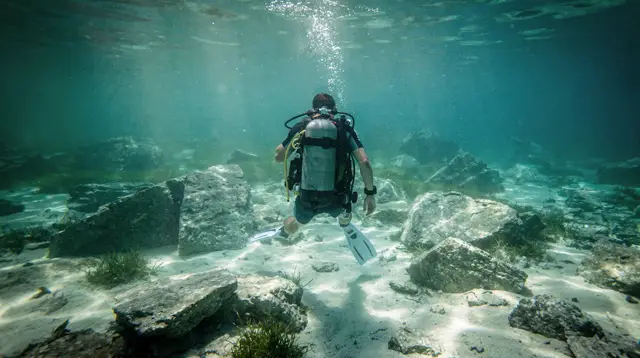
Certified dives near Manavgat and Side reach deeper and more varied terrain than try-dives: reef walls, drop-offs, and occasionally wreck-adjacent structure, generally in the 12-25m range depending on your certification level and the site. Advanced-certified divers and those with more logged dives get access to a wider set of options, including some of the deeper or current-exposed sites that aren’t offered to first-timers at all.
One distinctive certified-level option in the area is the [Side Underwater Museum](a guided dive around a submerged sculpture site near Side) — an open-air, underwater display of sculptures and artefacts arranged on the seabed. It’s a striking dive precisely because it isn’t just reef and rock, but check the experience level the operator requires before booking, since some runs of this dive assume prior diving comfort rather than treating it as a first dive.
For a broader look at the coast without going underwater at all, the [Side/Manavgat Boat Tours](a day out on the water along the Side and Manavgat coastline) option is worth considering as a non-diving add-on for travel companions who’d rather stay on deck.
Try-dive vs certified diving, side by side
| Try-dive (Discover Scuba) | Certified diving | |
|---|---|---|
| Certification needed | None | Open Water or equivalent |
| Typical depth | 6-12m | 12-25m (deeper for advanced divers) |
| Supervision | Instructor stays with you throughout | Buddy or dive guide, more independence |
| Duration on the day | Half-day, one or two dives | Half or full day, one to three dives |
| Sites accessible | Sheltered bays, shallow reef | Reef walls, drop-offs, specialty sites |
| Comes with a qualification? | No | You already have one |
| Best for | First-timers, curious non-divers | Divers with a card who want new sites |
How to choose
If you’ve never dived before and simply want to know what it feels like to breathe underwater, book a try-dive. It’s lower-commitment, requires no paperwork beyond a health questionnaire, and the instructor does the technical work for you. If diving turns out to be something you want to pursue, ask the same operator about a full certification course rather than repeating try-dives on future trips — the course builds toward independence, where a try-dive is capped at the same supervised, shallow experience each time.
If you already hold a certification card, skip the try-dive products entirely — they’re priced and structured for beginners and won’t take you anywhere near the depth or sites you’re qualified for. Bring your card and logbook, be upfront about how long it’s been since your last dive, and let the dive centre match you to a site appropriate to your level, especially for anything beyond standard Open Water depths.
Families travelling together often end up with a mix: a non-diving parent or child joins a [boat tour](a coastal boat day that doesn’t require diving) while a certified diver in the group books separately, or younger teens do a shallow pool-based try session while adults do an open-water dive. Most operators along this stretch of coast are used to arranging exactly that kind of split booking — it’s worth asking directly rather than assuming everyone in your group has to book the same product.
Planning the day: transfers, timing, and what to pack
Nearly all diving day trips from this area include hotel pickup and drop-off, covering a wide stretch of coast that typically spans Side, Belek, and parts of the wider Manavgat and Alanya region — but zones vary by operator, so confirm your specific hotel is covered before you book rather than after.
A typical day runs a half-day format: morning pickup, a briefing at the dive centre or boat, one or two dives with a surface interval between them, and return transfer by early-to-mid afternoon, leaving the rest of the day free. Some certified-diver trips run closer to a full day if they include a longer boat transit to a specific site.
Pack a swimsuit worn under your clothes, a towel, sun protection (reef-safe sunscreen where available), and a change of dry clothes for the ride back. Equipment — wetsuit, mask, fins, tank, and regulator — is provided as standard by the operator for both try-dives and certified dives. Certified divers should bring their own certification card and logbook; without it, most centres will treat you as a first-timer and restrict you to try-dive depths regardless of your actual experience.
For those staying further along the coast and considering a diving day trip from Kemer instead, a comparable structure exists there too — see the [Kemer: Scuba Diving Experience with Boat Trip Hotel Pickup](a similar boat-based diving day out from the Kemer coast) option, useful if Manavgat/Side transfer zones don’t reach your hotel.
Beyond diving: other ways to see the water near Manavgat
Diving isn’t the only way to experience this coastline’s water. The Manavgat River: Boat Tour Waterfall Visit and Green Canyon Boat Tour both cover freshwater scenery rather than the open Mediterranean, and pair well with a beach day at nearby Side if you want to break up a trip that otherwise centres on the coast.
For travellers building a longer itinerary around this part of the coast, see the four-day Side, Manavgat, and canyons itinerary, which slots a diving day alongside canyon and waterfall visits, or the broader best beaches on the Antalya coast guide for where to base yourself between dives.
Diving elsewhere on this stretch of coast
Manavgat and Side aren’t the only diving bases on this coast, and if your hotel sits somewhere else, or you’re building a longer trip around the region, it’s worth knowing what the alternatives look like before you commit to a transfer zone.
Alanya, further east along the coast, runs a similar split between beginner and certified diving to Manavgat and Side. The Alanya: Scuba Diving for Beginners Certified Divers option covers both experience levels from one base, and the Alanya scuba diving guide breaks down the local sites in more detail, including trips departing near Cleopatra Beach.
Closer to Antalya itself, both the city and the Kemer coast run their own dive operations, which can be worth considering if you’d rather dive close to your hotel than transfer out to Manavgat or Side. The Antalya: Scuba Diving at Mediterranean Sea 2 Dives with Lunch trip covers two dives with lunch included; the Kemer scuba diving guide and Antalya scuba diving guide cover what else is on offer along that part of the coast.
Further along the Lycian coast, Kaş is another established diving base, generally set up for both beginners and certified divers rather than one or the other. The Kaş scuba diving guide covers it in more detail, and the Kaş: Scuba Diving with Beginner Expert Options trip runs both levels from the same base. It’s a longer transfer from Manavgat, so it makes more sense as part of a trip based around Kaş or Kalkan than as an add-on to a Side or Manavgat stay.
Getting to the dive centre
Most Manavgat and Side diving operators handle hotel pickup directly as part of the booking, so you generally don’t need to arrange your own transport to the dive centre or harbour. See getting around the Antalya coast for the wider picture if you’re combining a diving day with other excursions that don’t include transfer.
If you’re planning several activity days around Manavgat, the Manavgat day trips guide rounds up how a diving day fits alongside the area’s other excursions — canyon boat tours, waterfall visits, and ancient sites — so you can space out a dive day against days that involve more walking or sun exposure rather than stacking them back to back.
Manavgat scuba diving: frequently asked questions
Do I need to know how to swim to try scuba diving in Manavgat?
Most operators ask for basic swimming ability and comfort in water, but you don’t need to be a strong swimmer. You won’t be certified to dive independently afterwards — a try-dive is a one-off supervised experience, not a qualification.
What certification do I need for certified dives near Manavgat?
A recognised open-water certification such as PADI or SSI Open Water Diver (or equivalent) is the minimum most dive centres accept, along with proof of a dive within the last 12-24 months or a short refresher if it’s been longer.
How deep do beginner try-dives go compared to certified dives?
Try-dives are typically kept shallow, around 6-12m, for safety and comfort. Certified divers with an Open Water card can generally go to about 18m, with Advanced-level divers and instructors accessing sites down to 25-30m.
Is there an age or health restriction for diving in the Manavgat area?
Most operators set a minimum age (commonly around 10-12 for supervised try-dives, younger in a pool setting) and ask divers to declare relevant medical conditions on a standard health questionnaire; certain conditions may require a doctor’s sign-off. Check with the operator directly if you have concerns.
Can I dive if I have a hotel in Belek, Side, or Alanya rather than Manavgat itself?
Yes — most Manavgat-area dive trips include hotel pickup from a wide stretch of coast, commonly covering Side, Belek, and parts of the Manavgat and Alanya region. Confirm your specific hotel is inside the pickup zone before booking.
What’s the Side Underwater Museum, and is it a dive site?
It’s a submerged open-air museum-style dive site near Side with placed sculptures and artefacts on the seabed, generally visited as a guided scuba exploration rather than a beginner try-dive, so check the experience level required before booking.
What should I bring on a diving day trip from Manavgat?
A swimsuit worn under your clothes, a towel, sun protection, and a change of clothes for afterwards. Dive gear (wetsuit, mask, fins, tank, regulator) is provided by the operator; bring your own certification card and logbook if you’re diving as a certified diver.
Scuba Diving and Snorkelling
Verified deep-linked GetYourGuide tours. Book through these links and we earn a small commission at no cost to you.
GetYourGuide does not provide a product photo for this activity — the image shows the meeting point, photographed by us.