Two sites, one stop on the coast road
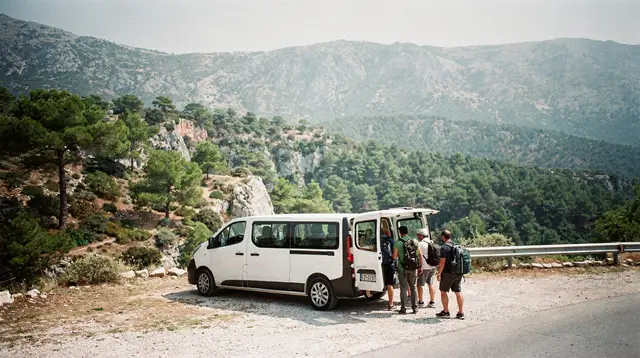
Most visitors reach Myra and Demre the same way: driving, or being driven, along the coastal road between Antalya and Kaş, roughly two to two and a half hours each way from the city and closer to 45 minutes from Kaş itself. That geography matters for planning — Myra and Demre are not a resort base with hotels lining a beach, they are a stopover destination, usually paired with Kekova on a full-day itinerary, or slotted into a longer drive down the Lycian coast toward Patara and Kaputaş.
The name confusion is worth clearing up before anything else. Myra is the ancient Lycian and Roman city: a cliff face pitted with rock-cut tombs and, below it, a well-preserved Roman theatre. Demre is the present-day town built over and around the old city’s harbour district, and it’s where the Church of St Nicholas stands. They are two separate ticketed sites a short walk or a few minutes’ drive apart, not one combined attraction, and treating them as interchangeable is the single most common mix-up travellers make when researching this stop.
Myra: the rock tombs and the Roman theatre
The rock tombs are what most photographs of Myra show: dozens of house-shaped and temple-shaped facades carved directly into a sheer limestone cliff, dating back to the Lycian civilisation that predates Roman rule on this coast. Lycians carved tombs into rock faces across the region — similar necropolises appear near other ancient cities along the coast — but Myra’s cliff is one of the largest and most photogenic concentrations, with carved columns, pediments and decorative details still legible despite roughly two and a half thousand years of weathering.
Below the cliff, Myra’s Roman theatre sits close enough to the tombs that both are covered by a single ticket and a single short walk. The theatre was damaged by an earthquake in antiquity and rebuilt, and while it’s smaller and less complete than Aspendos further along the coast, its setting — stone tiers facing the tomb-covered cliff — is what makes the site worth the stop. Carved theatrical masks and decorative fragments are scattered around the seating, some collapsed, some still in place.
Myra’s site is compact enough to walk in under an hour, though archaeology fans and photographers often stay longer. There’s limited shade, so a hat and water matter more here than at forested sites like Termessos.
Two distinct tomb styles are worth looking for once inside: house-type tombs, carved to resemble timber-framed Lycian dwellings right down to beam ends and door panels, and temple-type tombs with columned facades imitating a small shrine. Some of the higher tombs still carry traces of painted relief work, though most colour has long since weathered away.
A raised walkway runs along the base of the cliff, giving a closer view of the lower rows of facades than is possible from the theatre seating below, where the full sweep of the necropolis is best appreciated from a distance. Guides on organised tours typically point out which tombs belonged to prominent Lycian families based on the scale and decoration of the facade, since Myra was one of the six leading cities of the ancient Lycian League.
Demre and the Church of St Nicholas
A few minutes away by road, in the centre of modern Demre, stands the Church of St Nicholas — a separate, separately ticketed site from Myra itself. The church marks the town associated with the historical bishop whose life and legendary generosity fed into the Santa Claus tradition celebrated internationally. The building seen today is a Byzantine-era church built over an earlier structure, restored across several periods, with mosaic floor fragments, frescoed sections and a sarcophagus associated with the saint inside.
It’s a modest building rather than a grand cathedral, and it draws a steady stream of visitors specifically for the St Nicholas connection — worth knowing if travelling with children curious about the “real” story behind the modern figure. Demre itself is a workaday agricultural town, known regionally for greenhouse tomato production, so beyond the church and a scattering of cafés near the site entrance, it isn’t set up as a resort destination.
That agricultural backdrop is part of what makes Demre feel different from the resort towns further along the coast: rows of plastic greenhouses cover much of the flat coastal plain around the town, growing tomatoes and other produce year-round thanks to the mild Mediterranean winter. It’s not a scenic detail travel brochures dwell on, but it explains why Demre reads as a working town rather than a holiday village even with a major pilgrimage-style attraction at its centre. Visitors expecting a polished tourist quarter around the church are sometimes surprised by how modest the surrounding streets are — which, for travellers who prefer their historic sites without a manufactured resort feel, is part of the appeal.
Myra and Demre versus Kekova
Because the drive out from Antalya or Kemer takes a couple of hours regardless, almost every guided option pairs Myra and Demre with a boat trip to nearby Kekova, where parts of a sunken ancient settlement are visible through clear water from the boat — swimming directly over the submerged ruins is prohibited to protect the site, so this is a viewing trip, not a snorkelling one. A one-day tour combining the rock tombs, the church and a Kekova boat leg is the standard way most visitors experience this stretch of coast, since none of the three sites individually justifies the full drive on its own.
a one-day trip from Alanya covering Myra’s rock tombs, Demre’s church and a Kekova boat leg and a private guided tour from Antalya to Demre, Myra and Kekova both follow this same combined format, with a private vehicle generally offering more flexibility on timing than a shared coach.
How to plan the visit
| Option | Starting point | What’s typically included |
|---|---|---|
| Guided day trip | Antalya, Kemer or Alanya | Rock tombs, church, Kekova boat leg, lunch |
| Private tour | Antalya | Same sites, flexible pace, often hotel pickup |
| Self-drive stop | En route to Kaş/Kalkan | Myra and church only, on your own schedule |
| Off-road add-on | From Demre | Rural back-country sites beyond the coast road |
Travellers already basing themselves in Kaş or Kalkan are closest to Myra and Demre and can visit independently without a full-day tour, driving in for a couple of hours and continuing on. Those coming from Antalya, Kemer, Belek or further east are generally better served by a guided day trip, since the drive alone eats up most of a self-planned day.
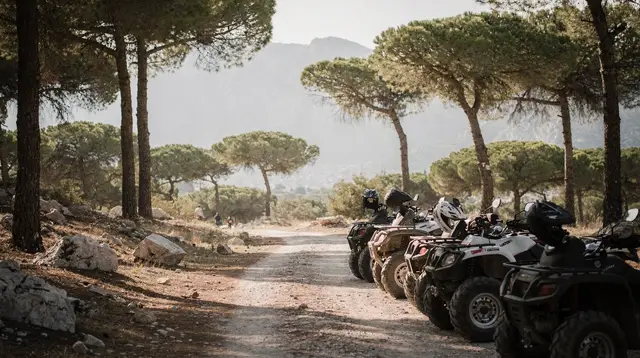
For travellers wanting to go further off the coast road, a private off-road drive from Demre into the rural interior toward Beloren and Alakilise reaches smaller, far less visited ruins and mountain villages inland — a different pace from the coastal sites, aimed at travellers who’ve already seen the main attractions and want something quieter.
Combining the stop with the wider Lycian coast
Because Myra and Demre sit roughly midway between Kekova and the resort towns further east, they fit naturally into a longer Lycian coast itinerary rather than standing as a destination of their own. A typical multi-day route runs from Kemer or Antalya down through Olympos and the Chimaera, on to Demre and Myra, then Kekova, Kaş, Kalkan, Kaputaş beach and Patara — a coastline that shifts from busy resort strip to a quieter, more scenic and more winding drive the further west it goes.
For sea-kayaking rather than a standard boat tour, a guided sea-kayaking trip from Demre over the sunken city at Kekova is a more active alternative to the usual glass-bottom boat, paddling directly above the submerged ruins rather than viewing them from a larger vessel.
Choosing a Kekova boat option from Demre
Boats to Kekova generally leave from Demre’s harbour area or from the small village of Kaleköy further along the bay, and there’s enough variety in format that it’s worth matching the option to how the rest of the day is planned. a full-day boat trip from Demre out to Kekova is the standard option for travellers who’ve already covered the rock tombs and church independently and just need the water portion of the day.
For a more relaxed pace with time built in for swimming stops along the way, a Kekova boat trip from Demre with swimming stops around the sunken city breaks up the sightseeing with time in the water at coves along the route, rather than a straight there-and-back run.
Travellers who’d rather see Kekova without the heat of the day, or who are staying nearby, can look at an evening speedboat transfer to Kaleköy with free time at the village, which trades the full-day format for a shorter, cooler outing with time to explore Kaleköy itself — a small waterside village overlooked by a Byzantine castle, sitting right on the edge of the sunken-city area.
For groups wanting a more private, faster boat rather than a shared tour, a private speedboat tour from Demre to Kekova Island and the sunken city covers the same sights on a smaller vessel and its own schedule. And for travellers who want the rock tombs, church and boat leg bundled with lunch in a single booking, a combined Kekova, Myra and Demre tour from Antalya with lunch and a boat trip covers the whole stop in one organised day.
Practical notes
Both Myra’s rock tombs/theatre and the Church of St Nicholas charge separate entry fees; there is no single combined ticket covering both, so budget for two admissions if visiting independently rather than on an all-inclusive tour. Lira prices for entry tickets change frequently given persistent inflation in Turkey, so treat any specific figure as a dated snapshot and check current pricing before travelling rather than relying on an old number.
There is limited shade at the Myra tomb site and no full shade at the theatre, so visiting in the cooler morning hours is more comfortable in peak summer. The Church of St Nicholas, being an indoor building, is a reasonable midday option when the outdoor sites feel too hot. Demre itself has only modest tourist infrastructure — a handful of cafés and souvenir stalls near the church — so this is not a stop to plan a leisurely lunch or extended browsing around, unlike a full resort town such as Side or Kalkan.
Driving times along this stretch run longer than a straight-line map suggests, since the coast road winds along cliffs and inlets rather than running flat and direct — factor extra time into any self-drive plan, particularly toward Kaş and beyond.
Parking near both sites is generally straightforward outside peak midday hours in high season, when tour coaches cluster around the Myra car park and the streets near the church. Independent drivers who can visit earlier or later in the day tend to have an easier time than those arriving between late morning and early afternoon, when most guided day trips converge on the same two sites at once.
Myra and Demre: frequently asked questions
Are Myra and Demre the same site?
No. Myra is the ancient site with rock-cut Lycian tombs and a Roman theatre; Demre is the modern town next to it, home to the Church of St Nicholas. They are separate, separately ticketed attractions a short distance apart, usually visited together on the same stop.
How far is Myra and Demre from Antalya?
Roughly 150-160 km, about two to two and a half hours’ drive along the coastal road, longer in peak summer traffic. Travellers based in Kaş or Kalkan are much closer, at around 40-45 minutes.
Do I need separate tickets for the rock tombs and the church?
Yes. The Myra archaeological site (rock tombs and theatre) and the Church of St Nicholas in Demre charge separate entry fees; there is no combined ticket covering both.
Is Myra connected to the Santa Claus story?
The connection is through Demre, not Myra’s ruins directly. The historical Bishop Nicholas, whose life fed into the Santa Claus legend, is associated with this town, and the Church of St Nicholas in Demre marks that link.
Can Myra and Demre be visited without a guided tour?
Yes, if self-driving or based in Kaş or Kalkan — both sites can be visited independently in a couple of hours. Travellers coming from Antalya, Kemer or Alanya are usually better served by a guided day trip, since the round-trip drive alone takes most of a day.
Is Myra and Demre worth visiting on its own, without Kekova?
It can be, especially for travellers already passing through on a self-drive itinerary toward Kaş. Most organised tours from further afield pair it with a Kekova boat trip, since the drive time is the same either way and Kekova adds a very different, on-the-water experience.
How long should I spend at Myra and Demre?
Around half a day covers both the rock tombs/theatre and the church comfortably, including travel time between the two. Add a Kekova boat leg and the stop becomes a full day.
What should I wear or bring to visit the Church of St Nicholas?
As an active place of some religious significance, modest dress — shoulders and knees covered — is appropriate, along with comfortable shoes for the uneven ground at the Myra ruins nearby.
Where do Kekova boats leave from — Demre or Kaleköy?
Both. Some boat trips depart directly from Demre’s harbour area, while others leave from Kaleköy, the small village on the bay closer to the sunken-city area itself. Which one applies depends on the specific tour booked, so check the departure point listed for each option.