A fire that has never gone out
On a dark, pine-covered slope of Mount Olympos, a few kilometres inland from the village of Çıralı, dozens of small flames flicker directly out of bare rock. There is no crater, no lava, and no smoke plume — just fire coming straight out of cracks in the stone, spread across an open patch of hillside roughly the size of a football pitch. It has been burning, by most accounts, for thousands of years, and it is one of the more genuinely strange sights on the Kemer coast.
The name Chimaera comes from Greek mythology, where a fire-breathing hybrid creature — part lion, part goat, part serpent — was said to live on this mountainside. Ancient sailors reportedly used the flames as a navigation marker, and the myth almost certainly grew up around a phenomenon people couldn’t otherwise explain. In Turkish, the site is called Yanartaş, which translates literally as “burning rock” — a much plainer, and more accurate, description of what you’re actually looking at.
What’s actually causing this — and what isn’t
This is the point worth getting right before anything else: the Chimaera is not a volcano, and it is not volcanic activity. Antalya province has no active volcano, and the flames have nothing to do with magma or a fault line erupting. What’s actually happening is far simpler and, in its own way, more interesting.
Gas — mostly methane, with smaller amounts of other flammable gases — seeps up continuously through fissures in the ultramafic rock of the mountainside. Geologists believe it forms through a process where certain minerals in the rock react with water at depth, releasing hydrogen and methane that then migrate upward through cracks. Where that gas reaches the surface and meets oxygen in the air, it ignites and keeps burning as long as the gas keeps flowing. It’s a genuinely rare geological setup — there are only a handful of comparable sites anywhere in the world — which is part of why the Chimaera draws visitors well beyond anyone with a specific interest in Greek mythology.
Because it’s a slow, steady seep rather than a single vent, the flames aren’t one central fire. They come up in scattered points across the rock — some just centimetres high, others knee height — and you can walk between them, feel the heat, and (carefully) light a stick or roast a marshmallow over one if you’re that way inclined. Older guidebooks and local lore sometimes describe the flames as unquenchable, in the sense that pouring water on one patch just sees it reignite, or flare up again nearby, since the gas is still escaping from the rock underneath.
Getting there and the walk in
The Chimaera sits above Çıralı, a quiet beach village that is itself part of the same cluster of sights as Olympos — the two share a road, a river valley, and a broad sweep of protected coastline. From Antalya, the drive is roughly 80-90 km and takes around 1.5-2 hours by car, longer if you’re relying on a combination of dolmuş (minibus) connections rather than a rental car or private transfer. From Kemer, it’s a shorter run, closer to 40-50 minutes.
There’s a signposted car park at the base of the path, with a small ticket booth (entry is a modest paid fee) and usually a few snack stalls. From there, the walk up to the flames is around 20-30 minutes on a gently rising, well-marked gravel and stone path through pine forest — not technically difficult, but uneven enough underfoot that flat sandals aren’t ideal. Sturdy sandals or trainers, and a torch or phone flashlight if you’re going after dark, make the walk noticeably easier. There are a few benches along the way if you need to catch your breath, and the gradient stays gentle rather than turning into a proper climb.
Why dusk and night are the best time to go
You can visit the Chimaera at any hour — the flames burn continuously, day and night, in every season — but the visual impact changes enormously with the light. In full daylight, the flames are still there, but they read as faint, almost transparent shimmers against bright rock, and it’s easy to walk right past a small one without noticing. After sunset, the same flames become sharp, clear points of orange light scattered across the dark hillside, and the whole site takes on a very different character — quieter, more atmospheric, and considerably more photogenic.
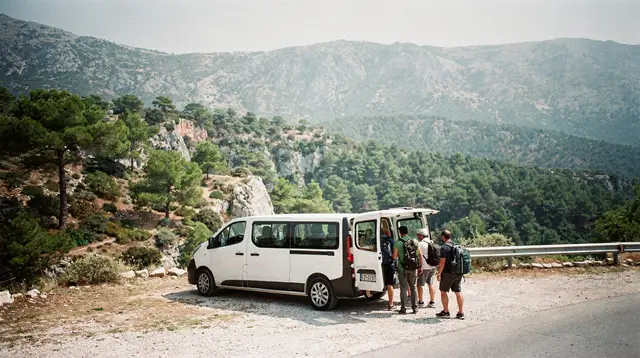
Most organised tours and jeep safaris that include the Chimaera are timed deliberately to arrive around dusk or after dark for exactly this reason. If you’re driving yourself, aim to reach the car park in the last hour of daylight, so you do the walk up while there’s still some ambient light and reach the flames as it gets properly dark.
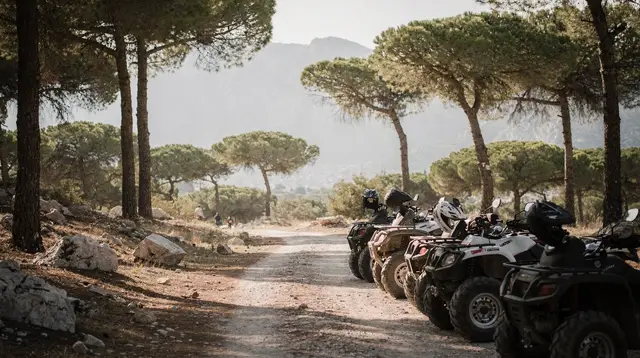
a night jeep safari through the Taurus foothills that times the Chimaera visit for after dark is the most popular way to see the flames at their best without worrying about the drive back on unlit mountain roads. For travellers who’d rather combine the flames with a full day of ruins and a beach stop, a jeep safari pairing Olympos beach with the Chimaera flames covers both sights in one outing.
Combining the Chimaera with Olympos and Çıralı
Because the flames sit so close to Olympos and Çıralı, almost nobody visits the Chimaera as a completely standalone trip. The natural pairing is:
| Stop | What it adds | Rough time |
|---|---|---|
| Olympos ancient city | Riverside ruins, city walls, a walk down to the beach | 1.5-2 hours |
| Çıralı beach | Quiet, protected shingle-and-sand beach, loggerhead turtle nesting site | 1-2 hours |
| Chimaera flames | The walk up plus time at the flame field, ideally at dusk | 2-3 hours |
A relaxed full day starting from Kemer or Antalya can cover ruins and beach time earlier, then finish at the Chimaera as the light fades — which is also the most efficient way to justify the drive out, given how far this cluster of sights sits from the main resort strip.
Travellers based further along the coast sometimes fold the Chimaera into a broader look at the Kemer coast, taking in the Tahtalı cable car and the ruined harbour city of Phaselis on the same trip, or extending south to the beach village of Adrasan and boat trips out to Suluada.
Boat and sea alternatives from the same coast
Not every visit to this stretch of coast needs to be about the flames. Çıralı and the wider Kemer coastline are also a launch point for boat trips along a pine-backed shoreline dotted with small coves. a lunch boat trip along the Genoese bay coastline is a good half-day option if you’d rather spend the daylight hours on the water and save the Chimaera for an evening add-on, and travellers with more time on the coast sometimes extend into a multi-day gulet cruise running from Olympos toward Fethiye, which threads past several of the bays below the Chimaera’s mountainside.
Tour or self-drive: which suits you
There are really two ways to see the Chimaera, and which one makes sense depends on how you feel about driving unlit mountain roads after dark. Self-driving gives you full control over timing — you can linger at the flames as long as you like, skip the crowds of a scheduled bus, and combine the stop with whatever else on the Kemer coast you fancy that day. The trade-off is the return drive: the road down from Çıralı isn’t heavily lit, and doing it for the first time after a dark, unfamiliar walk isn’t for everyone.
Joining an organised trip removes that problem entirely. a private day tour covering Phaselis, Olympos and Yanartaş is built around exactly this cluster of sights, with a driver handling the road both ways, which suits travellers who’d rather spend the last hour of daylight looking at ruins than watching for potholes. It also means you don’t have to plan the timing yourself — a decent operator will already know when dusk falls and pace the day so you reach the flames as the light drops, which is worth more than it sounds if you’re only in the region for a short stint.
For a broader read on how the logistics compare across the different sights on this stretch, the Kemer day trips guide and the Kemer jeep safaris guide both cover options that fold the Chimaera in with Olympos, Phaselis or a beach stop, and the Kemer boat trips guide covers the sea-based alternatives touched on above in more depth.
Where the Chimaera fits on a longer coast itinerary
If you’re building a longer trip around this part of the coast rather than a single day out from Antalya or Kemer, the Chimaera slots naturally into a wider look at the Kemer coast and its ancient sites. A three-day itinerary such as three days on the Kemer coast has room to pace ruins, beach time and the flame walk across separate evenings rather than cramming everything into one long day, which tends to suit anyone travelling with kids or older relatives.
Travellers staying in Antalya itself rather than along the Kemer coast should budget the full return drive into their day — see the Antalya day trips guide for how this compares against closer options like Perge or the Düden Waterfalls.
For a dedicated look at doing the night walk itself, including what to expect from the flame field once you’re actually there, the Chimaera night hike guide and the blog piece on the Chimaera flames at night both go into more depth than fits in this overview, and anyone planning to walk further afield afterward may also want the Lycian Way hiking guide, since a section of that long-distance trail passes close to this same slope of Mount Olympos.
Practical tips for visiting
- Footwear: the gravel path has loose stones and some uneven sections — trainers or sturdy sandals beat flip-flops.
- Light: bring a torch or use your phone’s flashlight for the walk back down after dark; the path itself isn’t lit.
- Water: there’s little shade on the open flame field itself, and even an evening walk in summer works up a sweat — carry water for the round trip.
- Fire safety: the flames are genuinely hot and the rock around them can be too — supervise children closely, and treat the site with the same caution you would any open flame.
- Marshmallows and sticks: a small, low-key local tradition; some visitors bring a stick to toast something over a flame. It’s optional, and not something the site formally provides.
- Combine, don’t isolate: given the drive time from Antalya or Kemer, the Chimaera works best as one stop within a longer day rather than a there-and-back trip on its own.
Chimaera (Yanartaş) — frequently asked questions
Is the Chimaera a volcano?
No. The Chimaera is not volcanic activity, and there is no active volcano anywhere in the Antalya region. The flames are caused by natural gas — mainly methane — seeping up through cracks in the rock and igniting on contact with air at the surface, a process driven by chemical reactions deep in the rock rather than by magma.
How long is the walk to the Chimaera flames?
From the car park at the base, the walk up to the flame field takes roughly 20-30 minutes on a gently rising gravel and stone path through pine forest. It’s not a technical hike, but the surface is uneven in places, so proper footwear makes it considerably easier, especially if you’re walking back down after dark.
What is the best time of day to visit the Chimaera?
Dusk or after dark is the best time to visit. The flames burn continuously around the clock, but in daylight they appear as faint shimmers that are easy to miss, while after sunset they show up as clear, bright points of light scattered across the dark hillside — a much more striking sight.
How do I get to the Chimaera from Antalya?
The Chimaera sits above Çıralı, roughly 80-90 km from Antalya, a drive of around 1.5-2 hours by car. It’s a shorter drive from Kemer, closer to 40-50 minutes. Most visitors without a rental car join an organised jeep safari or tour that includes transport, since public transport connections to Çıralı are limited.
Can I visit the Chimaera and Olympos on the same day?
Yes, and most visitors do exactly that. Olympos ancient city, Çıralı beach and the Chimaera flames sit close together in the same river valley, and a full day can comfortably combine ruins in the morning, beach time in the afternoon, and the flame walk at dusk before heading back.
Is there an entry fee for the Chimaera?
Yes, there is a modest paid entry fee collected at a ticket booth near the car park at the base of the path. It’s a minor cost compared with transport, and worth having small cash on hand for.
Is the walk to the Chimaera suitable for children?
Generally yes for older children who can manage a 20-30 minute uphill walk on gravel, though close supervision matters once you’re among the flames themselves, since the rock and fire are genuinely hot. It’s less suitable for very young children or anyone who struggles with uneven ground, particularly after dark.
Why is it also called Yanartaş?
Yanartaş is the Turkish name for the site and translates literally as “burning rock,” a direct and accurate description of what’s happening on the hillside. Chimaera is the older, Greek mythological name, tied to the legend of a fire-breathing creature said to have lived on this same mountainside in antiquity.