A Mountain Fortress Alexander Never Took
Most ancient sites around Antalya let you park, buy a ticket, and walk straight onto the ruins. Termessos does not work that way, and that single fact shapes everything about visiting it. Perched at around 1,000m in the pine-forested Güllük Dağı National Park, roughly 35km northwest of Antalya city, Termessos was a Pisidian mountain stronghold so defensible that even Alexander the Great, after inspecting its cliffs and narrow approaches in 333 BCE, decided against a siege and moved on. That same terrain is what visitors face today — not a road to the ruins, but a footpath.
This page sets expectations honestly: come prepared to walk uphill on uneven stone, and you’ll be rewarded with one of the most atmospherically sited ancient theatres on Turkey’s Mediterranean coast, viewed by a fraction of the visitors who queue at Perge or Aspendos on the same morning.
How Termessos Differs From Perge and Aspendos
If your itinerary already includes Perge or Aspendos, it’s worth being clear about what makes Termessos a different kind of visit rather than “one more ruin.”
| Termessos | Perge | Aspendos | |
|---|---|---|---|
| Access from car park | Uphill walk, 30-45 min to the theatre | Flat, walk-in from parking | Flat, walk-in from parking |
| Terrain | Forested mountainside, rocky path | Open, paved site | Open, paved site |
| Shade | Pine forest for much of the walk | Largely exposed | Partially exposed |
| Crowds | Consistently light | Moderate to heavy | Moderate to heavy, especially with tour groups |
| Standout feature | Theatre on a cliff edge, sweeping views | City street plan, stadium, agora | Best-preserved Roman theatre in the region |
| Suitable footwear | Hiking shoes or sturdy trainers | Any comfortable shoes | Any comfortable shoes |
The practical takeaway: if you’re combining ancient sites in one day via the one-day Perge and Aspendos itinerary, Termessos generally doesn’t fit alongside them — it deserves its own half-day rather than being squeezed in as a third stop after a long, hot walk elsewhere.
What to Expect From the Walk
From the entrance gate and car park inside the national park, the path to the main ruins climbs steadily for roughly 30-45 minutes depending on pace and stops. It is not a technical hike — no ropes or scrambling — but it is a genuine uphill walk on uneven, sometimes loose stone, with tree roots and steps worn smooth by centuries of use. There is no shuttle, no golf cart, and no paved road; this is the detail that most often surprises visitors who arrive expecting something closer to Perge.
A few practical notes that make the difference between an enjoyable visit and a miserable one:
- Footwear matters. Closed, sturdy shoes with grip are strongly recommended. Sandals or worn-down soles are a genuine hazard on the loose stone sections.
- Bring more water than you think you need. There are no shops or refreshment stands once you’re inside the park gate, and the climb is exposed in patches even though much of it runs through pine forest.
- Time of day matters more here than at flat sites. In July and August, an early morning or late-afternoon visit avoids both the worst heat and the harshest sun on the exposed upper sections.
- Budget more time than the ruin count suggests. Because the walk itself takes 30-45 minutes each way, a full visit runs closer to 2.5-3 hours rather than the hour or so a flat site of similar size might take.
- This is a national park, not just a ruin. Güllük Dağı National Park has its own entry structure and forest setting, which is part of why Termessos feels so different from a roadside archaeological site.
Travelers researching accessibility should know plainly: Termessos is genuinely difficult for anyone with mobility limitations, strollers, or wheelchairs. If that’s a concern for your group, Perge or Kaleiçi make far more accessible half-day alternatives — see the dedicated accessibility guide for the region.
What You’ll Find at the Top
The climb ends at a plateau scattered with ruins that were never fully excavated or rebuilt, which is part of the site’s particular character — tumbled columns, cisterns, and temple foundations sit half-reclaimed by pine forest rather than being cleared into tidy rows.
The centerpiece is the theatre, built into the hillside so that the stage looks out not onto a backdrop wall but onto open sky and, on a clear day, a sweeping view toward the Mediterranean and the mountains beyond. It’s widely considered one of the most dramatically positioned ancient theatres anywhere on this coast, and because so few visitors make the climb, it’s common to have long stretches of it to yourself.
Beyond the theatre, the site includes:
- A necropolis with rock-cut tombs scattered across the slopes, some accessible only by scrambling slightly off the main paths.
- Cisterns cut into the rock, evidence of how a city with no natural water source at this altitude sustained itself under siege conditions.
- Temple ruins, including remains associated with Artemis, Zeus, and other structures identified from inscriptions found on site.
- A bouleuterion (council house) and agora area, giving a sense of the city’s civic layout even in its fragmentary state.
Because excavation here has been comparatively light-touch, there’s a rawness to Termessos that contrasts with the more manicured presentation at Perge or Aspendos — for many visitors, that’s precisely the appeal.
Planning the Visit From Antalya
Termessos sits close enough to Antalya to work as a half-day trip, but it needs to be planned around, not squeezed between, other stops.
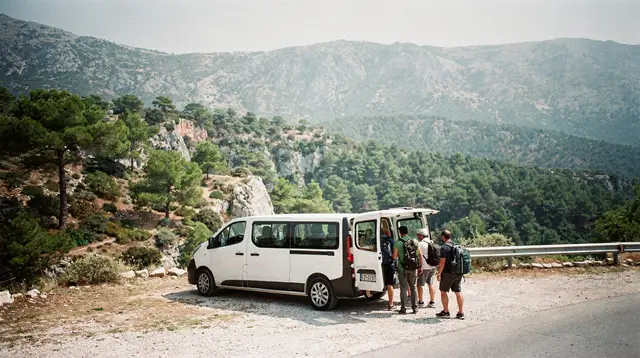
Getting there: The most straightforward option is a rental car, following signs from the main Antalya-Korkuteli highway; the turnoff into the national park is clearly marked. Termessos is not well served by public transport, so travelers without a car typically join an organized tour or arrange a private driver for a half-day. If you’re weighing car rental against other transport in the region, the coastal getting-around guide covers the trade-offs in more detail.
When to go: Spring (April-May) and autumn (September-October) offer the most comfortable climbing temperatures. Visiting in high summer is entirely possible but demands an early start — arriving at opening time avoids both the midday heat and the tour buses that occasionally reach the lower car park later in the day.
Combine it with: Because the climb takes a genuine chunk of a morning, most visitors treat Termessos as the single focus of a half-day rather than pairing it with another ancient site. It pairs more naturally with a relaxed afternoon back in Antalya — wandering Kaleiçi, or cooling off at the Düden Waterfalls or Konyaaltı Beach — than with cramming in a second ruin the same day.
Ticketing: Entry is a paid ticket at the park gate; it’s also covered by the regional Müze Kart / MuseumPass Mediterranean if you’re planning to visit several museums and archaeological sites during your stay, which is worth comparing against paying individually if Termessos is one of several sites on your list.
If your Antalya stay includes several ancient sites beyond Termessos, the ancient sites guide for the region rounds up how they compare and how to sequence them without ruin-fatigue setting in.
Extending the Trip Into the Mountains
Travelers who enjoy the wilder, national-park side of Termessos often find themselves drawn to similar landscapes elsewhere around Antalya — forested canyons, mountain lakes, and jeep tracks well away from the beach resorts. A day combining a lake, a boat trip, and off-road driving is a popular way to see more of this inland terrain in one outing:
a jeep safari with a lake boat trip and lunch included covers a similar off-the-beaten-path feel to Termessos, without the same demanding climb.
For a longer mountain-and-water day, a sunset jeep safari combined with a dam boat tour pairs off-road tracks with time on the water as the light changes over the hills.
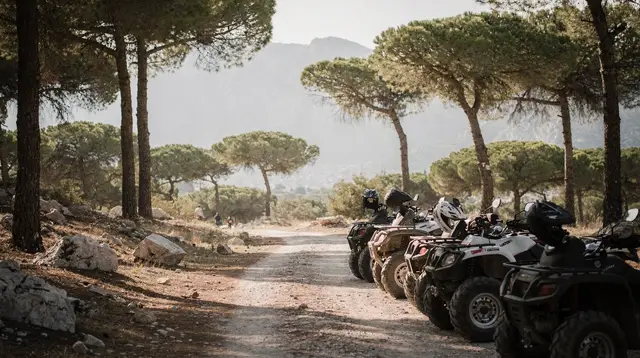
Travelers who’d rather combine adrenaline with the outdoors can look at a combined rafting and quad-safari day, which trades ancient ruins for canyon rivers and forest trails.
And if the plan is to balance an active morning at Termessos with a more relaxed afternoon back on the coast, a relaxed boat trip along the Lara-Kundu coastline is a gentler way to unwind after the climb.
First-Time Visitor Checklist
For travelers building their first Antalya itinerary and deciding whether Termessos earns a place on it, a short checklist helps:
- Are you comfortable with a 30-45 minute uphill walk on uneven stone, each way?
- Do you have sturdy, closed footwear and at least 1-1.5 liters of water per person?
- Can you visit outside the hottest midday hours in summer, or during spring/autumn?
- Does your group include anyone with mobility limitations who would struggle with the climb?
- Are you planning Termessos as its own half-day, rather than squeezed after another ruin visit?
If the answers point toward “yes, this suits us,” Termessos delivers a genuinely different experience from the coast’s more accessible ruins. If the climb is a dealbreaker, Perge offers a comparably rich ancient city with none of the uphill effort — see the first-time planning guide for how to weigh the two against each other, and the best time to visit guide for matching the season to what you want to do.
Termessos: Frequently Asked Questions
Do I need a car to visit Termessos?
A rental car is the most practical option, since Termessos has no direct public transport connection and the site itself is well outside central Antalya. Many visitors instead join an organized day tour or hire a private driver for the half-day, which also avoids navigating the mountain road independently.
How long is the walk to the ruins at Termessos?
Expect roughly 30-45 minutes of steady uphill walking from the car park to the main theatre, on uneven and sometimes loose stone paths through pine forest. Including time to explore the site and walk back down, most visitors should budget 2.5-3 hours total.
Is Termessos suitable for young children or people with mobility issues?
It’s genuinely challenging for both. The uphill walk on rough terrain, with no paved path, shuttle, or accessible route, makes Termessos one of the more physically demanding sites in the region. Families with young children or anyone with mobility limitations are generally better served by Perge, which is flat and walk-in from the car park.
What should I bring to Termessos?
Sturdy, closed shoes with good grip, more water than you’d bring to a flat site, sun protection, and a hat. There are no shops or refreshment stands inside the national park once you pass the entrance gate.
Is Termessos covered by the Müze Kart / MuseumPass Mediterranean?
Yes, Termessos is among the sites typically included on the regional multi-site museum pass. If you’re planning to visit several archaeological sites and museums during your stay, it’s worth comparing the pass price against paying individual entry fees.
Can I combine Termessos with Perge or Aspendos in one day?
It’s possible but not recommended for most travelers. The uphill walk at Termessos takes real time and energy, and pairing it with another major ruin the same day tends to produce ruin-fatigue and a rushed visit to at least one site. Most visitors get more out of treating Termessos as its own focused half-day.
What’s the best time of year to visit Termessos?
Spring (April-May) and autumn (September-October) offer the most comfortable temperatures for the climb. Summer visits are common but should be timed for early morning or late afternoon to avoid the harshest midday heat on the exposed upper sections of the path.
Why didn’t Alexander the Great conquer Termessos?
According to ancient accounts, Alexander’s forces assessed the city’s steep, naturally fortified position in 333 BCE and judged a siege too costly, choosing to bypass it rather than attack. The same terrain that discouraged an ancient army is what makes today’s visit a genuine climb rather than a stroll.