Antalya as your base on the Turquoise Coast
Antalya sits on a limestone cliff above the Mediterranean, midway along Turkey’s southern coast, and it plays two roles at once. It’s a city in its own right — an old harbour quarter, waterfalls, city beaches and a museum’s worth of Roman ruins within the municipal boundary — and it’s the transport hub that makes the rest of this coastline reachable. Almost every itinerary on this site starts here, whether that means Kemer an hour to the west, Alanya two hours to the east, or Cappadocia a long day trip inland.
Two corrections worth making before anything else, because they’re the most common mix-ups visitors arrive with. First, Antalya is not the capital of Turkey — that’s Ankara, a different city entirely, several hundred kilometres inland. Antalya is a provincial capital and a resort city, not a seat of national government. Second, Turkey uses the Turkish lira (TRY), not the euro, and the country sits outside both the EU and the Schengen Area.
Most visitors need a passport rather than a national ID card, and entry requirements (visa-free stays, e-Visa, visa-on-arrival) depend on nationality and change over time — check the official Turkish e-Visa portal or your own government’s travel advisory before booking rather than assuming a Schengen-style arrangement applies.
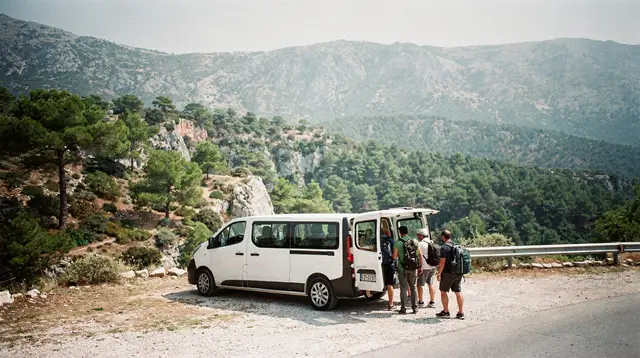
Geographically, Antalya faces the Mediterranean along a curving bay backed by the Taurus Mountains, which is why the region’s landscape flips so quickly from beach resort to alpine scenery within an hour or two of driving. Antalya Airport (AYT) is the region’s main international gateway, a short tram or taxi ride from the city centre, and it’s where the great majority of visitors to this coast first land.
How much time to give the city
Antalya city itself is realistically a one- to two-day stop: a day covers Kaleiçi’s old town and harbour plus one waterfall or beach; two days lets you add the other waterfall, a proper beach afternoon, and perhaps a half-day at one of the nearby ancient sites. Beyond that, most of what fills a week or two on this coast happens outside city limits — the Kemer coast, Belek and Aspendos, Side and Manavgat, Alanya, the Lycian coast, and inland to Pamukkale or Cappadocia are all separate destinations reached from here. Think of Antalya as the hub and the rest of the itineraries on this site as the spokes.
Kaleiçi: the old town and harbour
The historic core, Kaleiçi, is a walled old town of narrow lanes, Ottoman-era houses and a small working harbour where boat trips depart. It’s compact enough to wander without a plan, and it’s the natural first stop for anyone spending a day in the city. Kaleiçi gets its own dedicated guide on this site — see the Kaleiçi old town guide for a fuller walkthrough of the quarter, its gates, and the harbourfront.
From Kaleiçi’s harbour, boat trips run along the coast and past the cliffs where the Lower Düden Falls meet the sea — a relaxed way to see that stretch of coastline without driving. One popular option combines sightseeing with a swim stop:
a half-day boat trip along the Lara and Kundu coastline with swimming stopsThe Düden and Kurşunlu waterfalls
Antalya actually has two separate Düden waterfalls, and it’s worth being clear on the difference before planning a visit. The Upper Düden Falls sit inland, in a shaded park setting where the river drops over a rock shelf — a straightforward, walkable park visit. The Lower Düden Falls, several kilometres away, are where the river reaches the coast and drops directly into the Mediterranean off a cliff; these are best appreciated either from the cliffside park above or by boat, looking back at the falls from the water. They are not the same site, and mixing them up is one of the most common planning mistakes for a first visit. Full details on both are in the Düden Waterfalls guide.
A short drive further out, the Kurşunlu Waterfalls sit in a quieter forest park, lower and gentler than either Düden site, with boardwalks through the trees — a good add-on if you have a car or join a half-day tour, covered in the Kurşunlu Waterfall guide.
For a waterfall visit combined with the harbour boat experience, a pirate-style boat trip is a popular half-day option from the city:
a pirate-boat cruise past the Düden coastal fallsCity beaches: Lara and Konyaaltı
Antalya has two main city beaches, and they’re different enough to be worth choosing deliberately. Lara Beach, east of the centre, is a long sandy stretch backed by resort hotels, generally the calmer and more family-oriented of the two. Konyaaltı Beach, west of Kaleiçi, is a long shingle-and-sand beach with a promenade and views back toward the mountains, closer to the old town and popular with locals as well as visitors. If you’re trying to decide between the two, the Konyaaltı vs Lara Beach guide walks through the practical differences — sand type, crowds, access, facilities.
Both beaches are free to access, with paid loungers and beach clubs layered on top for those who want them, and both connect to the tram network, which makes a beach afternoon easy to combine with a morning in Kaleiçi.
Perge and Termessos: ancient sites within reach
Two of the region’s best Roman-era and Hellenistic sites sit close enough to the city for a half- or full-day trip, and they’re quite different experiences. Perge is a paid, ticketed ruin field on flat ground just outside the city — colonnaded streets, a stadium and baths, straightforward walking. Termessos, by contrast, is a mountaintop city inside a national park, reached by a walk uphill through forest before the ruins even come into view — it takes noticeably longer to visit properly than a roadside site like Perge, and is worth budgeting a half-day for rather than an add-on stop. Both are covered together in the Antalya ancient sites guide.
For a broader look inland that pairs ruins with landscape, jeep safaris out of the city combine mountain scenery with a lake stop:
a jeep safari into the Taurus foothills with a lake boat trip and lunch includedGetting around: AntRay, the Nostalgic Tramway, and AntalyaKart
Antalya’s city transport runs on the AntalyaKart, a contactless travel card used on buses, the light-rail AntRay line, and the separate heritage Nostalgic Tramway (Nostaljik Tramvay) that runs along the seafront through Kaleiçi’s edge. Buy and top up the card at kiosks and machines around the city — cash isn’t accepted on board — and the AntalyaKart and tram guide has the details on where to buy one and which lines matter for visitors.
From the airport, the tram connects fairly directly toward the centre, and it’s usually the simplest way in if you’re not being met by a transfer. For the wider region — Kemer, Belek, Side, Alanya and beyond — you’ll want a transfer, rental car or organised tour rather than city transit; see Antalya airport to hotel transport and the getting around the Antalya coast guide for the options.
Antalya as a launchpad: what’s within reach
Once the city itself is covered, Antalya’s real value is as a base. Within roughly an hour you can reach the Kemer coast with its cable car and ancient harbour ruins; within 30-40 minutes, the golf resorts and Roman theatre of Belek and Aspendos. Further along, Side and Alanya sit one and two hours east respectively, while the Lycian coast towns of Kaş and Kalkan are a three-to-four-hour drive southwest along winding coastal roads — noticeably slower than the straight-line distance suggests, since much of that route climbs through mountains rather than running flat along the shore.
Inland trips push further still: Pamukkale’s white terraces are a three-to-three-and-a-half-hour drive, and Cappadocia — a genuinely different landscape of rock formations rather than coastline — is typically a long overnight bus, an 8-10 hour drive, or a short seasonal flight, worth planning as a multi-day add-on rather than a rushed day trip. The Antalya to Pamukkale and Cappadocia tours guide lays out the realistic options for reaching both.
For white-water further inland, day trips from the city itself run out to the Köprülü Canyon:
a rafting day trip with a sunset finishAnd for a longer coastal boat day combining two of the region’s quieter spots:
a full-day boat tour from Antalya to Adrasan and the islet of SuluadaPractical basics for the city
| Topic | What to know |
|---|---|
| Currency | Turkish lira (TRY); inflation has been persistent, so treat any quoted price as a snapshot, not a fixed figure |
| Entry | Outside the EU/Schengen Area; passport required for most visitors, e-Visa or visa-on-arrival rules vary by nationality |
| Time zone | Fixed UTC+3 year-round — no daylight saving, unlike most of Europe |
| Electrical sockets | Type C/F, 230V, same as most of continental Europe — an adapter, not a voltage converter, is usually enough |
| Driving | On the right, as in continental Europe |
| Emergency number | 112 |
| Tap water | Not generally recommended for drinking; bottled or filtered water is standard |
| Tipping | Roughly 5-10% in restaurants where service isn’t included; rounding up for taxis and casual services |
For a deeper dive into budgeting and currency specifically, see money in Antalya: currency and tipping and visa and entry requirements for Antalya.
When to visit the city itself
Antalya has a Mediterranean climate: hot, dry, sunny summers (commonly in the low-to-high 30s °C in July-August, sea around 25-28°C) and milder, wetter winters (air typically 10-16°C, sea a cooler 16-18°C). For city sightseeing — Kaleiçi, the waterfalls, the ruins — spring and autumn are usually more comfortable than the July-August peak, while winter works for sightseeing but not for swimming. The best time to visit Antalya guide breaks this down month by month, and the how many days in Antalya guide helps size a full trip beyond the city itself.
Antalya city: frequently asked questions
Is Antalya the capital of Turkey?
No. Ankara is Turkey’s capital. Antalya is a major coastal resort city and the provincial capital of Antalya Province, and it functions as the main international gateway for Turkey’s southern Mediterranean coast, but it has no role as the national seat of government.
How many days should I spend in Antalya city itself?
One to two days is enough to cover Kaleiçi’s old town and harbour, one of the Düden waterfalls, and either a city beach or a nearby ancient site like Perge. Most visitors then use Antalya as a base and spend additional days on excursions to Kemer, Belek, Side, Alanya, the Lycian coast, or inland to Pamukkale and Cappadocia.
What currency is used in Antalya, and do I need cash?
Turkey uses the Turkish lira (TRY). Cards are widely accepted in hotels, restaurants and shops, but small vendors, markets and some transport may prefer cash, and the AntalyaKart transit card requires a top-up in advance rather than cash payment on board. Because of persistent inflation, check a current exchange rate before finalising a budget rather than relying on an old figure.
Do I need a visa to visit Antalya?
Turkey is outside the EU and the Schengen Area, so entry requirements depend on your nationality — some travellers qualify for visa-free stays, others need an e-Visa obtained in advance or a visa-on-arrival. Check the official Turkish e-Visa government portal or your own government’s travel advisory close to your travel date, since rules and durations can change.
What’s the difference between the Upper and Lower Düden Falls?
They’re two separate sites. The Upper Düden Falls are inland, set in a park where the river drops over rock. The Lower Düden Falls are where the river meets the Mediterranean, dropping off a coastal cliff — best seen from the cliffside park above or from a boat on the water. Visiting one doesn’t cover the other.
Which city beach should I choose, Lara or Konyaaltı?
Lara Beach, east of the centre, is a long sandy stretch backed by resort hotels and tends to suit families and calmer swimming. Konyaaltı Beach, west of the old town, is shingle-and-sand with a lively promenade and mountain views, and sits closer to Kaleiçi. Both are free to access with paid loungers available, and both connect to the tram.
How do I get from Antalya Airport into the city?
The AntRay tram connects the airport area toward the city centre, and taxis and organised transfers are also widely available; the ride is typically 15-20 minutes depending on traffic and exact destination. See the airport-to-hotel guide on this site for a fuller breakdown of transfer options.
Is Antalya a good base for day trips to the rest of the coast?
Yes — that’s largely its role on this site. Kemer, Belek and Aspendos, Side and Manavgat are all within roughly one to one-and-a-half hours; Alanya around two hours; the Lycian coast (Kaş, Kalkan) three to four hours over winding mountain roads; and Pamukkale around three to three-and-a-half hours. Cappadocia, being much further inland, is better planned as an overnight or multi-day add-on than a single day trip.