Turkish Bath & Spa in Antalya: What a Hammam Actually Involves
What does a Turkish bath in Antalya actually include?
A standard Antalya hammam session includes a hot-room steam soak, a firm full-body scrub (kese) that removes dead skin, a foam wash, and usually a short oil or soap massage. Tourist-oriented packages often add hotel transfer and a longer massage; traditional local hammams are simpler, cheaper, and separate men and women by hours or floors.
Why the hammam trips people up
A Turkish bath sounds simple on paper - steam, scrub, massage - but the gap between what a first-timer imagines and what actually happens on the table is where most disappointment comes from. Some visitors arrive expecting a spa-brochure relaxation session and get a brisk, businesslike scrub instead. Others book the cheapest local hammam they can find and are surprised there’s no English spoken, no soft lighting, and no extras beyond the basics. Neither experience is wrong - they’re just different products aimed at different expectations, and in Antalya both exist side by side, often within a few streets of each other.
This guide breaks down what a hammam session actually includes step by step, and draws a clear line between the tourist-oriented version most visitors book and the traditional local bath that residents actually use, so you know which one you’re walking into.
What a hammam session actually includes
Almost every Turkish bath session in Antalya follows the same basic structure, whether it’s a five-star resort spa or a neighbourhood hammam that’s been open for decades. The order rarely changes; what changes is the polish, the pacing, and what’s bundled around it.
1. The hot room (sıcaklık)
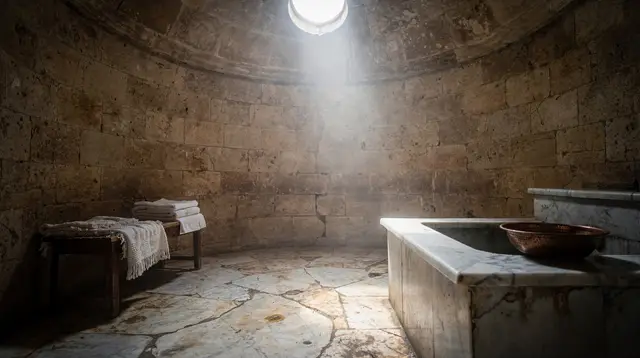
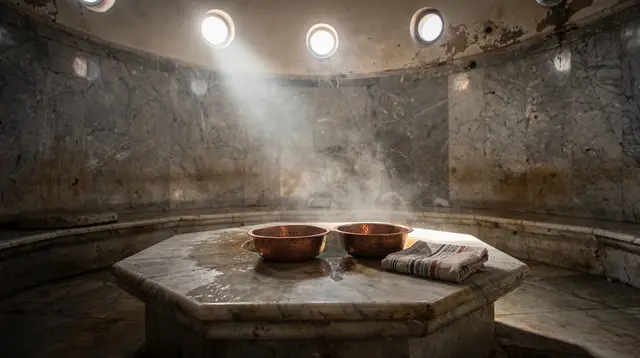
You change into a thin cotton wrap called a peştemal and move into the heated central chamber - typically a domed marble room with a large heated stone slab (göbek taşı, literally “belly stone”) in the centre. You lie or sit on the warm stone while steam and ambient heat open the pores and soften the skin, usually for 15-20 minutes. This part is passive: no attendant, no scrubbing, just heat and sweat. It’s also the part most easily rushed in a fast-turnover tourist package, so if the room feels more like a quick warm-up than a proper soak, that’s a signal of the shorter version rather than a fault on your part.
2. The scrub (kese)
An attendant works your body with a coarse woven mitt called a kese, removing a visible amount of dead skin - visitors are often startled by how much comes off on a first visit. The pressure is firm by design; it should feel thorough, not painful, and a reasonable attendant will ease off if asked. This is usually done section by section (arms, legs, back, chest) with the peştemal repositioned for modesty as needed.
3. Foam wash
After the scrub, the attendant works up a large cloud of soap foam - often using a cloth bag swished through water to build volume - and washes it over your body by hand. This part tends to feel more like a wash than a treatment, but it’s an essential rinse-and-reset step between the scrub and any massage that follows.
4. Oil or soap massage
Many packages, especially tourist-oriented ones, add a short massage after the wash - usually 15-30 minutes, using oil or continuing with soap. This is where the biggest variation between packages shows up: a basic hammam ticket might skip the massage entirely or keep it to a few minutes, while a “deluxe” or “VIP” package extends it meaningfully and may add extras like a facial mask or foot treatment.
Typical session structure at a glance
| Stage | What happens | Typical duration |
|---|---|---|
| Hot room | Steam and heat on the marble slab, no attendant | 15-20 min |
| Kese scrub | Firm full-body exfoliation with a coarse mitt | 15-20 min |
| Foam wash | Soap foam applied and rinsed by hand | 10-15 min |
| Massage (if included) | Oil or soap massage, basic to extended | 15-45 min |
| Total | Basic package vs. extended/VIP package | 45 min to 2 hours |
Tourist package vs. traditional local hammam
This is the distinction that actually matters for managing expectations. Neither option is “better” in an absolute sense - they’re built for different visitors.
Tourist-oriented Turkish bath experiences
These are the packages most visitors book, usually near resort areas like Lara, Konyaaltı, or Belek, or bundled with hotel transfer. They tend to run on fixed time slots, include a translated or multilingual staff, and package the core scrub-and-wash with a defined massage length. Hotel pickup and drop-off are common add-ons, which matters if you’re staying outside walking distance of the hammam itself - a real convenience for anyone without a rental car in the Kemer or Belek areas.
The trade-off is pace and atmosphere: these venues process a steady flow of visitors, so sessions are timed, the room is less likely to feel quiet or contemplative, and the experience leans toward “treatment” rather than the slower social ritual a hammam traditionally represents. For a first-timer who wants a predictable, comfortable introduction with no language barrier, this is usually the right call.
For a straightforward version with transfer included, an Antalyalara Turkish bath package that includes hotel pickup removes the logistics question entirely. Visitors who want the scrub-massage combination without extra frills often go for a traditional Turkish bath and spa session in Antalya, while those prioritising convenience from a resort base tend to book an Antalya Turkish bath and spa experience with hotel pickup.
Traditional local hammams
Antalya’s old town, Kaleiçi, has genuinely old hammam buildings that locals still use, alongside neighbourhood baths scattered through residential districts further from the tourist strip. These tend to be simpler in presentation - fewer robes-and-slippers touches, less English spoken, and pricing closer to what a resident would pay rather than a tourist-rate package. Separation between men and women is usually handled by dedicated hours or entirely separate sections rather than mixed sessions, so it’s worth confirming this ahead of a visit if your group includes both.
The appeal here is authenticity and cost: you’re getting the same fundamental scrub-and-steam ritual Antalya residents have used for generations, without the transfer, the multilingual staff, or the bundled extras. The downside is that the experience is less standardised - quality, cleanliness standards, and how rushed the scrub feels can vary more from one hammam to the next than at a polished tourist venue, and reviews in English are harder to find for genuinely local spots.
Choosing between the two
| Factor | Tourist package | Traditional local hammam |
|---|---|---|
| Location | Resort areas (Lara, Konyaaltı, Belek, Kemer) | Kaleiçi, residential neighbourhoods |
| Staff language | Usually multilingual | Often Turkish only |
| Hotel transfer | Frequently included | Rarely included |
| Massage length | Defined, often extended in higher packages | Minimal or basic |
| Gender separation | Sometimes mixed or family rooms | Usually strict, by hours or section |
| Price | Higher, reflects transfer and extras | Lower, closer to local rates |
| Atmosphere | Efficient, timed, comfortable for first-timers | Slower-paced, more traditional |
If it’s your first hammam and you’d rather not navigate logistics or language on your own, book a package. If you’ve done this before, or you specifically want the version Antalya residents actually use, seek out a hammam in Kaleiçi’s old town or a residential district and expect a plainer, cheaper, more local experience.
Women-specific and family options
Some visitors, particularly women travelling without male companions or families with children, prefer a venue built specifically around that. An Antalya ladies’ Turkish bath and wellness spa session removes any ambiguity about gender separation and tends to run at a more relaxed pace than a mixed resort package, which some find preferable for a first hammam experience. Travelling with kids changes the calculus too - see the Antalya with kids guide for which activities (hammams included) suit families and which are better left for a child-free morning.
Men-only sessions
Some venues run sessions restricted to men only rather than relying on separate hours within a mixed venue. An Antalya men-only Turkish bath experience with massage is worth considering for a group of male travellers who’d rather not think about scheduling around mixed hours at all.
Hammams beyond Antalya city itself
A hammam session isn’t limited to Antalya city - every major resort area along this stretch of coast has its own version, and staying closer to your hotel base can save a transfer. In Alanya, an Alanya traditional Turkish bath, hammam and spa massage follows the same hot room-scrub-massage structure described above, and the Alanya Turkish bath and spa guide covers the local venue landscape in more detail.
Travellers based around Belek or Side have their own resort-area options too - see the Belek Turkish bath and spa guide, the Side Turkish bath and spa guide, and the Manavgat Turkish bath and spa guide for what’s available closer to those bases. A traditional Turkish bath and hammam massage bookable from Belek or Side is a straightforward way to fit a session in without a long transfer back toward Antalya city.
Combining a hammam with a day out
A Turkish bath doesn’t have to be a standalone half-day - plenty of visitors fold it into a longer day trip, either before heading out to a beach or ruin site, or as a wind-down afterward. If you’re staying near the coast and want to pair relaxation with time on the water, an Antalya Larakundu relax boat trip works well as a lower-key half-day companion to a spa morning.
For a more active contrast, a day exploring Adrasan and the islet of Suluada by boat - see the Adrasan and Suluada boat tour from Antalya - pairs a beach day with a hammam booked for the evening.
A hammam also pairs naturally with a slower morning in Kaleiçi’s old town - wander the harbour and narrow lanes first, then book a session for the afternoon once the heat of the day sets in. Visitors piecing together a wider Antalya city tour sometimes prefer a hammam booked with transfer included, such as the Antalya hammam Turkish bath experience with a transfer option, so sightseeing and the spa session don’t compete for the same taxi or rental car.
If you’d rather round out a relaxed day with a hands-on cultural activity instead of another beach or ruin, both the Antalya traditional tesbih-making workshop with local artisans and the Antalya traditional Turkish ceramic painting workshop work well either side of a hammam booking; the Antalya workshops and classes guide lists more options in the same vein.
For a wider read on how to build out a first visit around bookings like these, the Antalya first-time planning guide, the Antalya budget vs luxury excursions guide, and the general Turkish hammam guide for Antalya are useful companion reading.
Practical tips before you book
- Confirm what’s included. “Turkish bath” alone can mean just the steam room and scrub; ask specifically whether a massage, foam wash, and transfer are part of the package before comparing prices between venues.
- Check gender arrangements ahead of time if this matters to your group - mixed-gender sessions, family rooms, and strict separation-by-hours all exist across Antalya, and it’s not always obvious from a listing alone.
- Bring flip-flops if you have them, though most venues supply slippers. Leave valuables at the hotel; lockers exist but aren’t the place for anything you’d hate to lose.
- Speak up about pressure. The kese scrub is meant to be firm, not painful - a good attendant adjusts on request.
- Avoid a heavy meal or alcohol right before a session - the heat and scrub are more comfortable on a lighter stomach.
- Check with a doctor first if you have heart or blood pressure conditions, or are pregnant - hammams don’t run medical screening, so this is on the visitor to judge.
- Book ahead in peak summer (June-August) for resort-area hammams with hotel transfer; traditional hammams in Kaleiçi generally accept walk-ins but can have a short wait at busy times.
- Treat lira prices as a snapshot, not a fixed figure - persistent inflation in Turkey means listed prices shift over time, so compare current rates rather than an older number you’ve seen quoted elsewhere.
Turkish bath and spa in Antalya: frequently asked questions
What actually happens during a hammam session in Antalya?
You change into a thin wrap (peştemal) and sit in a heated, steam-filled marble room to sweat and soften the skin, usually 15-20 minutes. An attendant then scrubs your body with a coarse mitt (kese) to remove dead skin, follows with a soap-foam wash, and often finishes with a short oil or soap massage. The whole cycle typically runs 45-90 minutes depending on the package.
Is a tourist Turkish bath different from a traditional local one?
Yes. Tourist-oriented hammams near hotels and beach resorts run on fixed time slots, often include hotel pickup, and package the scrub with a longer add-on massage. Traditional neighbourhood hammams, used by local residents, tend to be cheaper, less scripted, and separate men and women either by set hours or by having entirely separate sections, without transfer or extras.
Do I need to book a Turkish bath in Antalya in advance?
Booking ahead is recommended in peak summer (June-August) when resort-area hammams fill up with hotel-transfer bookings. Traditional hammams in Kaleiçi and residential neighbourhoods generally accept walk-ins, though popular ones can still have a short wait around midday and early evening.
What should I wear or bring to a Turkish bath?
Most hammams supply a peştemal (thin cotton wrap), towels, and disposable underwear or swimwear is allowed in some venues. Bring your own flip-flops if you have them, though many places provide slippers. Leave jewellery and valuables at the hotel; lockers are usually available but are not the place for anything irreplaceable.
Is the scrub (kese) part of a Turkish bath uncomfortable?
The kese scrub is firm and can feel intense on sensitive skin, but it is not meant to hurt and should not leave the skin raw or bruised. Tell the attendant to ease off if the pressure feels excessive - a good hammam adjusts pressure on request rather than applying one standard intensity to everyone.
Can men and women visit a Turkish bath together in Antalya?
It depends on the venue. Larger tourist-oriented spas near Lara and Konyaaltı often run mixed-gender sessions or family rooms. Traditional hammams, especially in Kaleiçi and older neighbourhoods, usually separate genders by dedicated hours or entirely separate sections - check before booking if this matters to your group.
How much does a Turkish bath cost in Antalya?
Prices vary widely by package and location; given persistent high inflation in Turkey, any lira figure quoted here ages fast. As a rough guide, a basic scrub-and-wash session at a traditional hammam costs noticeably less than a resort-area package that bundles hotel transfer, a longer massage, and extras - compare current listed prices rather than relying on a fixed number.
Are Turkish bath treatments suitable for everyone?
Most healthy adults can enjoy a hammam, but the heat and steam are not advisable for anyone with certain heart conditions, uncontrolled high blood pressure, or who is pregnant, without checking with a doctor first. Venues generally do not run medical screening, so it is the visitor’s responsibility to assess their own suitability before booking.
Turkish Bath and Spa
Verified deep-linked GetYourGuide tours. Book through these links and we earn a small commission at no cost to you.
GetYourGuide does not provide a product photo for this activity — the image shows the meeting point, photographed by us.