Best Beaches on the Antalya Coast: Sand, Pebbles or Wild Coves?
What's the best beach on the Antalya coast?
It depends on what you want underfoot and around you. Lara and Belek have fine sand and a resort feel, Konyaaltı is pebbly with a dramatic mountain backdrop, and Kaputaş and Patara are wilder coves a good hour or more from Antalya city.
Sand, Pebbles or Wild Coves — Which Beach Fits You?
Ask ten people what makes a “best” beach on this coast and you’ll get ten different answers, because the Antalya region doesn’t really have one type of beach — it has several, spread across a couple of hundred kilometres of Mediterranean coastline. Some are fine sand with rows of loungers and a beach club soundtrack. Some are pebbles and shingle backed by dramatic mountains. And some are quiet coves you only reach after a proper drive, rewarded with turquoise water and far fewer people.
Rather than ranking beaches as if they’re competing for the same title, it makes more sense to sort them by what’s underfoot and what kind of day you’re after — sand versus pebbles, urban versus wild, family-friendly versus remote. This guide works through the coast that way, starting close to Antalya city and moving out toward the Lycian coast, where the beaches get wilder and the drive gets longer.
Sandy Beaches: Lara and the Belek Coast
If soft sand between your toes is the priority, Lara Beach and the Belek coastline are the two stretches to know.
Lara sits on Antalya’s eastern edge, a long run of genuinely fine sand backed by a strip of resort hotels, public sections and private beach clubs. It has a built-up, resort-town atmosphere — sunbeds, beach bars, water-sports operators — rather than a quiet-cove feel, and that’s exactly what many visitors are looking for. The sand shelves gently in most spots, which helps with families, though it’s worth checking a specific section before assuming every part suits young children equally.
Belek, further along, is best known as a golf-resort area, and its beaches share that polished, all-inclusive character: wide sandy stretches fronted almost entirely by resort properties, with fewer independent public access points than Lara. If you’re staying at a Belek resort, the beach is essentially an extension of the hotel; if you’re not, it’s a less obvious day-trip target than Lara or Konyaaltı.
Both are close enough to central Antalya and the airport to work as a half-day or full-day outing without major route planning, unlike some of the coves described further down.
Pebbles With a View: Konyaaltı
Konyaaltı Beach is the other major city beach, and it’s a genuinely different experience from Lara. The shoreline here is pebble and shingle rather than sand, so aqua shoes are worth packing if bare feet on stones isn’t your thing. What Konyaaltı trades in soft sand it makes back with scenery: the beach runs for several kilometres directly beneath the Beydağları mountain range, giving it one of the most striking mountain-meets-sea backdrops on this coast.
It also sits closer to Kaleiçi, Antalya’s old town, than Lara does, which makes it easier to combine a beach afternoon with a wander through the harbour and old streets on the same day. The promenade along Konyaaltı is long and well set up with cafés, and the beach itself splits into public sections and paid loungers, so it’s worth walking a stretch before settling in.
If a resort-club sand beach is Lara’s identity, Konyaaltı’s is a working city beach with mountains behind it — useful to know before you pick.
Wilder Water: Patara and Kaputaş
For a genuinely different mood, the Kaputaş cove and Patara beach sit much further west, along the Lycian coast, and they reward the extra travel with a wilder, far less developed feel.
Kaputaş is a small, dramatic cove tucked beneath cliffs, reached by a long staircase down from the coastal road — a striking patch of turquoise water hemmed in by rock, with limited space and limited facilities, which is part of its appeal. It gets busy in peak season precisely because it’s so photogenic, so an early arrival helps.
Patara is a different scale entirely: one of the longest sandy beaches in the region, backed by dunes and the ruins of an ancient city, with far more room to spread out than Kaputaş. Because the beach sits within a protected archaeological zone, development is deliberately limited, which keeps it feeling open and undeveloped compared with the built-up city beaches.
Both of these beaches sit a considerable distance from Antalya city — well over an hour’s drive, and likely closer to two on the winding coastal road — so neither works as a casual afternoon out from a Lara or Konyaaltı hotel. They make far more sense as part of a Lycian coast trip based around Kaş or Kalkan, or as a stop on a longer road trip, rather than a same-day round trip.
Quiet Coves: Adrasan and Boat-Only Beaches
Between the city beaches and the far Lycian coast sits a stretch that rewards a bit more effort: Adrasan, a low-key beach village near Olympos, and the boat-accessible coves around Phaselis and the islet of Suluada.
Adrasan has a relaxed, unhurried character — a pebble-and-sand beach with far less resort infrastructure than Lara or Belek, popular with travellers who’ve already done the bigger city beaches and want somewhere quieter. Phaselis combines Roman and Byzantine ruins directly on a pine-backed bay with three separate beaches on the same site, which makes it a rare combination of history and swimming in one paid visit — worth a full morning or afternoon rather than a quick stop.
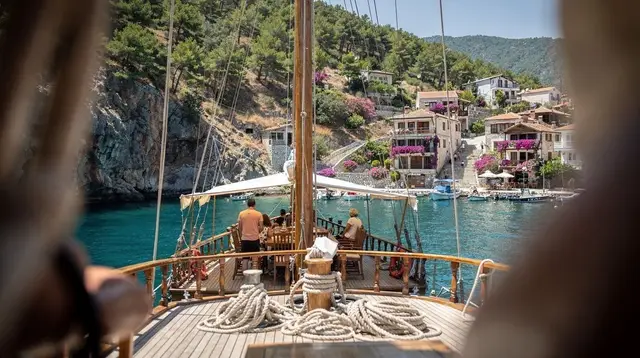
Suluada, meanwhile, isn’t reachable by road at all — it’s a boat-trip destination, a small islet with clear water that draws day-trippers precisely because you can’t simply drive there. A cruise along this stretch of coast is a good way to see several of these coves without picking just one:
a coastal cruise stopping at waterfalls, sea caves and swimming spots along the Kemer coastcovers several of these harder-to-reach corners in a single day, and a boat tour combining Adrasan and Suluada is a direct way to reach the islet without organising your own transport.
Family-Friendly Versus Party or Quiet
Not every beach suits every traveller, and family suitability is one of the clearest ways to sort them. Lara and Belek lead here, thanks to gently shelving sand, established resort facilities, and a general concentration of family hotels along both stretches. Side, further east, also works well for families, combining a sandy town beach with the town’s ancient ruins close by.
Konyaaltı is workable for families too, but the pebbly entry is worth preparing kids for in advance — water shoes make a real difference. At the other end of the spectrum, Kaputaş’s staircase access and limited shade make it a less practical choice with very young children or anyone with mobility limitations, and Patara’s scale means more walking to reach the water from parking.
For travellers without kids who want a livelier scene, Lara’s beach clubs lean into music, loungers and food-and-drink service, while Adrasan and the boat-only coves sit at the opposite end — closer to a genuinely quiet swim than a social afternoon.
Comparing the Coast at a Glance
| Beach | Surface | Distance from Antalya city | Best for |
|---|---|---|---|
| Lara Beach | Fine sand | Close, within the city | Beach clubs, resort atmosphere, families |
| Belek coast | Sand | Short drive | All-inclusive resort stays |
| Konyaaltı | Pebbles/shingle | In the city centre | Mountain views, combining with Kaleiçi |
| Adrasan | Pebbles and sand | Moderate drive, past Kemer | Quiet, low-key days |
| Phaselis | Sand, three coves | Moderate drive, past Kemer | Ruins plus swimming in one visit |
| Kaputaş | Sand, small cove | A significant drive west, well over an hour | Dramatic scenery, photos |
| Patara | Long sandy beach | A significant drive west, well over an hour | Space, dunes, an undeveloped feel |
Treat the distance column as a rough steer rather than a fixed number — the coastal road toward Kaş and the Lycian coast is winding, so actual journey times run longer than a straight-line map suggests, and traffic in peak summer adds further variability.
Getting the Timing Right
Sea temperatures on this coast are comfortable roughly from late spring into early autumn, with the warmest water in July and August. Outside that window, the beaches themselves are still pleasant for a walk or a look at the scenery, but swimming becomes a cooler, shorter-season activity — worth factoring in if a beach day is central to your trip and you’re travelling in shoulder season.
Peak summer also means the popular beaches — Lara, Konyaaltı and especially the small, photogenic Kaputaş cove — get genuinely crowded, so an early start makes a bigger difference there than at the larger, more spread-out Patara or the quieter Adrasan.
For a broader view of the coast beyond the sand, a private walking tour of the old town pairs naturally with a beach day:
a private walking tour through Antalya’s old town with a local guideand for those chasing a specific photogenic angle on the coastline rather than just a swim, a tour built around Antalya’s best photo spots and hidden viewpoints covers several coastal vantage points in one outing.
For a slower, boat-based way to see the coast around the city rather than driving between beaches, a relaxed boat trip along the Lara and Kundu coastline is a straightforward option, and travellers who’d rather see the coast from the water in more comfort might consider a private yacht tour along the Antalya coastline.
Planning Your Beach Days Around the Rest of the Coast
Because the beaches worth knowing about span from the city centre out to the Lycian coast, it’s worth deciding early whether you want a beach-focused stay near Lara, Konyaaltı or Belek, or a longer trip that reaches Kaş, Kalkan and the wilder coves. Basing yourself centrally in Antalya makes Lara, Konyaaltı and even Phaselis or Adrasan workable as day trips; reaching Kaputaş or Patara comfortably usually means building a night or two into the Kaş or Kalkan area rather than a rushed there-and-back.
A five-day route through the region’s western coves is one practical way to fit the wilder beaches in without constant long drives — see the five-day Lycian coast itinerary for a structure that pairs Kaputaş and Patara with nearby ruins at Myra and boat trips around Kekova.
Beaches on the Antalya Coast: Frequently Asked Questions
Are Antalya’s beaches sand or pebbles?
Both, depending on where you go. Lara Beach and the Belek coastline are genuinely sandy, while Konyaaltı in the city centre is a long pebble-and-shingle beach. Further along the coast, Patara and Kaputaş are sandy or fine-shingle, while stretches near Kaş and Kalkan mix pebbles and rock platforms.
Which Antalya beach is best for families with young children?
Lara Beach and the Belek coast are the most family-friendly, thanks to soft sand, gently shelving water and a dense strip of resort facilities. Side and parts of Konyaaltı also work well, with shallow entry points and nearby amenities.
Is Konyaaltı or Lara Beach better?
Konyaaltı sits closer to Antalya’s old town, backed by the Beydağları mountains, but the entry is pebbly underfoot. Lara Beach has finer sand and more beach clubs but lies further from Kaleiçi. Neither is objectively better — it’s a trade-off between soft sand and easy access to the city.
Are Kaputaş and Patara beaches worth the drive from Antalya?
For travellers who want a striking, less developed coastline, yes — but both sit a considerable distance from Antalya city, well over an hour’s drive, so they suit a Lycian coast trip or an overnight stay in Kaş or Kalkan rather than a quick afternoon out.
Which beaches are best for a quiet, less crowded day out?
Adrasan, parts of Patara’s long shoreline, and coves reached by boat around Suluada or Phaselis tend to feel calmer than the busy central stretches of Lara or Konyaaltı, especially outside the peak July-August weeks.
Do Antalya’s beaches charge an entry fee?
Some do. Many stretches are free public beach with simple facilities, while sections fronted by beach clubs or resort loungers charge for a sunbed and umbrella. It varies by beach and even by section of the same beach, so check on arrival rather than assuming either way.
Is the water warm enough for swimming year-round?
Sea temperatures are comfortable roughly from late spring to early autumn, commonly in the mid-to-high 20s°C in summer. Outside that window the air may still be mild, but the sea is noticeably cooler, so this coast functions as a summer swimming destination rather than a year-round one.
Beaches Guide
Verified deep-linked GetYourGuide tours. Book through these links and we earn a small commission at no cost to you.
GetYourGuide does not provide a product photo for this activity — the image shows the meeting point, photographed by us.