The Chimaera Flames at Night: Fire from the Rock, Not a Volcano
Are the Chimaera flames at Yanartaş from a volcano?
No. The flames near Olympos are natural gas seeping continuously through cracks in the rock and igniting at the surface, not volcanic activity — there is no active volcano anywhere on this coast. The gas has apparently been burning here for a very long time, which is exactly why the ancient Greeks built a myth around it.
The first time someone told me there were “flames coming out of a mountain” near Olympos, I assumed they meant a volcano, and I nearly didn’t bother going. I’m glad I checked before writing it off, because that assumption is wrong, and it’s the single most common misunderstanding about this place. I want to clear it up before I tell you anything else, because it changes what you should actually expect to see.
So what’s actually burning up there?
The Chimaera, known locally as Yanartaş — which translates roughly to “burning rock” — is not a volcano, has never been a volcano, and sits nowhere near one. What’s happening is quieter and, in a strange way, more interesting: natural gas, mostly methane with some other trace gases, seeps up through cracks and fissures in the rock and ignites on contact with air. It isn’t one dramatic jet either. It’s dozens of small flames scattered across a rocky hillside, some no bigger than a candle, some a bit taller, flickering out of gaps in the stone itself rather than from any single vent or crater.
There’s no lava, no heat you’d feel from a distance, no rumbling underfoot. It’s closer to a gas leak that happens to be permanent and happens to be beautiful than anything remotely volcanic. Geologists who’ve studied the site attribute the gas to underlying rock formations that slowly release it to the surface, and as far as anyone can tell it’s been doing this for a very long time — long enough that people in antiquity built a whole myth around it.
That myth is where the name comes from. The Chimaera of Greek legend was a fire-breathing hybrid creature — part lion, part goat, part snake — and ancient writers, including Homer, placed its lair in this part of Lycia. Standing near the flames after dark, with no obvious explanation available to someone two or three thousand years ago, I can see exactly how that story took hold. Unexplained fire that never goes out, coming straight out of solid rock, is the kind of thing that demands a story.
Why I’d go after dark
I’ve read accounts of people visiting at midday and coming away a little underwhelmed, and I understand why. In full sun, the flames are still there, still burning, but they’re pale and easy to miss against bright rock and daylight glare — you can walk right past a small one without noticing it’s alight. At night, the same flames become genuinely striking: dozens of small fires scattered up a dark hillside, some clustered together, some standing alone, with nothing artificial lighting the scene. It looks less like a tourist attraction and more like something you’ve stumbled onto by accident.
Night also matches the site’s own character better. This isn’t a spot with visitor infrastructure built around it — there’s a car park, a short walk up a marked path, and then the hillside itself. In daylight that walk feels like an approach to a geological curiosity. After dark it feels a little bit eerie, which given the Chimaera myth, feels appropriate rather than out of place.
I won’t pretend to give you an exact walking time from the car park, because it depends on your pace, the light you’re carrying, and how many times you stop to look at flames along the way — and I’d rather you go in without a fixed number ticking down in your head. Bring a torch or a phone light for the path itself even though the flames light up the final stretch, wear shoes with decent grip since the ground is uneven rock rather than a paved trail, and go with a little patience: this is a short, low-effort walk rather than a hike, but it’s still outdoors, after dark, on natural terrain.
Pairing it with Olympos
Most people visiting the Chimaera are already staying near or passing through Olympos, a few kilometres away, and I’d genuinely recommend treating the two as a single evening rather than rushing between them. Olympos itself is a riverside ancient-city site that backs onto a long beach, and its laid-back, slightly overgrown ruins make for a completely different mood from the fire-lit hillside later on.
Spend the afternoon wandering the ruins and the beach, have dinner in the village, and head to Yanartaş once it’s properly dark — the flames simply don’t compete with daylight the way they do with a night sky. If you want the full picture of the village and its beach before you go, our Olympos boat trips guide covers the other side of a day there.
If you’re staying along the Kemer coast rather than in Olympos itself, it’s a manageable evening trip down the coast, and combining it with a look at the Tahtalı cable car or a stop in Göynük Canyon earlier in the day makes for a full, varied day without feeling rushed. For a guided evening that handles the driving and timing for you, our Chimaera night hike guide run specifically after dark takes the guesswork out of when to arrive.
Confusing it with other things nearby
Because the flames sit within the same stretch of coast as several other natural sights, it’s easy to muddle them together before you’ve actually been. The Chimaera is not the same as Phaselis, the ruined harbour city with three beaches a bit further north — that’s a daytime ruins-and-swimming stop, unrelated geologically; our Phaselis ancient city guide covers it separately.
It’s also not connected to the Tahtalı cable car, which climbs to a genuine mountain summit for Mediterranean views rather than anything to do with gas or fire — see the Tahtalı Mountain cable car guide if that’s what you’re after. And it has nothing to do with actual volcanic geology anywhere in Turkey — Turkey does have volcanic regions elsewhere in the country, but this coast, and this site specifically, isn’t one of them; for the very different landscape further inland, see our notes on Cappadocia, which is volcanic in origin but hundreds of kilometres away.
I’d also gently push back on any description that calls this a “fire mountain” in the sense of an eruption risk. It’s not dangerous in that sense at all; the flames are small, contained to the rock surface, and have apparently burned steadily for a very long time without escalating into anything larger. The only real caution is the ordinary kind that applies to any uneven, unlit outdoor site after dark — decent footwear, a light for the path, and reasonable care around open flame, which is honestly less risk than a barbecue.
Making a night of it from Kemer or Antalya
If you’re not staying in Olympos itself, the practical question becomes how to fit this into a day that also includes something else worthwhile along the Kemer coast, since a round trip purely for after-dark flames can feel like a lot of driving for one stop. I’d anchor the day around Adrasan or a boat trip to Suluada for a beach and boat-trip afternoon, then work the Chimaera in as the evening’s final stop on the way back, rather than treating it as a stand-alone excursion — our Adrasan boat trips guide and Suluada island boat trip guide cover those afternoons in detail.
A Kemer day trips itinerary built around the wider Olympos-Chimaera area often does exactly this pairing for you, and if you’d rather not self-drive after dark, a Taurus Mountains night jeep safari that includes a stop at the Chimaera flames covers the transport and timing for you.
There’s also a dedicated Olympos, Çıralı and Chimaera night tour with dinner if you’d rather have the whole evening, meal included, arranged for you, or a more focused jeep safari to Olympos beach and the Chimaera flames if you just want the beach and the fire without a formal dinner stop.
For a broader look at how this fits into a full coastal itinerary rather than a single evening, our three-day Kemer coast adventure covers the Chimaera alongside Olympos, Phaselis and the cable car over a few days, which is roughly the pace I’d recommend if you have the time — this stretch of coast rewards not rushing. If you’re building a longer trip and want to see how the Chimaera fits alongside the rest of the region, our Antalya day trips guide and Kemer jeep safaris guide both cover it as one option among several.
If you’d rather not drive yourself
Self-driving to the car park after dark is entirely doable, but it does mean navigating an unlit mountain road at night, finding parking, and walking the path with your own light. If that’s not how you want to spend an evening, a guided option removes all of it.
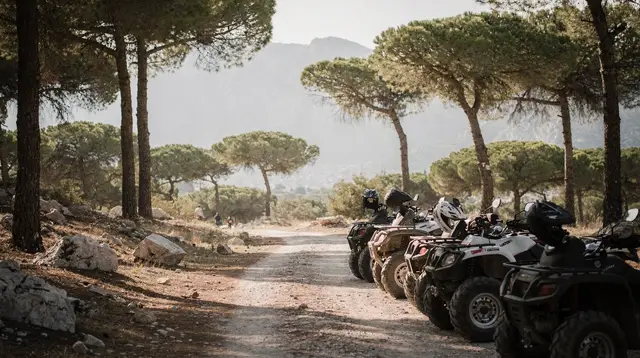
Beyond the jeep safaris already mentioned, some visitors based further along the coast in Alanya fold a Chimaera-style night safari into a broader mountain evening — our Alanya jeep safaris guide rounds up the main options for that area, including a night safari with dinner and boat party and a quieter night quad safari in the Taurus Mountains, both built around the same after-dark mountain atmosphere even though they run further east along the coast, closer to Alanya Castle and Cleopatra Beach.
Where to base yourself for this
Whether the Chimaera works as an easy evening or a longer detour depends heavily on where you’re staying. Olympos and nearby Adrasan put you closest, with Kemer a short drive further north. Staying in Antalya itself, or further round the coast near Side or Belek, turns this from a quick evening stop into a proper half-day commitment, which is where a guided night tour tends to make more sense than self-driving. Our getting around the Antalya coast guide has more on distances and transport options between these bases if you’re still deciding where to stay.
Chimaera flames FAQ
Is the Chimaera an active volcano?
No. There is no volcano at Yanartaş or anywhere on the Antalya coast. The flames are natural gas — mostly methane — seeping through cracks in the rock and burning continuously at the surface, a geological phenomenon rather than volcanic activity.
Is it better to visit during the day or at night?
Night, if you have the choice. The flames are pale and easy to overlook in daylight glare, while after dark the same small fires scattered across the dark hillside are genuinely striking and much closer to what draws people to visit in the first place.
How far is the walk from the car park?
There’s a short, marked path from the car park to the flames across natural, uneven rock rather than a paved trail. I’d rather not quote a fixed time, since pace varies a lot — go in without a countdown and enjoy the walk itself.
Do I need a guide, or can I go independently?
Both work. Independent visitors can drive or taxi to the car park and walk up on their own; a guided evening trip, such as a dedicated night visit paired with Olympos, handles transport and timing if you’d rather not navigate after dark yourself.
Is it safe to visit after dark?
Yes, in the ordinary sense that applies to any unlit natural site at night — bring a light for the path, wear grippy shoes for the uneven rock, and take reasonable care near the open flames themselves, which are small and have burned steadily without incident for a very long time.
Why is it called the Chimaera?
Ancient Greek writers, Homer among them, located the lair of the fire-breathing Chimaera — a mythical creature part lion, part goat, part snake — in this part of Lycia. The permanently burning rock is generally considered the likely inspiration for that myth.
Can I combine it with Olympos in one visit?
Yes, and I’d recommend it. Olympos sits a few kilometres away with ruins, a river and a long beach, making a natural afternoon stop before heading to the flames once it’s properly dark for the best effect.
Will the flames ever go out?
There’s no fixed answer — the gas has been seeping and burning for a very long time and shows no sign of stopping, but like any natural geological process it isn’t something anyone can permanently guarantee.
tours.Explainer
Verified deep-linked GetYourGuide tours. Book through these links and we earn a small commission at no cost to you.
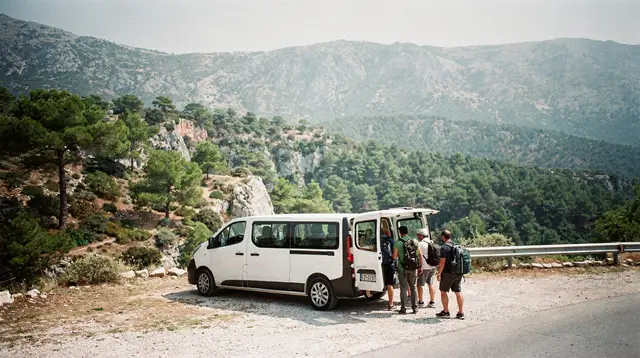
GetYourGuide does not provide a product photo for this activity — the image shows the meeting point, photographed by us.