The Chimaera (Yanartaş): Day Visit vs Night Hike
Is the Chimaera near Olympos a volcano, and is it better to visit by day or at night?
No — the Chimaera (Yanartaş) is natural gas seeping through cracks in the rock and burning continuously at the surface, not volcanic activity. It can be visited any time, but the small flames are far more visible and atmospheric after dark, when a short, rocky, uphill walk with a torch or headlamp is worth the extra effort over a daytime visit.
What the Chimaera actually is
Ask around Kemer or Olympos about “the flames near Olympos” and it is common to hear them described, half-jokingly, as a volcano. They are not. The Chimaera, known locally as Yanartaş (“burning rock”), is a patch of bare mountainside where natural gas — mostly methane, seeping up from underground rock through a series of small fissures — reaches the surface and ignites on contact with oxygen. The result is a scattering of small, low flames that burn continuously, day and night, year-round, without any lava, crater, ash or eruption involved anywhere on site.
The phenomenon has been documented since antiquity. Ancient sailors reputedly used the flames as a navigation marker along this stretch of coast, and the mythical fire-breathing Chimaera creature of Greek legend, part lion, part goat, part serpent, is thought to take its name from this very hillside. That mythology is almost certainly responsible for the modern confusion with volcanic activity — the name and the fire-breathing imagery suggest something far more dramatic than what is, geologically, a slow, steady gas seep.
In practical terms, this matters for how you plan a visit. There is no danger of eruption, no ash, no sulphur smell to speak of, and no need for the kind of caution a genuine volcanic site would warrant. What there is, instead, is a quiet, slightly surreal field of small flames burning directly out of bare rock and gravel on a hillside above Olympos — closer in feel to a natural curiosity than a spectacle, and one whose modest scale is worth knowing in advance so it isn’t a disappointment.
Setting expectations: modest flames, not a fire show
The single most common visitor letdown at the Chimaera is expecting something closer to a bonfire or a dramatic wall of fire. In reality, most individual flames are small, often ankle-height, occasionally knee-height at their strongest points, flickering out of gaps in rock and dry soil across an open hillside roughly the size of a couple of football pitches. Seen collectively and at the right time, the effect is genuinely striking; seen as a single feature in isolation, any one flame is unremarkable.
This is exactly why timing changes the experience so much. In daylight, especially under the region’s characteristically strong Mediterranean sun, the flames are easily washed out — visible up close but easy to miss and generally underwhelming in photographs. After dark, the same flames glow clearly against the black hillside, visible from a distance as you approach, and the whole slope takes on a genuinely atmospheric quality that daylight simply cannot replicate. If a night visit is possible at all within your itinerary, it is worth prioritising over a daytime stop.
Day visit vs night hike
| Day visit | Night hike | |
|---|---|---|
| Flame visibility | Modest, easy to miss in bright sun | Clearly visible, more atmospheric |
| Path conditions | Same rocky, uneven trail, but easy to see | Unlit; torch or headlamp required |
| Crowds | Can be quieter mid-morning | Busiest shortly after sunset |
| Combine with | Olympos ruins, beach time | Dinner in Çıralı, jeep safari tours |
| Footwear | Trainers or hiking sandals fine | Closed, grippy shoes strongly advised |
| Best for | Independent travellers on a tight schedule | Most visitors, if timing allows |
A daytime stop makes sense if the Chimaera is one stop among several on a packed day — combined, for example, with the ruins at Phaselis or a morning at Olympos beach — and an evening return to the site simply is not practical. The walk itself is identical by day or night: roughly 20 to 30 minutes uphill from the car park, over uneven, loose stone in places, gaining modest elevation rather than a serious climb. In daylight the terrain is straightforward to read and pace yourself against.
At night, the same walk takes on a different character. The path has no street lighting whatsoever, so a torch or headlamp is not a nice-to-have but a genuine requirement — a phone flashlight works in a pinch but drains a battery fast and leaves both hands occupied. Footing needs more attention in the dark, and closed shoes with reasonable grip matter more here than on almost any other short walk in the region. The reward for the extra care is real, though: the flames light the path ahead as you climb, other visitors’ torches bob across the hillside, and the whole area feels considerably more special after sunset than the same rocks do at midday.
Getting there
The Chimaera car park sits above the small village of Çıralı, roughly a 15 to 20 minute drive from Olympos and around 25 to 35 minutes from central Kemer, depending on traffic on the coastal road. Signage in the area generally reads “Yanartaş” rather than “Chimaera,” which is worth knowing if navigating by road signs rather than GPS.
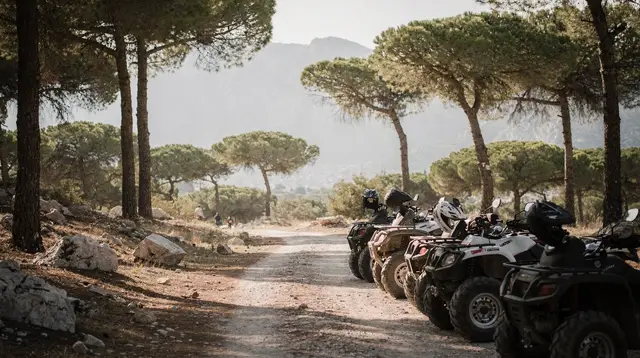
Independent travellers with a rental car have the most flexibility, since they can time the visit for just after sunset and stay as long as they like. Without a car, the most common option is joining an organised jeep safari or private tour departing from Kemer or Antalya, most of which combine the flame walk with Olympos, Phaselis, or a broader Taurus Mountains evening that may also include dinner and a swim stop. A Kemer: Jeep Safari to Olympos Beach and Chimaera Flames covers the beach, the ruins and the evening flame walk in one outing, which suits travellers who would rather not self-drive the mountain roads after dark.
For a visit built specifically around the after-dark experience, a Taurus Mountains night jeep safari that times its stop at the flames for full darkness removes the guesswork of judging sunset and drive time yourself, and typically bundles in a wider evening in the surrounding forest and villages.
Combining the Chimaera with nearby sites
Because the flame field sits within a short drive of several of the region’s better-known ancient and natural sites, few visitors treat it as a stand-alone trip. The most natural pairing is with Olympos itself — a riverside ancient city near the beach village of the same name, worth exploring on foot before or after the flame walk, since the two sites are ticketed and managed separately despite sharing a name-adjacent location. Phaselis, a short drive north, combines Roman and Byzantine ruins directly on a pine-backed bay with three separate beaches on the same site, making it an easy daytime add-on ahead of an evening Chimaera visit.
A private tour covering Phaselis, Olympos and Yanartaş together in one day suits travellers who want all three without managing transfers or timing themselves, particularly useful given how differently each site rewards a daytime versus evening visit.
For hikers specifically, the Chimaera sits close to a section of the long-distance Lycian Way, and a guided outing on the eastern section of the Lycian Way can be arranged to take in the flame field as part of a longer coastal walking day, rather than as an isolated evening excursion.
What else is nearby
Beyond the immediate Chimaera–Olympos–Phaselis cluster, the wider Kemer coast offers several other half-day options worth weighing against or alongside a Chimaera evening. The Tahtalı cable car climbs to a mountain-top Mediterranean viewpoint and works well as a separate morning activity, since its queues and wind-dependent operation make it a poor fit for an evening schedule built around sunset timing elsewhere. The mountain village of Göynük and the beach village of Adrasan both make relaxed daytime stops if the Chimaera itself is reserved for an evening return.
Travellers with a full evening free, rather than a single stop, sometimes prefer to end the day on the water instead of retracing the drive back to Kemer immediately. A night boat tour with dinner and swimming is one way to fill that evening slot on a day when the Chimaera visit happens earlier, in late afternoon or at dusk, rather than after full dark.
Practical tips for the walk
- Footwear matters more here than at most regional sites. The rocky, uneven ground underfoot, combined with darkness on a night visit, makes closed, grippy shoes a real safety consideration rather than a suggestion.
- Bring a dedicated torch or headlamp, not just a phone flashlight, if visiting after sunset — the path has no lighting of its own, and a dying phone battery partway up the trail is a genuine inconvenience.
- Time the visit for shortly after sunset for the strongest visual effect: enough daylight to walk up safely, dark enough by the time you reach the flame field for them to glow properly.
- Expect a small entrance fee, separate from any Olympos or Phaselis ticket — the Chimaera trail and car park are managed independently of the neighbouring ancient sites.
- Allow at least an hour on site beyond the walk itself: the flame field rewards slow wandering between patches rather than a single quick look and turn-back.
- Pack a light layer. Mountain air above the coast cools noticeably after dark, even in the height of a hot Mediterranean summer.
- Combine, don’t isolate. Given the drive involved, pairing the Chimaera with Olympos, Phaselis, or a broader jeep safari itinerary makes far better use of the trip than treating it as a single-purpose outing.
Chimaera night hike: frequently asked questions
Is the Chimaera an active volcano?
No. The flames come from natural gas escaping through fissures in the rock and igniting on contact with air. There is no lava, no crater and no volcanic activity involved — it is a geological curiosity related to gas seepage, not a volcano.
Can the flames be seen during the day?
Yes, but they are much less impressive in daylight. The individual flames are modest, ankle- to knee-height in most spots, and sunlight washes out their visibility. Visitors who only have daytime hours available can still see them, just without the same atmosphere as after dark.
Is the night hike difficult or dangerous?
The walk from the car park to the flame field is short, generally 20 to 30 minutes uphill, but the path is uneven, rocky and unlit. It is not technically difficult for a reasonably fit adult with proper footwear and a light, but it is not a walk to attempt in sandals or without a torch.
What should I bring for a night visit?
A torch or headlamp is essential, since the path has no street lighting and phone flashlights drain batteries quickly. Closed, grippy shoes, a light jacket for cooler mountain air after sunset, and water are all worth carrying even for a short walk.
How do most visitors get to the Chimaera?
Independent travellers with a rental car can drive to the car park near Çıralı and walk in on their own schedule. Most other visitors join an organised jeep safari or private tour from Kemer or Antalya, which usually bundles the Chimaera with Olympos, Phaselis or a broader Taurus Mountains evening out.
Is the Chimaera included with Olympos entry?
No, they are separate. Olympos is a riverside ancient-city site near the beach village of the same name, ticketed on its own, while the Chimaera car park and flame trail sit a short drive away and have their own small entrance fee, unconnected to the Olympos ruins ticket.
Is the site suitable for children or older visitors?
The short uphill walk on uneven stone is manageable for most older children and reasonably mobile adults, though it is not stroller- or wheelchair-friendly. Families visiting after dark should keep young children close, since the ground is uneven and the area is unlit beyond the flame patches themselves.
Hiking and Cycling
Verified deep-linked GetYourGuide tours. Book through these links and we earn a small commission at no cost to you.
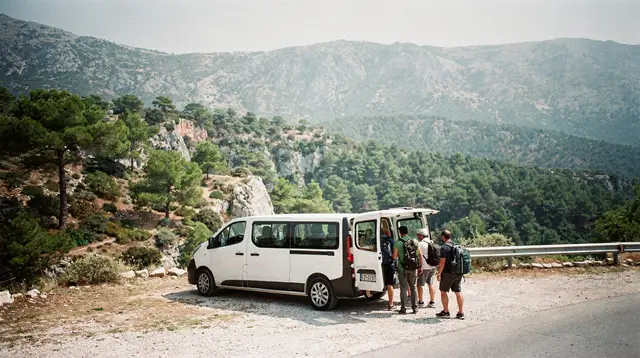
GetYourGuide does not provide a product photo for this activity — the image shows the meeting point, photographed by us.