Setting the right expectations
Kurşunlu Waterfall sits about 20 km northeast of Antalya, in a shaded pine and cedar forest that has been developed into a modest nature park. If you’ve already seen photographs of Antalya’s better-known Düden Waterfalls crashing over a cliff into the Mediterranean, it’s worth resetting your expectations before you drive out here. Kurşunlu is a different kind of place entirely: a series of low, stepped cascades running through forest, feeding a scattering of small pools along a wooden boardwalk. It’s calm, green, and quiet rather than dramatic.
That’s not a criticism — it’s simply what the site is, and knowing it in advance is the difference between a pleasant half-hour stop and a disappointing one. Kurşunlu works best as a secondary stop on a day that has a stronger anchor, and the obvious pairing is the Roman ruins of Perge, which sit only a short drive away and can easily be combined with Kurşunlu into a single half-day itinerary from Antalya city.
Getting there
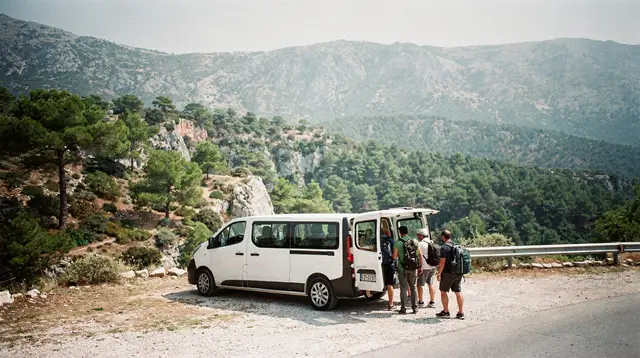
Kurşunlu Waterfall is roughly 30-35 minutes by car from central Antalya, heading northeast past the airport toward Perge. There’s no direct tram or metro connection, so most independent visitors arrive either by rental car, taxi, or as part of an organised day tour that bundles Kurşunlu with Perge or other inland stops. Public dolmuş (shared minibus) options exist toward the general area but are not straightforward for a first-time visitor juggling connections and timing, so a private transfer, rental car, or guided excursion tends to be the more practical choice for most travellers based in Antalya, Lara, or Konyaaltı.
Parking is available on site, and the park itself is reached via a short walk from the entrance gate through the forest.
What you’ll actually see
The waterfall itself is best described as a series of short, wide steps rather than a single dramatic drop. Water flows over layered limestone in a gentle staircase pattern, feeding shallow pools that are genuinely scenic in a soft, forested way — think dappled light through pine branches rather than a roaring cataract. A wooden boardwalk and viewing platforms let you walk close to the water without getting wet (swimming in the falls themselves is generally restricted, and the appeal here is visual and atmospheric rather than a swim spot).
Flow is strongest in spring, when snowmelt and rain keep the stream fuller; by late summer the water can slow to a much gentler trickle, though the shade of the forest canopy remains a real draw regardless of season — this is one of the coolest, most comfortable outdoor spots near Antalya on a hot July or August afternoon.
Beyond the falls, the park includes picnic areas, shaded walking paths, a small café, and enough greenery to make it feel like a genuine break from the city and coastal heat. It’s an easy, flat walk suitable for most fitness levels, including families with younger children or travellers who prefer a gentle stroll over strenuous hiking.
Photographers tend to get the best results in the mid-morning, when sunlight filters through the pine canopy without yet being harsh overhead, and again in the last hour or two before closing, when the light softens and the tour-bus crowds have usually thinned out. Because the falls are wide and low rather than tall, a wide-angle shot from one of the boardwalk platforms, taking in both the cascading steps and the surrounding forest, generally reads better than trying to isolate a single dramatic drop the way you might at Düden. Midday in high summer tends to be the busiest and least atmospheric window, since that’s when day-tour groups combining Kurşunlu with Perge typically pass through.
How Kurşunlu compares to Düden
Because both sites carry the word “waterfall” and sit within the greater Antalya area, first-time visitors often assume they’re interchangeable. They’re not, and the table below should help you decide which one — or whether both — deserve a place on your itinerary.
| Kurşunlu Waterfall | Düden Waterfalls (Upper & Lower) | |
|---|---|---|
| Scale | Small, stepped cascades | Large drops; Lower Düden falls directly into the sea |
| Setting | Pine forest park, inland | Upper: park setting inland; Lower: coastal cliffs |
| Visual drama | Modest, gentle | High — especially Lower Düden’s sea-cliff drop |
| Distance from Antalya centre | About 30-35 minutes | Both within the city or its immediate edge |
| Best paired with | Perge | A city-centre day combining Kaleiçi, Lara, or Konyaaltı |
| Typical visit length | 1-1.5 hours | 1-2 hours combined for both sites |
If your time in the region is limited and you have to choose one waterfall experience, the Düden Waterfalls are the stronger single choice for visual impact, particularly the Lower Falls where the river meets the sea. Kurşunlu earns its place on an itinerary that already has room for a quieter, shadier stop — most naturally as part of a loop that also takes in Perge.
Practical visiting information
Kurşunlu is a paid-entry nature park, and admission is inexpensive relative to the region’s larger ticketed ruins. As with most prices across this coast, treat any specific lira figure as a snapshot that will have moved by the time you travel — Turkey’s persistent inflation means ticket prices in TRY climb steadily, so check current pricing shortly before your visit and consider looking up an approximate euro or dollar equivalent for budgeting purposes.
The park is generally open during standard daytime hours, with slightly longer hours in peak summer season and reduced hours in winter — confirm current opening times before setting out, since they can shift seasonally. Comfortable, closed shoes are sensible for the boardwalk paths, and given the forest setting, mosquito repellent is worth packing in warmer months. Bring water, since the on-site café is basic rather than a full restaurant.
A light layer is worth carrying even on a hot day, since the combination of shade and evaporating water can make the immediate area around the boardwalk noticeably cooler than the open coast. Toilets and basic seating are available near the entrance, and the paths are mostly stroller- and wheelchair-friendly boardwalk rather than uneven forest track, though a few sections narrow enough that larger groups may need to pass single file near the busiest viewing platforms. There’s no dedicated parking fee structure worth planning around in detail — just note that the on-site lot can fill during midday in peak season when several tour buses arrive in the same window.
The best way to combine Kurşunlu with a full day
Because Kurşunlu alone rarely fills more than 90 minutes, most visitors treat it as one stop within a broader half-day or full-day itinerary rather than a dedicated trip. The most natural pairing is Perge, the sprawling Roman-era city a short drive away, whose colonnaded main street, stadium, and theatre offer the kind of substantial, photogenic ruins that Kurşunlu’s gentle nature setting complements well — history in the morning, shade and greenery in the afternoon, or vice versa.
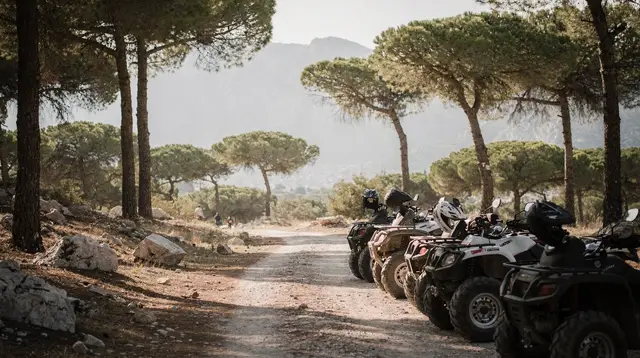
Travellers building a longer inland day from Antalya sometimes extend further to include Termessos, the dramatic mountaintop city, though that adds meaningfully to driving time and a forested climb, so it suits those with a full day and reasonable fitness rather than a quick half-day loop. For a structured option that bundles several inland stops with transport included, several jeep safari and countryside day-trip itineraries from Antalya cover forest, lake, and canyon scenery in a single organised outing — worth comparing against a self-driven plan if you’d rather not navigate and plan the logistics yourself.
One option is the Antalya jeep safari combined with a lake boat trip and lunch, which gives a flavour of the region’s forest and water landscapes in one organised day. A similar alternative is the Karacaören dam jeep safari and boat tour at sunset, timed for golden-hour light over the reservoir.
If you’d rather stay closer to the coast and treat Kurşunlu strictly as a quiet detour, pairing it only with Perge and returning to Antalya, Lara, or Konyaaltı by early afternoon leaves time for a beach session or a wander through Kaleiçi old town later in the day.
Guided tours that bundle Kurşunlu with other ancient sites
Because Kurşunlu sits roughly on the road between Antalya and the region’s cluster of Roman ruins, it’s a common stop on multi-site guided tours rather than a destination most operators sell on its own.
A typical full-day option is the guided tour combining Perge, Aspendos, Side, and Kurşunlu Waterfall, which strings together the colonnaded street at Perge, the well-preserved Roman theatre at Aspendos, the old port town of Side, and a shaded stop at Kurşunlu — a logical way to see four of the region’s inland highlights in one organised day with transport and, typically, a guide included.
A close variant is the Perge, Aspendos, Side and Manavgat Waterfall tour from Antalya, which swaps Kurşunlu for the Manavgat Waterfall further east — worth comparing if you’ve already visited Kurşunlu or prefer to see a different waterfall alongside the same ruins. If you’re based further along the coast rather than in Antalya itself, the Perge, Aspendos, and Kurşunlu Waterfall trip departing from Side covers similar ground with pickup from Side or Manavgat-area hotels instead of Antalya city.
Travellers who’d rather focus purely on the ancient sites without a nature stop can also look at the Perge, Aspendos theatre, and Side city tour, which drops Kurşunlu from the itinerary in favour of more time at the ruins themselves.
Our one-day Perge and Aspendos ancient sites itinerary and Antalya ancient sites guide lay out how these ruins fit together for travellers planning the route independently rather than on an organised tour, and the Antalya city tours guide covers the broader range of half- and full-day tour options departing from the city.
Where to stay for easy access
Kurşunlu is close enough to Antalya city that it doesn’t require its own dedicated base — travellers staying anywhere in central Antalya, Lara, or Konyaaltı can reach it comfortably as a half-day excursion. There’s no reason to plan overnight accommodation specifically around this site; it fits naturally into a broader Antalya city stay rather than requiring its own itinerary base.
For travellers planning their first days in the region, our guide to first-time planning in Antalya covers how to sequence city sights, beaches, and short inland trips like this one, and our roundup of Antalya day trips lists the fuller range of half-day and full-day options beyond Kurşunlu and Perge, including canyon, lake, and boat-based itineraries for travellers with extra time on the coast.
Kurşunlu Waterfall: frequently asked questions
How does Kurşunlu Waterfall compare to Düden Waterfalls?
Kurşunlu is considerably smaller and gentler — a series of low, stepped cascades through pine forest, compared to the Düden Waterfalls’ more dramatic drops, including the Lower Falls’ striking plunge directly into the sea. If you can only visit one, Düden offers more visual impact; Kurşunlu offers more shade and quiet.
How long does it take to visit Kurşunlu Waterfall?
Most visitors spend around 1 to 1.5 hours at the site, which is enough time to walk the boardwalk paths, view the falls from the platforms, and relax briefly in the forest setting. It’s rarely a half-day destination on its own.
Can you swim at Kurşunlu Waterfall?
Swimming directly in the falls themselves is generally restricted, and the site is best approached as a scenic walking and viewing destination rather than a swimming spot. Check current on-site rules, as access policies can be adjusted seasonally.
What’s the best time of year to visit Kurşunlu Waterfall?
Spring and autumn bring milder temperatures and typically fuller water flow. Midsummer sees the water slow considerably, but the forest shade makes it a genuinely comfortable escape from the coastal heat even when the falls themselves are less impressive.
How do you get to Kurşunlu Waterfall from Antalya?
By car or taxi, it’s roughly 30-35 minutes from central Antalya. There’s no direct tram connection, so most independent travellers use a rental car, taxi, or a guided day tour that also includes nearby Perge.
Is Kurşunlu Waterfall suitable for families with young children?
Yes — the boardwalk paths are flat and easy, making it a manageable, low-effort outing for families, including those with strollers or younger children who might struggle with steeper hikes elsewhere in the region.
Should I visit Kurşunlu Waterfall on its own or combine it with something else?
Combine it. Given the modest scale of the site, most travellers pair it with the nearby Roman ruins of Perge, creating a satisfying half-day loop that mixes ancient history with a shaded nature break, rather than making the round trip solely for the waterfall.
Is there an entry fee for Kurşunlu Waterfall?
Yes, it’s a paid-entry nature park, though the fee is modest compared to major ticketed ruins in the region. Given ongoing inflation in Turkey, check current pricing close to your visit date rather than relying on an older quoted figure.
Can I visit Kurşunlu Waterfall as part of a guided tour?
Yes — it’s frequently included as a stop on multi-site guided tours that also cover Perge, Aspendos, and Side, since these all sit within a similar driving radius inland from Antalya. This can be a convenient option if you’d rather not self-drive or coordinate a private taxi for a multi-stop inland day.
Is Kurşunlu Waterfall accessible for visitors with mobility limitations?
Largely yes. The main paths follow a wooden boardwalk that is flat and stroller-friendly, which makes it more accessible than many of the region’s hiking-style nature sites. A few sections near the busiest viewing platforms can narrow when the park is crowded, so allow extra time during peak midday hours in high season.