Ramadan and Public Holidays in Antalya: What Actually Changes
Will Ramadan or Turkish public holidays disrupt an Antalya beach holiday?
Rarely, in the touristy coastal zones. Ramadan's dates shift every year on the lunar calendar, so check an official calendar rather than a fixed date; hotels, resort restaurants and tour operators keep normal hours, though some local eateries away from the resorts may adjust daytime service. Turkey's fixed national holidays follow a separate calendar and can affect opening hours and crowd levels at popular sites more than Ramadan does.
The first time I planned a trip to Antalya during what I thought was “Ramadan season,” I made the mistake of copying a date off an old blog post. It was wrong. Not wildly wrong, but off by nearly two weeks, which was enough to leave me second-guessing plans I didn’t actually need to second-guess. That’s the thing I want to get across here: Ramadan moves every single year, and nothing printed on a page — including this one — should be treated as this year’s actual date.
Why Ramadan never lands on the same date twice
Ramadan follows the Islamic lunar calendar, which is shorter than the standard solar calendar most of us plan trips around. Because of that, the month shifts roughly ten to eleven days earlier each year relative to the calendar on our phones. Over a decade, it cycles through every season — summer one year, winter a few years later. If you’ve read that Ramadan falls in a particular month, that’s only true for whichever year that source was written in.
What this means practically: don’t trust a fixed date on any travel site, including anything I write here months or years from now. Before you lock in flights, check an official Islamic calendar or a reliable, current Turkish source close to your travel dates. It takes two minutes and saves you from planning around a month that’s already passed.
What actually happens on the coast during Ramadan
Here’s what surprised me the first time I was in Antalya during Ramadan: almost nothing, at least in the resort zones. Hotels along Lara Beach and Konyaaltı Beach kept their breakfast buffets, pool bars and dinner service running exactly as normal. Restaurants in Kaleiçi, the old town, stayed open through the day for anyone who wanted lunch. Boat trips along the coast, day tours out to Aspendos or Termessos, and excursions around Side and Alanya all ran on their usual schedules.
Where I have noticed a shift is in smaller, more local restaurants — the kind with a mostly Turkish clientele, away from the beachfront strip. Some of these adjust their daytime hours during Ramadan, serving lighter options or waiting until sunset (iftar, the meal that breaks the fast) for a full spread. If a place I’m eyeing looks quiet at lunchtime during Ramadan, I just check before assuming it’s closed for the day — it’s often only closed until evening.
I’d also say: eating or drinking water in public during the day is not something anyone will blink at in a tourist area. I don’t hide a coffee or a sandwich walking along the harbour in Antalya. I’m a bit more mindful in smaller inland towns, mostly out of basic courtesy rather than any actual rule.
Ramadan versus Turkey’s public holidays — two different calendars
This is the part I mixed up for years before I sorted it out properly. Ramadan itself is not a public holiday — it’s a month of fasting from dawn to sunset. What follows it is a separate, multi-day religious holiday marking the end of the fast, and there’s a second religious holiday later in the Islamic calendar year, roughly a couple of months after. Both of these move with the lunar calendar, just like Ramadan does.
Turkey also has its own set of fixed national holidays tied to the republic’s calendar — dates that land on the same day every year, unrelated to the lunar cycle. Those are a completely separate system from the religious holidays. If you’re trying to plan around “Turkish holidays” broadly, it’s worth checking both calendars rather than assuming one covers the other.
What I’ve actually noticed affecting a trip more than Ramadan itself is the holiday at the end of it, plus that second religious holiday later in the year. These are when a lot of Turkish families travel domestically — I’ve seen busier queues at popular sites, a livelier atmosphere at beaches like Cleopatra Beach, and it’s worth booking transport, popular excursions and even restaurant tables a little earlier if your dates happen to overlap.
How I actually plan around it
My approach now is simple. A few months before booking, I check a current calendar for that specific year’s Ramadan dates and the holiday that follows it, rather than relying on memory or an old article. If my trip overlaps with the post-Ramadan holiday specifically, I book excursions and transfers earlier than I otherwise would, since that’s the period I’ve seen the most local travel demand.
Beyond that, I don’t restructure the trip much. A boozy boat day along the Green Canyon with lunch on board, a jeep safari up into the hills near Sapadere Canyon, or a slower cruise through hidden coves and a blue lagoon all run through Ramadan without any noticeable change. If I’m booking one of these, I still go with the same operators I’d use any other time of year.
a Green Canyon day trip with a boat lunch included is one I’ve done outside Ramadan and would happily book during it too, since the whole itinerary runs on the water rather than through local restaurants.
Similarly, a cruise past Alanya’s hidden coves and blue lagoon or a jeep safari into Sapadere Canyon with lunch both keep to their normal operating schedule year-round. For something a bit more active inland, I’ve also seen a mountain trail jeep adventure with a riverside lunch stop run without any Ramadan-related changes.
Dress and mosque etiquette
If I duck into an active mosque — and there are a few worth seeing around Kaleiçi’s old town — I dress the same way I would any time of year: shoulders and knees covered, shoes off inside. Ramadan doesn’t change that rule, it just makes it slightly more visible, since local worship is more frequent through the month. It doesn’t touch beachwear norms on the coast at all — bikinis and swim shorts at Lara or Konyaaltı are unaffected.
A few other things worth checking before you go
None of this changes how I’d plan a first Antalya trip overall — I still start from the same basics I’d recommend to anyone visiting Antalya for the first time, or comparing Side, Alanya and Kemer as a base.
Currency, tipping norms, visa rules and market haggling are all separate topics from Ramadan, and each is worth its own quick check before you land — a Ramadan-timed trip doesn’t need a fundamentally different packing list or budget, just a bit more attention to a couple of local restaurant hours and, if it overlaps with the post-fasting holiday, slightly earlier bookings for transport and excursions. I’d also browse a broader spread of food and market experiences around the region regardless of when you travel — Ramadan just shifts a handful of local schedules, not the whole coast’s rhythm.
tours.Seasonal
Verified deep-linked GetYourGuide tours. Book through these links and we earn a small commission at no cost to you.
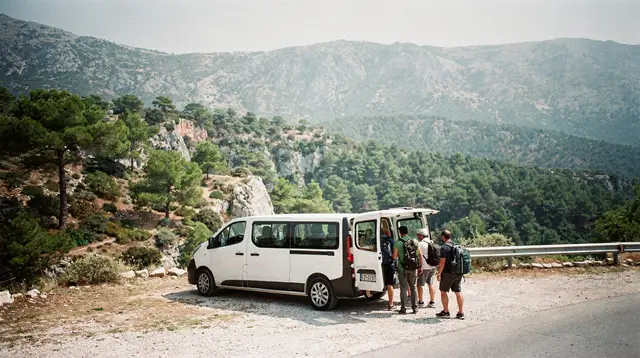
GetYourGuide does not provide a product photo for this activity — the image shows the meeting point, photographed by us.