Rafting vs Canyoning Near Antalya: Which One to Book
What's the difference between rafting and canyoning near Antalya?
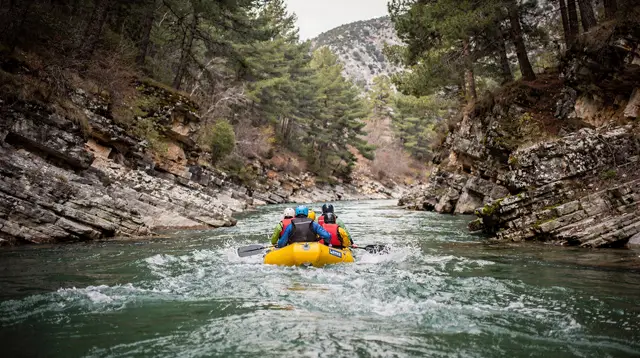
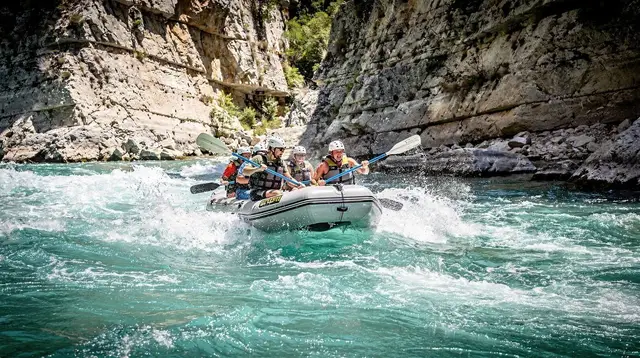
Rafting is a seated, guided descent of a river in an inflatable boat, paddling as a team through rapids graded by intensity. Canyoning is a slower, on-foot descent through a narrow gorge — walking, wading, sliding and abseiling past waterfalls. Both run out of the Köprülü Canyon area and nearby rivers, use full safety gear, and need no prior experience, but they ask different things of the body and suit different group compositions.
Two very different ways to get wet in the Taurus Mountains
Ask a hotel rep in Antalya about “rafting” and “canyoning” and they’ll often be lumped into the same conversation, sold from the same desk, sometimes even the same brochure. That’s understandable — both happen in the gorges behind the coast, both involve a river, a helmet and getting thoroughly soaked, and both are commonly booked as a half-day or full-day escape from the beach. But they are structurally different activities, and picking the wrong one for your group can turn a highlight of the trip into the one excursion everyone complains about.
Rafting is a seated, team-paddled descent of a river in an inflatable boat, following the current downstream through a sequence of rapids. Canyoning is an on-foot, guided descent through a narrow gorge — walking along riverbed rock, wading through pools, sliding down natural rock chutes and abseiling past small waterfalls with a harness and rope. One keeps you largely in a boat; the other keeps you largely on your feet, in the water, and occasionally hanging from a rope. This guide walks through fitness level, what’s provided, when the water is at its best, and how to match either activity — or both — to the group you’re actually traveling with, rather than pointing you toward a list of operators.
Where these trips actually run
Almost all rafting and canyoning sold out of Antalya centers on the Köprülü Canyon, a national park roughly 90 minutes to two hours inland from the coast, where the Köprüçay River cuts a dramatic gorge through the Taurus foothills. This is the same river most operators use for both activities — rafting descends open stretches of it, while canyoning routes use narrower side-gorges and tributary sections nearby.
A smaller number of operators run canyoning and rafting combinations further east near Manavgat or package a rafting stop into wider jeep-safari and nature-tour itineraries that also visit Selge, a remote hilltop ruin above the canyon reached by the same rough mountain road.
Because the pickup and drive time from most coastal resorts is similar for both activities — expect roughly 1.5 to 2.5 hours each way depending on whether you’re staying in Antalya city, Belek, Side or Kemer — the choice of which activity matters more than the choice of where. A full day is largely consumed by transport either way, so it’s worth being clear on what you actually want to do once you arrive.
Fitness and comfort level: the real deciding factor
This is where the two activities diverge most, and it’s the single most useful question to ask before booking.
Rafting asks for short bursts of paddling strength and the ability to brace and hold on through a rapid, but for long stretches you’re simply sitting in the boat, floating with the current. The Köprülü Canyon’s standard tourist run is generally graded as an easy-to-moderate introduction (commonly cited around Grade II, occasionally touching III depending on water level and the section run) — approachable for reasonably fit first-timers, families with older children, and groups with a wide range of ages, as long as everyone can follow instructions and hold a paddle.
Canyoning is a longer, more physically sustained effort: walking over uneven, slippery rock for an extended stretch, short climbs, jumping or sliding into pools, and abseiling down rope past waterfalls. It also means more sustained time immersed in cold mountain water, which is where a wetsuit (provided) becomes essential rather than optional. Canyoning generally suits fit teenagers and adults comfortable with heights, cold water and a slower, more technical pace — it is a noticeably bigger physical ask than rafting’s standard tourist route.
| Rafting (standard route) | Canyoning | |
|---|---|---|
| Typical duration on the water/rock | 1-1.5 hours | 2-4 hours |
| Physical demand | Moderate, in bursts | Higher, sustained |
| Swimming ability | Recommended | Usually required |
| Minimum age (typical) | ~6-7 years | Teens/adults |
| Cold-water exposure | Brief, splashes | Extended, full immersion |
| Heights/abseiling involved | No | Yes, short abseils |
| Best suited to | Families, mixed-age groups, first-timers | Fit adults, small groups seeking more adrenaline |
Ages and minimums vary by operator and by the specific route, so treat the table as a general pattern rather than a fixed rule — always confirm with the tour provider for your group’s exact composition.
What’s provided, and what to bring yourself
Both activities are normally run as fully guided, all-gear-included excursions — this isn’t a niche sport requiring you to own equipment, and operators are used to outfitting complete beginners.
For rafting, expect the operator to provide the raft, paddle, life jacket and helmet. Some also throw in a wetsuit or splash jacket, particularly in cooler months or on higher-water routes; ask when booking if the water is likely to be cold. You’ll want to wear a swimsuit under quick-dry clothing, secure water shoes or trainers you don’t mind getting soaked (sandals or flip-flops are generally a poor idea and sometimes explicitly disallowed), and bring a full change of clothes and a towel for afterward.
For canyoning, the gear list is longer because the activity is more technical: a full wetsuit, climbing harness, helmet and life jacket are standard-issue, along with ropes and abseiling equipment operated by the guide. You’ll typically wear the wetsuit over a swimsuit, with closed-toe water shoes required underneath — canyoning routes involve too much rock contact for bare feet or open sandals. Bring the same post-activity essentials: a dry change of clothes, a towel, and something to keep your phone and valuables safe and dry during the drive (most operators don’t allow phones on the water itself).
Neither activity requires you to bring your own technical kit, but both are physical enough that comfortable, secure footwear makes a real difference to how much you enjoy the day.
Book the Köprülü Canyon rafting tour for the classic introductory river run, or if your group wants more of a technical challenge, combine canyoning with SUP and rafting in one adventure day.
When the water is at its best
Water level and flow speed on the Köprüçay River change meaningfully across the season, and this affects both the intensity and the character of the trip.
Spring through early summer (roughly April to June) brings the strongest flow, fed by snowmelt draining down from the Taurus Mountains. This is when rafting rapids are at their liveliest and the river feels most dramatic — the trade-off is colder water and a slightly higher chance of a route being adjusted or paused after heavy rain.
Mid-to-late summer (July-August) sees the river settle into a gentler, lower-volume flow. Rafting becomes noticeably calmer and more family-friendly at this point, which suits groups after a relaxed float rather than a technical challenge, while the warmer air and water temperatures make canyoning’s cold-water sections more comfortable to sit through.
Early autumn (September into October) often lands in between — reduced flow but still enough current for an enjoyable ride, and this is typically when full-day combination tours (rafting plus canyoning plus zipline, for instance) run most comfortably, since neither activity feels extreme.
Outside these windows, some operators pause canyoning routes entirely in the coldest, wettest stretches of winter due to flash-flood risk in narrow gorges — a pattern also seen at Saklıkent Canyon further along the coast, which closes after heavy rain for the same reason. If your trip falls in winter, confirm with the operator that the specific route is running before you commit a day to it.
Matching the activity to your group
Traveling with young children or a wide age range? Rafting’s standard Köprülü Canyon route is the more forgiving choice — seated, guided, over in about an hour and a half on the water, and generally accepting of children from around 6-7 upward depending on the operator. A nature tour pairing rafting with the Selge ruins is a good way to fold in some history for a family group without asking too much physically.
A fit group of adults or teens after a bigger adrenaline hit? Canyoning’s climbing, sliding and abseiling delivers a noticeably different, more technical day out. A canyoning and rafting combination tour from Belek lets a group experience both in one outing without needing two separate excursion days.
Staying in Belek or Side and want the whole package? A full-day multi-activity tour that layers canyoning, rafting and a zipline onto one itinerary is a practical way to make the long drive inland worth it — this full-day canyoning, rafting and zipline trip with lunch is built around exactly that combination, with a meal included so the day doesn’t need a separate stop.
Short on time and only want one activity? Rafting alone is the faster commitment — typically back on the coast by mid-afternoon — while a canyoning-only day tends to run longer given the walking pace through the gorge and the technical stops along the way. Weigh this against how much of your remaining trip you want to spend on an excursion versus back at the beach or exploring Antalya’s old town.
Practical notes before you book
A few things worth checking directly with the operator rather than assuming:
- Health conditions: heart conditions, pregnancy, recent surgery or serious mobility limitations are commonly listed as exclusions for both activities — flag any concerns when booking rather than on the day.
- What’s actually included: transport, lunch, gear and photos/video are handled differently across operators; some include a cooked lunch on-site, others stop at a riverside restaurant as a separate cost.
- Group size on the water: rafting boats typically hold 6-8 people plus a guide; ask how many rafts run per departure if you’re booking a private or small-group experience versus joining a larger convoy.
- Photography: waterproof phone pouches are sometimes allowed on calmer rafting stretches but rarely on canyoning routes given the climbing and abseiling — many operators instead offer a paid photo/video package shot by the guide team.
- Cancellation for weather: heavy rain can raise river levels beyond safe limits or trigger flash-flood closures in canyon sections; check the operator’s weather policy, particularly if you’re traveling outside the main April-to-October window.
Whichever you choose, both activities are run daily out of the coast in season with full safety gear and English-speaking guides, and neither requires prior experience — the real decision is how much time your group wants to spend paddling versus scrambling, and how much cold water and height everyone is genuinely up for.
Rafting and canyoning near Antalya: your questions answered
What’s the difference between rafting and canyoning near Antalya?
Rafting is a seated, guided descent of a river in an inflatable boat, paddling as a team through rapids graded by intensity. Canyoning is a slower, on-foot descent through a narrow gorge — walking, wading, sliding and abseiling past waterfalls. Both run out of the Köprülü Canyon area and nearby rivers, use full safety gear, and need no prior experience, but they ask different things of the body and suit different group compositions.
Is rafting or canyoning more physically demanding near Antalya?
Canyoning is generally the more physically demanding of the two. Rafting mostly asks for paddling strength in bursts and the ability to sit and brace through rapids; canyoning involves scrambling over wet rock, short climbs, abseils and cold-water immersion over a longer, slower stretch of time.
Do I need to know how to swim?
Basic swimming ability is normally required or strongly recommended for both activities, since both involve time in moving water and the possibility of falling in. Non-swimmers are usually not accepted on canyoning trips and may be restricted on higher-grade rafting sections — check with the operator before booking.
What is provided and what should I bring?
Operators typically provide the life jacket, helmet and, for canyoning, a wetsuit and climbing harness; rafting usually includes the paddle and boat. Bring quick-dry clothing, a swimsuit worn underneath, secured water shoes or trainers (not flip-flops), a towel and a change of clothes for after.
When is the water best for rafting near Köprülü Canyon?
The Köprülü River generally carries its strongest, most exciting flow in spring and early summer, roughly April through June, fed by snowmelt from the Taurus Mountains. By late summer the water level drops and the ride becomes noticeably gentler; some operators pair a lower-water rafting run with jeep safaris or zipline add-ons to round out the day.
Can children or older travelers take part?
Many rafting operators accept children from around 6-7 years old on the lower-intensity sections, with life jackets sized accordingly; canyoning routes near Antalya are generally aimed at teenagers and adults given the climbing and cold-water elements. Age and health restrictions vary by operator and by the specific route — always confirm before booking for a mixed-age group.
Is rafting or canyoning safer for a first-timer?
Both are run as guided, beginner-friendly activities with safety briefings and full protective gear, and serious incidents are rare when instructions are followed. Rafting on the standard tourist sections is generally considered the gentler introduction; canyoning carries slightly more inherent risk from slippery rock and abseiling, though qualified guides manage this closely.
Can I combine rafting and canyoning in one day?
Some full-day tours out of Antalya, Belek and Side combine canyoning with rafting, a zipline and lunch on a single itinerary, letting a group sample both without committing a separate day to each. Check the specific itinerary, as not every operator runs the same combination.
Rafting and Canyoning
Verified deep-linked GetYourGuide tours. Book through these links and we earn a small commission at no cost to you.
GetYourGuide does not provide a product photo for this activity — the image shows the meeting point, photographed by us.