A mountain city that never became a tourist stop
Most of the ancient sites around Antalya sit within easy reach of a coastal road — a car park, a ticket booth, a shaded café nearby. Selge is a different kind of place. Perched at roughly 1,050 metres in the Taurus Mountains, high above the Köprülü Canyon, it was once a substantial Pisidian and later Roman city of some standing, with a theatre, a stadium, temples and an extensive network of streets and cisterns still traceable across the hillside. Today it is one of the least visited major ruins in the Belek and Aspendos area, not because it lacks substance, but because it lacks a straightforward road.
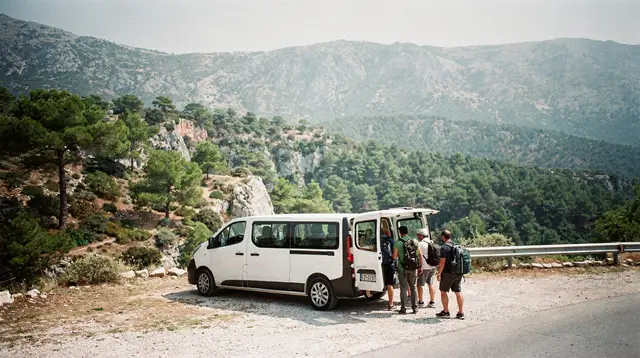
Reaching Selge means leaving the coastal plain, climbing through the canyon, and following a narrower, winding mountain road up through the villages of the Köprüçay valley. The route is scenic — pine forest, terraced hillsides, glimpses of the gorge far below — but it is also slow. Allow noticeably more time than the raw distance suggests; hairpin bends and a single-lane surface for stretches of the final approach mean this is not a road to rush, especially with an unfamiliar rental car. There is no direct bus service to speak of, and the drive is long enough that Selge rarely appears as a dedicated day trip from Antalya on its own.
A Pisidian stronghold that outlasted its neighbours
Long before Rome absorbed this stretch of the Taurus Mountains, Selge was already a significant city of the Pisidians, the mountain people whose settlements dotted the highlands above the Pamphylian coast. Ancient sources describe it as one of the more populous and independent-minded Pisidian cities, protected less by walls than by sheer geography — a defensible plateau reached only by narrow approaches, which let it maintain a degree of self-rule that lowland cities along the coast rarely managed.
That same isolation, which once kept invading armies at bay, is what keeps modern coach tours away today: there was never a reason to build the kind of coastal-standard road that serves Aspendos or Perge, because Selge’s defensibility depended on the opposite.
Under Roman rule the city continued to mint its own coinage and retained a level of civic importance disproportionate to its remote position, a status reflected in the scale of the theatre and stadium that still stand today. Olive cultivation and styrax resin — used in incense and perfume across the ancient world — were long associated with the surrounding hillsides, and terraced groves are still visible on the slopes below the ruins, a rare case of a Roman-era economic activity that never really stopped.
Why Selge is usually a Köprülü Canyon add-on, not a separate trip
Given the drive time and the site’s remoteness, the practical way most visitors see Selge is as an extension of a day already built around the Köprülü Canyon — typically a morning of whitewater rafting followed by lunch at one of the riverside restaurants near the canyon, then a detour up the mountain road to the ruins in the afternoon before heading back down to the coast. Several operators package the two together for exactly this reason: rafting fills the morning, Selge fills the afternoon, and neither one on its own quite justifies the round trip from Antalya.
If a rafting trip with the Köprülü stretch built in appeals more than assembling the day piece by piece, a guided option that pairs canyon activities with a stop at Selge’s theatre removes the need to navigate the mountain road independently — worth booking through a jeep safari that combines Tazı Canyon and the Selge theatre if self-driving the final approach feels like more than you want to manage.
For travellers who would rather combine the canyon’s whitewater with a broader adventure day and decide on Selge separately, a canyon-focused jeep safari with a boat stop and lunch included covers the rafting-adjacent side of the day for travellers who’d rather decide on the Selge detour once they’re already up in the mountains.
What’s actually at the site
Selge has no visitor centre, no signage in multiple languages, and only minimal fencing around its most fragile structures — this is very much a walk-among-the-stones site rather than a curated museum experience, closer in spirit to Termessos than to the manicured presentation at Aspendos.
The theatre is the site’s centrepiece and the best-preserved structure, cut partly into the hillside with a sweeping view down toward the canyon and the surrounding peaks. It is smaller than the Roman theatre at Aspendos and far less restored, with tumbled seating rows and overgrown stonework in places, but the setting — a mountain amphitheatre rather than a valley-floor one — gives it a character the more famous sites nearby don’t have.
The stadium, unusually well preserved for a site this remote, lies a short walk from the theatre and is one of relatively few ancient stadiums in the region still recognisable as such.
Scattered ruins across the modern village include column fragments, temple remains, a city gate, and traces of the old street grid, many of them now standing incongruously among working farmland and village houses — Selge is still a living settlement (known locally as Zerk or Altınkaya), and much of the ancient city overlaps with it rather than sitting behind a perimeter fence.
There is no dedicated ticket booth in the conventional sense and no café or shop at the site itself — bring water, sun protection, and appropriate footwear for uneven ground, since none of that is available to buy nearby.
Getting there and what to expect on the road
| From | Approx. distance | Approx. drive time | Road character |
|---|---|---|---|
| Antalya city | ~95-100 km | 2-2.5 hours | Highway to the canyon, then a narrow mountain road |
| Belek | ~75-85 km | 1.5-2 hours | Similar route via the Köprülü Canyon turn-off |
| Side / Manavgat | ~70-80 km | 1.5-2 hours | Inland via the Manavgat river valley |
These times assume dry, daylight conditions; they lengthen in poor weather, and the final stretch of road can be affected by seasonal rockfall or maintenance closures, so it’s worth checking locally before setting out, particularly outside peak summer months. A car with reasonable ground clearance is preferable to a compact city rental for the last few kilometres, and fuel should be topped up before leaving the main road — there are no reliable filling stations near the site itself.
Public transport does not serve Selge in any practical way for a day visit; a self-drive rental, a private transfer, or a tour that includes the detour are the three realistic options. Travellers already booked on rafting who want the ruins added without renting a car of their own are generally better served by a combined tour than by trying to arrange a taxi up the mountain independently.
Travellers weighing whether to self-drive at all are usually better off deciding based on the rafting portion of the day rather than the ruins alone — a Köprülü Canyon whitewater rafting trip covers the river activity with transport included, which removes the mountain road from the equation entirely for anyone unsure about driving it themselves.
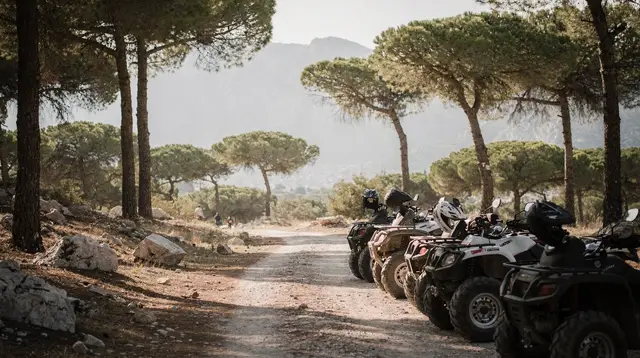
For a day built around a wider mix of activities rather than rafting specifically, a combined rafting, buggy, zipline and monster truck tour bundles several canyon-area activities into one transfer, which is worth considering for groups where not everyone wants to spend the whole day on the water.
Practical tips for visiting
- Bring your own water and snacks. There is no shop, café, or reliable vendor at or near the site — the nearest options are back down near the Köprülü Canyon river restaurants.
- Wear proper walking shoes. Paths are uneven, partly overgrown, and unpaved in most places; this is not a site suited to sandals.
- Go earlier rather than later. Given the drive time, an early start makes it realistic to combine Selge with rafting or another canyon activity and still be back on the coast before dark.
- Check the road before setting off in shoulder season or after heavy rain — the mountain route can be affected by conditions that wouldn’t touch the coastal highway.
- Don’t expect facilities. No restrooms, no ticket office in the usual sense, and limited or no mobile signal in stretches of the drive — plan accordingly and let someone know your route if travelling independently.
- Combine, don’t dedicate. Given the round-trip time from the coast, most visitors get more out of the day by pairing Selge with Köprülü Canyon rafting, a jeep safari, or a stop at Aspendos on the way rather than treating it as a single-site outing.
How Selge compares to other regional ruins
| Site | Preservation / restoration | Crowds | Access |
|---|---|---|---|
| Selge | Minimal, mostly untouched | Very low | Long mountain road, no direct transit |
| Aspendos | Extensively preserved theatre | Moderate to high | Easy paved road from Antalya/Belek |
| Termessos | Partially cleared, forested setting | Moderate | Paved road plus a walk/climb |
| Perge | Well excavated and marked | Moderate to high | Short drive from Antalya |
The trade-off is straightforward: Selge offers solitude and a genuinely remote atmosphere in exchange for a longer, more demanding journey and none of the visitor comforts found at Aspendos or Perge.
Suggested combined itinerary
- Early morning — depart Antalya, Belek, or Side for the Köprülü Canyon area.
- Mid-morning — whitewater rafting or a canyon-based jeep safari.
- Midday — riverside lunch near the canyon (widely available at restaurants along the river).
- Early afternoon — drive up to Selge for 2-3 hours at the theatre, stadium, and scattered ruins.
- Late afternoon — descend and return to the coast, or extend the day toward Aspendos if time allows.
Travellers building a longer regional itinerary sometimes fold this combination into a broader loop through the Belek and Aspendos area — see the general things to do listings and day trip options for how Selge and Köprülü fit alongside Aspendos and Perge on a multi-stop route.
Selge: frequently asked questions
How do I get to Selge from Antalya?
There is no direct highway route. The drive covers roughly 95-100 km and takes about 2-2.5 hours, following the road toward the Köprülü Canyon before turning onto a narrower, winding mountain road for the final ascent to the village and ruins.
Is there an entrance fee for Selge?
Selge does not operate like a conventional fenced, ticketed archaeological park in the way Aspendos or Perge do. Ticketing arrangements can change, so check current entry conditions locally or with a tour operator before visiting rather than assuming free access.
Can I visit Selge without a car?
It’s difficult. There is no meaningful public transport link, so the realistic options are a self-drive rental with reasonable ground clearance, a private transfer, or a guided tour that includes the detour, most commonly bundled with a Köprülü Canyon rafting day.
How long should I spend at Selge?
Two to three hours is generally enough to see the theatre, stadium, and the main scattered ruins on foot. Given the drive time involved, most visitors treat it as a half-day addition to a longer day built around the canyon rather than a full day on its own.
Is Selge suitable for a family visit?
The uneven, unpaved terrain and lack of facilities make it more suited to families comfortable with a moderate amount of walking and no amenities on site. Younger children or anyone needing step-free access may find Aspendos or Perge considerably easier.
What should I bring to Selge?
Water, sun protection, sturdy closed shoes, and cash for fuel, since there is nowhere to buy supplies at the site itself. A car with good ground clearance is worth arranging in advance if self-driving.
Can Selge be combined with other sites in one day?
Yes — it’s most commonly paired with Köprülü Canyon rafting, and some travellers extend the day further to include Aspendos on the way back to the coast, though that makes for a long day given the driving involved.
Is the road to Selge safe to drive?
The road is paved but narrow and winding in its final stretch, with limited passing space in places. It’s manageable in dry daylight conditions with an attentive driver, but it’s worth checking current road conditions before setting out in poor weather or after heavy rain, and driving it after dark is not advisable.