Side Jeep Safaris: What to Expect and How to Choose One
What does a jeep safari from Side offer that a regular excursion doesn't?
Jeep safaris from Side trade air-conditioned coach seats for open-top 4x4 vehicles that leave the highway for dirt tracks through pine forest, riverbeds and mountain villages, usually combining a canyon or waterfall stop, a village visit, and sometimes rafting or a boat leg. Expect dust, bouncing over rough terrain, and a physically active day rather than a scenic drive-by.
Most people booking their first Side excursion picture a coach: air conditioning, a fixed schedule, a guide with a microphone, and a route that never leaves paved roads. A jeep safari is a different kind of day out entirely, and it’s worth understanding exactly what that difference means — in terrain, pace, comfort and preparation — before you commit a full day and a nonrefundable booking to it.
Why a jeep safari instead of a standard excursion
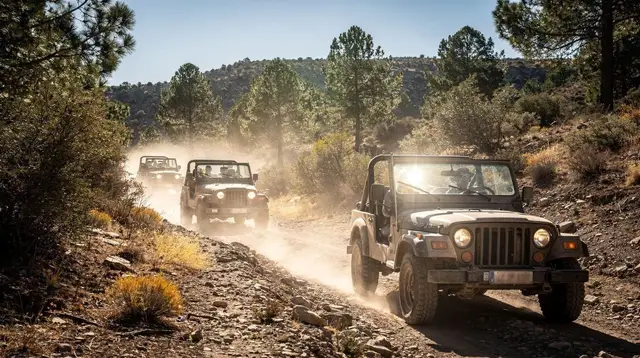
The core appeal of a jeep safari out of Side is access. Open-top 4x4 vehicles can leave the highway behind and follow dirt tracks into terrain a coach simply cannot reach: pine forest trails climbing into the hills above the coast, dry riverbeds that wind through farmland, and unpaved lanes threading between mountain villages that see little other tourist traffic. A standard excursion connects fixed, paved stops in a predictable order. A jeep safari’s whole premise is the terrain in between those stops — the drive itself is part of the experience, not just transport to get somewhere else.
That access usually buys three things a coach tour doesn’t offer in the same way:
- Rougher, more remote terrain — riverbeds, forest tracks and switchback mountain roads rather than a parking lot next to a monument.
- Village stops that a coach itinerary skips, giving a glimpse of rural life inland from the resort strip along the coast.
- A built-in adventure format — most routes pair the driving with a swimming stop, a mud bath, a short rafting segment, or a boat leg, rather than ending with just a gift shop and a bus back.
The trade-off is comfort. A coach seat with air conditioning is replaced by an open or semi-open vehicle exposed to sun, dust and vibration for several hours. If the appeal of a day trip is mainly seeing famous sites in comfort, a jeep safari probably isn’t the right format — a city tour or a boat trip from Side will suit that better. If the appeal is the terrain itself and a more physical, active day, the jeep format delivers something a bus genuinely cannot.
What a typical route from Side looks like
Routes vary by operator, but a common structure from Side runs roughly like this: pickup from hotels around Side, Manavgat and the wider coastal strip in the morning, a drive inland gathering the group into fewer, larger 4x4 vehicles, then a climb away from the main road onto dirt tracks. From there, expect one or more of the following depending on the specific tour: a stretch of forest driving with photo stops overlooking the valley, a village visit where local producers sometimes offer honey, dried fruit or a short tea break, and a swimming or mud-bath stop at a river or canyon — Green Canyon reservoir is a common destination for routes heading that direction.
Some operators extend the format further, combining the jeep leg with rafting, a quad or buggy segment, or a boat trip back along the coast — a look at the tours listed on this page shows the range, from a straightforward half-day jeep route to combined jeep-and-boat or jeep-and-rafting formats. Lunch is typically included on full-day versions, often at a riverside restaurant reached partway through the route, with local dishes served family-style.
Duration matters when comparing options: a half-day version might run four to five hours including pickup, while a full-day combination tour pairing a jeep leg with rafting or a boat trip can run seven to eight hours door to door. Longer isn’t automatically better — it depends on how much time you want to spend on the road versus how much aversion you have to dust and bouncing for extended stretches.
| Format | Typical length | What’s added to the jeep leg |
|---|---|---|
| Half-day jeep safari | 4-5 hours | Village stop, viewpoints, sometimes a short swim stop |
| Jeep safari + mud bath / canyon | 6-7 hours | Green Canyon swim stop, mud bath, lunch |
| Jeep + boat combo | 7-8 hours | Afternoon or return leg by boat along the coast |
| Jeep + rafting/zipline/buggy 3-in-1 | Full day | Rafting segment and a zipline or buggy leg added to the route |
The precautions worth planning for before you book
The dust and the jolting ride are the two things that catch first-timers off guard most often, and neither is exaggeration for marketing effect — they’re a direct result of driving open vehicles over unpaved terrain in a dry Mediterranean climate.
Dust. Summer conditions along this stretch of coast are hot and dry for months at a time, and unpaved tracks kick up fine, reddish dust that settles on everything — skin, hair, clothing, sunglasses, and any bag or camera left open. Vehicles following behind the lead jeep tend to catch the worst of it, since dust hangs in the air rather than clearing quickly. A buff, bandana or light scarf pulled over the nose and mouth makes a real difference, as do sunglasses (contact lens wearers may find the dust more irritating than glasses wearers do). Anything electronic — phones, cameras — is worth sealing in a dry bag or a simple zip-lock bag rather than left loose in a pocket or open tote.
Bouncing and jolts. These are genuine, sustained jolts over rocks, ruts and uneven ground, not a gentle rocking motion. Standing braced with knees slightly bent, or holding the roll bar loosely rather than gripping a fixed seat rigidly, tends to absorb the impact better than sitting stiffly. This matters most for anyone with an existing back problem, a recent injury, or a tendency toward motion sickness — it’s worth being honest about that before booking rather than discovering it partway along a dirt track with no way to opt out mid-route. Pregnant travellers are commonly advised against these tours by operators for the same reason.
Sun and heat. Open-top vehicles offer little shade for hours at a stretch. Reef-safe sunscreen reapplied through the day, a hat that won’t blow off, and water carried rather than assumed-available all help — some operators supply water, but it’s safer to bring your own rather than rely on it.
What to wear. Closed shoes that can handle mud, water and dust — sandals tend to fill with grit and offer no ankle support on uneven ground. Clothes you don’t mind getting genuinely dirty, and a swimsuit worn under your clothes if the route includes a river, canyon or mud-bath stop, since changing facilities at these stops are often basic or nonexistent.
Choosing between jeep, quad, buggy and rafting formats
Side’s inland activity scene offers several ways to cover similar terrain, and the differences matter for anyone deciding between them. A jeep safari is a shared, driven experience — a guide handles the vehicle, and passengers ride together in groups of four to six, which suits travellers who want the terrain and the adventure without the responsibility of driving.
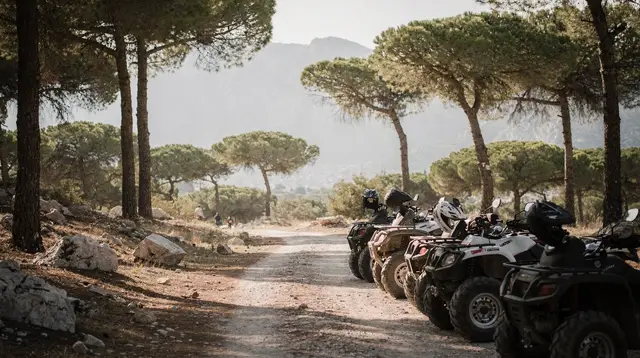
A quad or buggy safari puts each guest behind their own handlebars after a short briefing, adding active driving to the mix — appealing to those who want more control and a more physical role, less appealing to anyone nervous about handling a vehicle on rough ground. Rafting and canyoning trips swap the vehicle for a river entirely, trading dust for water and a different kind of physical exertion.
Combination tours blur these lines deliberately — a jeep-and-rafting day, or a jeep-and-buggy 3-in-1 format, packs more variety into a single booking but also means a longer, more tiring day overall. For a first visit to this style of excursion, a straightforward half-day jeep safari is a reasonable way to test whether the format suits you before committing to a longer combination tour.
For a shared, driven day into the hills above Side with a village stop and a swim, a standard jeep safari from Side covers the core format without extra add-ons. Travellers who want to end the day differently, pairing the dirt-track drive with time on the water, can look at a jeep safari combined with a boat trip back along the coast.
For a route built specifically around a mud stop and a swim at the reservoir, a jeep safari to Green Canyon with a mud bath is the more targeted option, while those wanting to combine driving, a quad segment and a lake boat leg in one day can consider a jeep, quad and boat combination tour for a fuller adventure day.
More jeep safari formats worth comparing
The five tours listed on this page don’t exhaust the range of jeep safari formats running out of Side. For travellers who want the dirt-track drive without an early departure, an evening jeep safari with a Green Canyon cruise and dinner swaps the midday heat and dust for cooler light and a boat-and-meal finish.
Those set on covering more ground inland, further from the coast strip and toward the forested foothills, can look at a Taurus Mountains jeep safari with lunch and a Green Lake stop, which trades a shorter village-and-viewpoint loop for a longer push into the mountains proper.
A route built around a canyon walk paired with a boat leg and lunch, rather than a mud bath, is covered by a Uzun Canyon jeep safari with a boat trip and lunch. And for a route that leans into the water-fight, group-energy side of the format rather than a quieter village-and-swim day, a water-fight jeep safari adventure from Side is built specifically around that livelier version of the drive.
None of these swap out the core trade-off described above — dust, jolting and sun exposure are part of every version — but they do differ meaningfully in pace, timing and what the jeep leg is paired with, so it’s worth reading the specific stops on each before assuming “jeep safari” means the same day out everywhere.
Where a jeep safari fits into a wider Side trip
A jeep safari is usually one day within a longer stay rather than the whole point of a trip to this stretch of coast, and it’s worth thinking about how it sits alongside everything else on offer. The Side day trips guide lays out how a jeep safari compares with the other full-day options running from the same hotels, while the Side vs Alanya vs Kemer guide is useful context if you’re still deciding which base on this coast suits the kind of adventure days you want.
Anyone weighing this specific format against the alternatives covered above in more depth can read the dedicated Side quad biking guide or the Side rafting and canyoning guide before booking either.
For the ancient sites that a jeep safari itinerary typically skips in favour of villages and rivers, the Side ancient sites guide and the Manavgat Waterfall guide cover ground closer to town and easier on the legs.
Travellers building a multi-day itinerary around Side and its inland canyons rather than a single excursion can look at the four-day Side, Manavgat and canyons itinerary, which sequences a jeep-style adventure day alongside the coastal and ancient-site stops nearby. And for a sense of how a jeep safari day compares with the other headline excursion out of Side, the Side vs Belek piece is a useful read if Belek is also on the shortlist as a base.
The village and river terrain a jeep route passes through also borders Tazı Canyon and the wider Green Canyon reservoir, both worth knowing about independently of any single tour, since some operators substitute one for the other depending on water levels and season.
Booking logistics and what to check beforehand
Pickup is typically included from hotels in Side, Manavgat and nearby resort areas, with a departure window rather than an exact time — expect a call or message the evening before confirming the pickup slot. Group sizes per vehicle are usually capped at four to six passengers plus a driver-guide, though the total number of vehicles in a convoy can be larger on popular routes.
Before booking, it’s worth confirming a few specifics directly with the operator or checking the tour description carefully: whether lunch is included, what the swimming or mud-bath stop actually involves (some are optional, some are a fixed part of the itinerary), the minimum age for children, and whether the specific route is on the rougher or gentler end — operators running the same general “jeep safari” label can differ meaningfully in how aggressive their driving style and track selection are.
A tour combining a jeep leg with rafting or a canyon walk will run longer and demand more physical stamina than a village-and-viewpoint half-day route, so matching the format to your own fitness and tolerance for a bumpy, dusty day is the main decision to get right.
Anyone travelling directly from the airport rather than an existing hotel stay in the area can also look at an airport transfer to Side to bracket the trip with reliable transport on both ends.
Frequently Asked Questions About Side Jeep Safaris
How is a jeep safari different from a normal bus excursion in Side?
A standard coach excursion follows paved roads between fixed stops, with a guide narrating over a microphone and minimal physical involvement. A jeep safari swaps the coach for open-sided 4x4 vehicles, usually with a driver-guide per vehicle of four to six guests, and leaves the highway for dirt tracks, riverbeds and forest trails. The pace, noise level and physical involvement are all higher, and the route typically threads through mountain villages that a coach itinerary would skip entirely.
How much dust and bouncing should I actually expect?
A lot, especially in a dry summer. Unpaved tracks kick up fine reddish dust that settles on skin, hair, sunglasses and any exposed bag or camera, and it tends to hang in the air behind the vehicle ahead, so trailing jeeps get the worst of it. The ride itself involves real jolts over rocks and ruts, not gentle rocking, and standing up or holding on loosely rather than sitting rigid usually absorbs the bumps better.
What should I wear and bring on a Side jeep safari?
Closed shoes that can get wet and dusty, clothes you don’t mind ruining, and a swimsuit under your clothes if the route includes a river, canyon or mud stop. A buff, bandana or light scarf to cover the nose and mouth helps a great deal with dust, along with sunglasses rather than prescription glasses you’re precious about. A dry bag or sealed plastic bag for phones and cameras is worth packing, since dust and splashes reach everything not zipped away.
Is a jeep safari from Side safe for people with back problems or motion sensitivity?
Not automatically — the jolting ride is a genuine consideration, not a marketing exaggeration, and anyone with a bad back, a recent injury, or a tendency toward motion sickness should think carefully before booking. Pregnant travellers are commonly advised against these tours outright. Operators differ in how rough their specific route and driving style are, so it’s worth asking directly when booking rather than assuming all jeep safaris are equivalent.
Can children join a jeep safari from Side?
Many operators accept children, often with a minimum age or a requirement that young children sit on a lap or in a designated seat, but this varies by tour and vehicle setup. Given the bouncing and dust, it’s worth confirming the operator’s age policy and asking how rough that specific itinerary runs before booking for a family with small children.
Do jeep safaris from Side include a river or canyon stop?
Many do, since a river, canyon or mud-bath stop is one of the main draws that separates a jeep safari from a plain scenic drive — routes toward Green Canyon or a village river are common. Confirm the specific stops on the tour description before booking, since not every route includes a swimming or mud stop, and some pair the jeep leg with rafting, a boat trip, or a quad-bike segment instead.
What’s the difference between a jeep safari and a quad or buggy safari from Side?
A jeep safari puts a small group together in one open-sided 4x4 driven by a guide, so passengers experience the terrain but don’t drive themselves. A quad or buggy safari puts each guest (or pair) behind their own handlebars, adding a layer of active driving and typically a short briefing before setting off. Both cover similar rough, dusty terrain, but the jeep format is more passive and social, while quad/buggy tours suit travellers who want to be the one steering.
Jeep Safaris in the Taurus Mountains
Verified deep-linked GetYourGuide tours. Book through these links and we earn a small commission at no cost to you.
GetYourGuide does not provide a product photo for this activity — the image shows the meeting point, photographed by us.