Rafting vs Canyoning Near Manavgat: How to Choose
What's the difference between rafting and canyoning near Manavgat?
Rafting is a seated, guided paddle down the Köprülü Çayı river in an inflatable boat, suited to most fitness levels and groups with children. Canyoning near Manavgat is closer to a walking-and-wading tour through a shaded canyon with some scrambling over rock, generally a slower, less physically demanding day than whitewater rafting on the same river.
Both activities market themselves as the region’s big adrenaline day out, both use the same stretch of river and canyon country inland from Manavgat, and both get lumped together in resort brochures under one photo of a grinning group in helmets. They are not the same trip. One is a seated ride through whitewater; the other is a walk, wade and scramble through a shaded gorge. Picking the wrong one for your group means either a toddler strapped into a bouncing raft or a fit adult bored on a gentle riverside stroll. This guide separates the two on the things that actually matter for choosing: how physical each one is, what’s provided versus what you need to bring, and when the water itself is at its best.
Where the river and canyon activities actually happen
Almost all of the rafting and canyoning trips sold out of Manavgat, Side, Belek and Antalya run on or around the same river system: the Köprüçay (also written Köprülü Çayı), which flows down through the Köprülü Canyon national park before reaching the coastal plain near Manavgat. This is a genuine river gorge with pine-forested walls, a fixed put-in and take-out point for rafting, and side canyons and pools used for the walking-based canyoning routes. It sits roughly 45-60 minutes inland from Manavgat and the Side coast by road, so almost every trip includes a hotel pickup and a transfer both ways, built into the price.
The Green Canyon reservoir, a wide turquoise lake further up the same valley system, is a separate and much calmer attraction — it’s the setting for boat cruises and jeep safari stops, not for rafting or canyoning, and it’s easy to conflate the two because tour names sometimes reference both the canyon and the green water in the same breath.
Rafting: what it actually involves
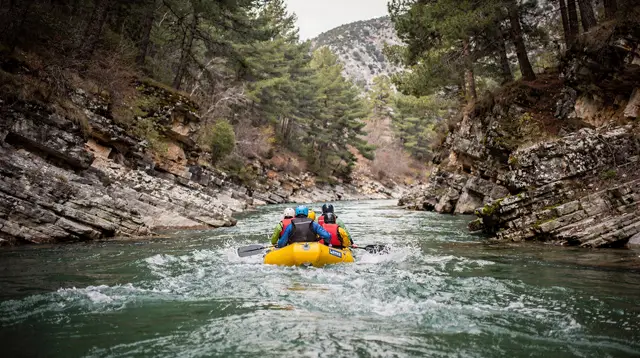
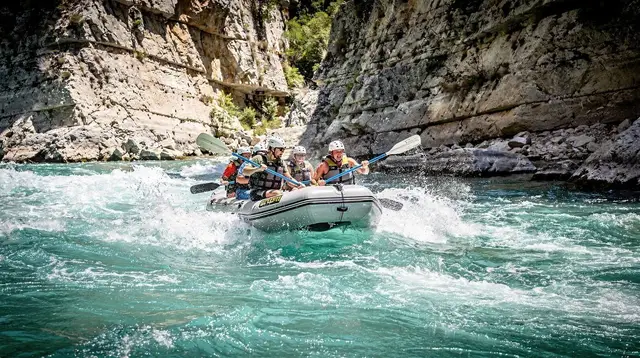
Rafting on the Köprüçay is graded for recreational, beginner-friendly conditions rather than expedition-level whitewater. Groups of roughly 6-8 people sit in an inflatable raft with a guide steering from the back, paddling on command through a sequence of rapids interspersed with calmer flat stretches where the boat drifts and everyone gets a breather. The run typically takes around an hour on the water, bookended by a safety briefing, gear fitting, and the transfer to and from the put-in point.
Physically, rafting asks less of you than it looks like in photos. You need to be able to sit upright, hold a paddle, follow shouted instructions, and brace yourself when the guide calls for it — there’s no swimming required unless someone falls in, which the crew is trained to handle. It suits a wide range of fitness levels and is the more forgiving choice for a mixed group that includes older teenagers, moderately fit adults, or anyone nervous about scrambling over wet rock.
Equipment provided on essentially every rafting trip: helmet, life jacket, paddle, and the raft itself. Most operators also supply a dry bag for phones and valuables, though it’s worth asking rather than assuming. What you bring: swimwear or quick-dry clothing worn underneath, secured footwear (trainers or purpose-made water shoes — flip-flops come off in the current), and a towel and change of clothes for the ride home.
Canyoning: what it actually involves
The canyoning trips sold near Manavgat are usually a gentler, more accessible version of the sport than technical canyoning elsewhere — rappelling down waterfalls with ropes is not typically part of the standard tourist package here. Instead, expect a guided walk along and partly through a canyon, wading through sections of cold, shallow-to-waist-deep water, some easy scrambling over smooth rock, and stops at natural pools for a swim. It’s a slower-paced, several-hour outing rather than a single burst of one-hour whitewater.
Physically, canyoning demands more sustained effort than rafting, even though no single moment of it is as intense as a big rapid. You’re on your feet, on uneven and sometimes slippery ground, for longer stretches, and there’s more decision-making involved in where to place each step. It suits travellers who prefer a nature walk with a wet, adventurous edge over a single adrenaline burst, and it tends to work better for groups without young children, simply because of the sustained walking and wading involved rather than any strict rule.
Equipment provided: helmet and, on most guided routes, a life jacket for the deeper pool sections; some operators also issue neoprene shoes. What you bring: the same quick-dry clothing logic as rafting, plus footwear with a secure grip is even more important here than on the river, since you’re walking on wet rock rather than sitting in a boat.
Rafting vs canyoning near Manavgat, side by side
| Rafting | Canyoning | |
|---|---|---|
| Format | Seated, guided paddle in an inflatable raft | Guided walk, wade and light scramble through a canyon |
| Typical duration on-site | About 1 hour on the water | Roughly 1.5-3 hours on foot |
| Physical demand | Short bursts of paddling, ability to sit and brace | Sustained walking on uneven, wet ground |
| Swimming needed | Not usually, unless you fall in | More likely, in deeper pools |
| Minimum age (typical) | From around 6-7 on calmer runs, operator-dependent | Similar or slightly higher, operator-dependent |
| Best suited to | Mixed-age groups, first-timers, families | Adults and older teens wanting a longer, quieter adventure |
| Gear provided | Helmet, life jacket, paddle, raft | Helmet, often life jacket, sometimes water shoes |
When the river is at its best
The Köprüçay is fed partly by snowmelt from the mountains further inland, which means its flow changes noticeably across the year — this matters more for rafting, where water volume directly affects how lively the ride feels, than for canyoning, which depends more on comfortable air and water temperature than on strong current.
Spring (roughly April to June) brings the highest and coldest flow, a result of snowmelt further up the watershed. This is generally considered the liveliest rafting window, with more pronounced rapids, though the water itself runs colder — a wetsuit top isn’t standard issue on most trips, so be ready for a brisk plunge if you go in.
High summer (July-August) sees the river settle to a lower, warmer flow. Rafting is calmer and more family-friendly during this stretch, and it’s also peak season for both activities, meaning more operators running trips, bigger groups, and more competition for early morning slots, which tend to be less crowded and cooler than midday departures.
Early autumn (September into October) often keeps reasonably warm water with flow continuing to ease off, a comfortable window for canyoning in particular, since the pools and wading sections feel less shockingly cold than in spring. Check with the operator on current conditions before booking late in the season, as low water can occasionally affect trip availability.
None of this is a fixed calendar — rainfall varies year to year, and operators adjust routes and trip availability to actual river conditions rather than a set date. If a strong, sporty rapid ride matters most to your group, ask specifically about spring; if a warmer, calmer experience matters more, high summer works better for both activities.
Choosing for a mixed group
A family with young children, older relatives, or anyone anxious about water is usually better served by rafting: it’s shorter, seated, closely guided, and the physical bar is lower. A group of fit adults or older teens looking for a longer, more exploratory day, and comfortable with an hour or more of walking on wet rock, will likely get more out of a canyoning route.
For groups that can’t agree, several operators solve the dilemma by bundling both — or bundling rafting with an entirely different adrenaline activity — into one full-day package, so nobody has to choose. The Manavgat super combo pairs a rafting run with a jeep safari, buggy ride and zipline in a single day, which suits a group that wants variety over a single focused activity.
For something closer to canyoning’s slower pace but built around a private group, the Side/Manavgat private tour combines a canyon walk, a rafting stretch and a stop in a local village, useful if you want a guide’s full attention rather than joining a larger shared group.
Travellers based more centrally around Antalya who want the rafting-and-zipline combination without a long coastal transfer can look at the Antalyacanyoning rafting and zipline day trip. And for a full day built specifically around the Green Canyon scenery alongside off-road driving, the Green Canyon jeep safari with lunch is a lower-intensity alternative for anyone who wants the landscape without the whitewater or the wading.
Practical notes before booking
Both activities include hotel pickup and drop-off from most coastal resorts around Side, Manavgat, Belek and often Antalya itself, though pickup times and the length of the transfer vary by how far your hotel sits from the river — ask before booking if a long transfer would eat too much into your day. Life jackets and helmets are mandatory safety equipment on both, not an optional add-on, and are fitted before you set off.
Pack a dry bag or leave valuables at the hotel rather than trusting a wet day out with anything that can’t get soaked. Bring cash for a locker deposit if one is offered, and check the operator’s policy on photos — some include a photographer on-site with paid digital downloads afterwards, others don’t, and phones generally don’t survive an unprotected trip through either activity.
If the river is running unusually low or high due to that year’s rainfall, reputable operators will adjust the route or postpone rather than run an unsafe trip — treat a same-day change of plan as a safety call, not an inconvenience. Combine either activity with a look at the Köprülü Canyon destination page or the Green Canyon boat tour guide if you want to see the wider valley beyond the rafting and canyoning trips themselves, or check Manavgat day trips for how this fits alongside the area’s other inland excursions.
Manavgat rafting and canyoning FAQ
Is rafting near Manavgat suitable for beginners?
Yes. The Köprülü Çayı is graded for recreational rafting, and most operators run it as an introductory trip with a safety briefing, a guide steering each boat, and no prior experience required.
What is the minimum age for rafting or canyoning near Manavgat?
Age limits vary by operator and by water level, but rafting trips commonly accept children from around 6-7 years old on calmer stretches, while some canyon walks set a similar or slightly higher minimum. Confirm the age policy directly with the operator before booking, especially for young children.
Which season has the best water flow for rafting near Manavgat?
Spring, roughly April through June, generally has the strongest and coldest river flow from snowmelt further inland, giving a livelier ride. By late summer the river runs lower and warmer, which suits nervous paddlers and young children better than a high-flow spring run.
Do I need to know how to swim to go rafting or canyoning?
Basic swimming confidence is recommended for both, though a life jacket is mandatory and provided throughout. Canyoning sections with deeper pools or short swims typically require more comfort in water than a rafting seat does.
What should I wear for rafting or canyoning near Manavgat?
Quick-drying clothes you don’t mind getting soaked, secured footwear such as trainers or water shoes rather than flip-flops, and a change of clothes for afterwards. Cotton is a poor choice since it stays wet and heavy for the rest of the day.
Is rafting or canyoning near Manavgat more physically demanding?
Rafting asks for short bursts of paddling on a guide’s command and the ability to sit and brace through a bumpy but seated ride. Canyoning near Manavgat typically asks for more sustained walking, wading and some rock scrambling over an hour or two, which can feel more tiring for anyone unused to uneven ground.
Can I combine rafting with other activities near Manavgat in one day?
Yes, several operators bundle rafting with a jeep safari, buggy ride or zipline into a single full-day combo trip, which suits travellers who want more than one adrenaline activity without arranging separate bookings.
Rafting and Canyoning
Verified deep-linked GetYourGuide tours. Book through these links and we earn a small commission at no cost to you.
GetYourGuide does not provide a product photo for this activity — the image shows the meeting point, photographed by us.